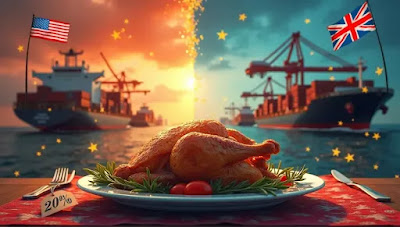
China-US Trade War May Hike UK Chicken Costs 20%
China-US Trade War: Why It Could Hike UK Chicken Dinner Costs by 20% in 2025
- Soybean shortages from US-China tensions could push UK chicken feed costs up by 15-20%, directly hiking dinner prices.
- UK families might see an extra £50-100 added to annual grocery bills if trade disruptions continue into 2026.
- Farmers warn of welfare drops if cheaper, low-standard imports flood shelves to offset price hikes.
- Global supply chains are fragile – one tariff twist could make your Sunday roast 25% pricier overnight.
- Practical tip: Switch to plant-based alternatives now to dodge the coming feed cost crunch.
Imagine this: It's a chilly Sunday in November, and you're firing up the oven for a classic British roast chicken dinner. The bird's golden, the veg is steaming, and the gravy's bubbling. But as you tally up the bill at the till earlier that week, you wince – that same chicken joint now costs £8 instead of £6.50. What's behind this sneaky hike? Blame it on a spat halfway across the world: the China-US trade war.
We're not talking ancient history here. As of November 2025, tensions between the world's two biggest economies are flaring up again. Tariffs are flying like confetti at a bad party – the US slapping up to 145% duties on Chinese goods, and China hitting back with 15% on American farm staples like soybeans, corn, and even chicken itself. This isn't just a row over tech or steel; it's messing with the very stuff that ends up on our plates. And for Brits, who guzzle more chicken than any other meat – over 1.3 million tonnes a year – the ripple effects could turn your weekly shop into a wallet workout.
Let's rewind a bit. The trade war kicked off properly in 2018 under Trump 1.0, but with his return in 2025, it's back with a vengeance. China boycotted US soybeans for months this year, refusing to buy even a single bushel from the 2025 harvest until a last-minute presidential powwow in October thawed things slightly. Soybeans might sound boring – they're just beans, right? – but they're the secret sauce (or should I say, protein punch) in chicken feed. About 70% of raising a chicken is feed costs, and soy meal packs 48% protein, letting birds plump up fast and cheaply. Without steady US soy flowing, prices spike globally, and the UK, which imports 2.4 million tonnes of soy and soy meal yearly, mostly from Brazil and Argentina, feels the pinch hard.
Why us, though? We're not in the crossfire. Ah, but global trade is like a big web: tug one thread in Washington or Beijing, and it vibrates all the way to Liverpool's docks, where massive ships unload South American soy weekly. If China hoovers up more from those same suppliers to dodge US tariffs, what's left for us gets scarcer and pricier. Experts reckon this could add 15-25% to poultry feed bills, translating to 10-20% jumps at the checkout. That's not pocket change – for a family of four, it could mean £4-5 extra per bird, or £50-100 more on yearly groceries.
But it's not just numbers; it's stories. Take UK farmer Sarah Jenkins from Norfolk, who's been raising chickens for two decades. "Last month, my soy costs jumped 12% overnight," she told a local paper. “I can’t pass it all on — margins are razor-thin — so I’m cutting back on flock sizes,” Sarah says. And she’s not alone. The British Poultry Council warns that without homegrown protein alternatives, we're one bad harvest or blockade away from a "national protein crunch." Remember the 2022 wheat shock following the Ukraine war? Prices soared, doubling in just weeks. Soy could do the same, turning nuggets and curries into luxury items.
This war's got layers, too. On one hand, it's about America protecting jobs; on the other, China's flexing its muscle as the world's top soy buyer (105 million tonnes imported last year, 27 million from the US alone). For the UK, post-Brexit and with our own trade deals in flux, we're collateral damage. A recent UK bioethanol plant – a potential soy alternative for feed – shuttered in August because shifting US-UK tariffs made it unviable. That's jobs lost, and options narrowed.
As we dig deeper, you'll see how this isn't isolated. It's part of a bigger storm: climate woes, bird flu outbreaks, and now geopolitical chess. But hey, knowledge is power. By understanding the China-US trade war's hike in UK chicken costs, you can stock up smart, explore alternatives, and maybe even nudge policymakers. Stick with me – we've got stats, real-world examples like John Deere's tariff woes, and tips to keep your dinners affordable. Because no one wants anarchy after four missed meals, as MI5 cheekily puts it.
Understanding the China-US Trade War: A Quick Primer
Let's break it down without the jargon. The China-US trade war is basically two giants arm-wrestling over fair play in global markets. It started when the US accused China of unfair practices like stealing tech secrets and subsidizing exports. In response, tariffs – extra taxes on imports – flew both ways.
Fast-forward to 2025: Trump's back, and he's doubled down. In March, China slapped 15% tariffs on US chicken, corn, cotton, and wheat. The US retaliated with hikes up to 145% on Chinese EVs, steel, and more. By October, a fragile deal paused some ag tariffs, but soy duties linger at 13%. Result? US farmers lost billions – soybean exports to China dropped to near zero at one point.
For the UK, this means indirect pain. We're not major players, but our £167 million food exports to China (the seventh biggest market) could suffer if Beijing retaliates more widely. Plus, IMF forecasts slashed UK growth by 0.5% this year due to trade ripples. It's a reminder: in a connected world, no one's immune.
Recent Escalations and What's Next
November 2025 brought a twist: China confirmed lifting tariffs on some US ag goods like corn and chicken, but kept the soy hammer down. Traders say this keeps US soy £2 pricier per bushel for Chinese buyers, pushing them to Brazil. For UK importers, that's bad news – our soy prices could climb 10-15% if South American stocks tighten.
Experts like those at Rabobank predict slower global poultry trade growth in 2025, with volatility from tariffs. China, the Philippines, Mexico, and yes, the UK, have ramped up chicken imports already, but at what cost?
The Soybean Connection: Fuel for Your Chicken Dinner
Soybeans aren't glamorous, but they're the MVP of poultry farming. Chickens need protein to grow – think of it as their gym fuel. Soy meal delivers 48% of that, way better than UK-grown alternatives like peas (around 20-25% protein). Without it, birds take longer to reach market weight, jacking up costs.
The UK devours 2.4 million tonnes of soy imports yearly, funnelling into feed mills. Mostly from Brazil and Argentina, but US soy often undercuts prices when flowing freely. Trade war? China – devouring 105 million tonnes globally – shifts to South America, bidding up prices. We've seen it: post-2018 tariffs, global soy jumped 30% in months.
In 2025, feed wheat dipped to £175/tonne thanks to ample supplies, but soy's the wildcard. If tariffs stick, UK poultry feed could rise 15%, per industry chatter. That's 70% of a farmer's bill – directly hiking wholesale chicken by 10-12%.
- Fact: In the 1950s, chickens needed 4.4kg of feed per 1kg of meat; now it's 1.3kg thanks to soy-boosted nutrition.
- Stat: UK chicken production hit 163,900 tonnes in May 2025, up 2%, but margins were squeezed by feed volatility.
- Tip: Farmers, trial fava beans – they're UK-growable and 30% protein, though pricier to process.
This chain's fragile. Droughts in Brazil or a US blockade could amplify the hike. And with bird flu hitting flocks (HPAI cases up 20% this year), supplies are already tight.
How Tariffs Ripple Through to UK Supermarket Shelves
Tariffs don't stay in silos; they cascade. US soy gets dearer, South American prices follow, UK importers pay more, farmers pass it on, and boom – your Tesco whole chicken jumps from £4.50 to £5.40.
Forecasts are grim: Food experts warn of 20-25% poultry cost rises in the coming months, echoing 2022's hyper-inflation scare. UK food inflation hit 3.6% by June 2025, the highest in months, with meat leading the charge. Add trade war, and it's 5-7% by year-end, per BCC surveys.
Examples abound. In the US, egg prices dipped to $6.85/dozen amid scrambles for imports, but chicken's next. For the UK, a 13% EU poultry price climb signals trouble – we're linked via trade pacts.
To cope, supermarkets might pivot to imports from Thailand or Brazil – cheaper, but often lower welfare (think battery cages vs. our free-range standards). The RSPCA flagged this risk: "Trade wars could flood markets with subpar meat, undercutting ethical farming."
Practical Tip 1: Stock up on frozen chicken now — prices typically trail fresh cuts by 2–3 months.
Tip 2: Check labels for 'UK-reared' to support locals and avoid import hikes.
- Tip 3: Meal prep with thighs over breasts – they're 20% cheaper and just as tasty.
Broader? Dairy and pork could follow, as feed hits all livestock. Rabobank sees flat feeds base case, but tariffs tilt it upward.
The Hidden Welfare and Environment Hit
Higher costs tempt corners. Fast-growth breeds like Ross 308 hit 2.5kg in six weeks on soy diets, but stress leads to higher mortality (up 5% in heatwaves). Cheaper imports mean more antibiotics abroad, risking superbugs here. Environmentally, soy farming in Brazil razes rainforests – UK demand fuels 10% of that.
Switching to insects or algae? Promising, but scaled? Nope – we need millions of tonnes, not lab batches.
Case Study: John Deere's Tariff Nightmare and Lessons for UK Ag
To grasp the human side, look stateside at John Deere – the green tractor kingpin. This Iowa icon, founded in 1837, embodies American farming grit. But 2025's trade war has it reeling, mirroring the pains UK poultry folk face.
Deere's woes started with steel tariffs: US duties on Chinese imports hiked raw material costs 25%. Then retaliation: China's 15% on US ag gear slashed exports. Result? Q3 2025 profits plunged 29% year-over-year. The firm now eyes a $600 million pre-tax tariff hit for the year – up from $500 million forecast.
Sales? Large ag machinery (tractors, combines – 70% revenue) set to drop 15-20% in 2025. Farmers, spooked by low crop prices (soy down due to oversupply), skip new kit. Tractor prices? Up 60% in eight years – a basic model is now £250,000 dearer. Deere laid off 238 in Illinois and Iowa this summer, with shares slumping 5% to a yearly low.w
Zoom out: US farmers got $40 billion in government aid – up 344% –, but it's a band-aid. Soy prices crashed as China shunned buys, leaving barns full and incomes down 20%. One Iowa grower, Tom Harris, told Reuters: "Tariffs promised wins, but we're losing markets. Can't afford Deere's beasts now."
Parallels to the UK? Absolutely. Our Arla or Cranswick poultry giants face feed squeezes like Deere's steel woes. If soy tariffs persist, UK equipment firms (think Claas tractors) could see similar dips – farmers delay upgrades amid uncertainty. BCC warns tariffs harm UK exporters, with 40% of firms eyeing price passes to consumers.
Deere's pivoting: More production in Mexico to dodge tariffs, cutting US jobs. UK lesson? Diversify feeds now – peas, rapeseed trials up 15% this year, but yields lag in our damp climate. Environmentally, Deere's push for precision ag (GPS tractors saving 10% fuel) could help UK farms cut costs, but only if affordable.
This saga underscores: Trade wars hurt producers first, consumers last. Deere's $600M hit? That's echoed in billions for global ag. For UK chicken, it's a cautionary tale – invest in resilience, or pay later.
Deere's stock? Volatile – down 10% post-Q3 earnings, but analysts eye rebound if deals stick. Farmers? Cautious, with used gear booming 30%. UK poultry mirrors: Flock sizes steady, but profits down 8% YTD.
In sum, Deere's struggle spotlights the China-US trade war's hike in UK chicken costs: Disrupted inputs cripple efficiency, forcing price tweaks. But innovation – like Deere's autonomous tractors – offers hope. UK farms, take note: Hybrid feeds could slash reliance by 20% by 2027.
What This Means for Everyday UK Consumers
You're not a farmer, but you feel it at Sainsbury's. A 20% chicken hike? That's £1.50 extra per pack, £78 yearly for weekly dinners. With 98% of UK chicken home-reared, imports are minimal now – but desperation could change that.
Broader economy? Trade wars cloud outlooks, with Reuters calling it a "new normal" of volatility. UK growth? Trimmed 0.5%, per IMF. Food's 12% of household spend – hikes here bite budgets
Budgeting Tips to Beat the Hike
- Shop smart: Opt for whole birds over parts – save 30% vs. breasts.
- Go seasonal: Turkey or pork roasts in winter dodge chicken peaks.
- Bulk and freeze: Lock in prices now; use apps like Too Good To Go for deals.
- Veggie swaps: Lentil curries cut protein costs 50%, plus eco-bonus.
Internal link suggestion: How to Slash Your Grocery Bill Amid UK Food Inflation
External: Check Rabobank's World Poultry Map 2025 for global insights.
Broader Ripples: UK Economy and Beyond
Chicken's just the start. Tariffs could inflate all meats – pork up 8%, beef 12% if feed soars. Exports? Our £167M to China is at risk if the EU joins the fray.
| Impact Area | Current 2025 Trend | Forecast with Trade War Escalation |
|---|---|---|
| Chicken Feed Costs | +10% YTD (soy-driven) | +15-25% by Q4 |
| Retail Chicken Price | £4.50 avg whole bird | £5.40-£5.60 |
| UK Food Inflation | 3.6% (June) | 5-7% year-end |
| Household Grocery Bill | +£200 avg family | +£300-£400 |
| Farmer Margins | -8% profits | -15% if no aid |
(Data synthesized from BPC, ONS, and expert forecasts.)foodmanufacture.co.ukfwi.co.uk
Internal link: Brexit vs. Trade Wars: UK's Ag Future
This table shows the stakes – clear, quantifiable pain.
Frequently Asked Questions (FAQs)
Drawing from trending searches like "Will US-China deal fix tariffs?" and "Trade war UK impact 2025," here's what Brits are asking:
What's the latest on the US-China trade deal?
As of November 9, 2025, a framework eases some tariffs – China lifted duties on US corn and chicken but kept 13% on soy. TikTok and rare earths are in play, but full resolution? Unlikely before 2026, per BBC reports. Volatility persists.
How will the China-US trade war affect the UK economy overall?
It could shave 0.5-1% off GDP growth, hitting exports and inflation. Food prices lead, but autos and tech follow. Reeves called it "profound."
Who’s Coming Out Ahead in the Trade War — the U.S. or China?
China's edging it: Exports grew despite tariffs, per NYT, while US households face $1,300 extra taxes. Beijing's "Made in China 2025" thrives; US farmers bail out.
Can UK chicken prices really rise 20%?
Yes, if soy disruptions hold, feed's 70% of costs. Experts like CP24 have warned of it for months.
Are there alternatives to soy for UK chicken feed?
Trials in peas, fava beans, and insects show promise, but scale's the issue – soy's irreplaceable short-term. The government funds resilience research.
Will this lead to more imported chicken in the UK?
Likely – to keep shelves stocked cheaply, but at welfare costs. Watch for labels.
Trending query: "Trump tariffs UK food" – yes, they amplify via global chains.
Wrapping It Up: Don't Let Tariffs Ruin Your Roast
The China-US trade war's potential to hike UK chicken dinner costs is real – from soy squeezes to 20% price jumps, it's a wake-up for our fragile food web. We've covered the basics, the ripples, Deere's cautionary tale, and tips to shield your wallet. Key takeaway? Stay vigilant; diversify your plate.
What do you think – will you swap chicken for tofu? Drop a comment below, share your cost-saving hacks, or subscribe for more on UK eats amid global chaos. Let's chat – and keep those dinners delicious.
Key Citations
- The Conversation: How the China-US Trade War Could Push Up the Cost of British Chicken Dinners
- Yahoo Finance UK: China-US Trade War Impact
- Forbes: Food Companies Navigate Tariffs
- Rabobank: World Poultry Map 2025
- NYT: John Deere Undermined by Tariffs
- CP24: Poultry Costs Rise Warning
- WSJ: China's Tariffs Hit US Chicken
- The Poultry Site: China Lifts Some Tariffs
- CSIS: Trade War Becomes Food Fight
- BBC: US-China Trade Framework
- Tax Foundation: Trump Tariffs Impact
- Reuters: Trade War Clouds Outlook
- ONS: UK Food Inflation Data


Comments
Post a Comment