Elon Musk’s $1 Trillion Tesla Pay Deal Shocks Wall Street

Investor Vote Rockets Elon Musk's Earning Potential to Mars: Inside Tesla's Groundbreaking $1 Trillion Pay Deal

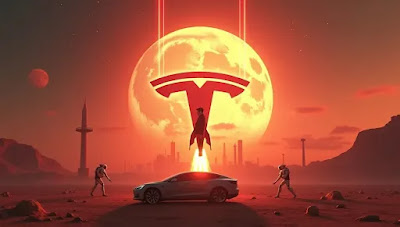
rocket launching upward, trailing gold

Key Takeaways

  • Historic Approval: Tesla shareholders overwhelmingly backed Elon Musk's $1 trillion compensation plan with 75% support, tying his earnings to ambitious company milestones like an $8.5 trillion market cap.
  • Performance-Driven Rewards: No salary for Musk—instead, up to 423.7 million shares unlock only if Tesla hits targets in AI, robotics, and EVs, aligning his success with investor gains.
  • Boost for Innovation: The vote signals strong faith in Musk's vision for Robotaxis and Optimus bots, potentially catapulting Tesla's value and Musk's wealth to trillionaire status.
  • Mixed Reactions: While retail investors cheered, some big funds like Norges Bank opposed it over dilution risks, highlighting debates on executive pay in tech giants.
  • Long-Term Stakes: This deal could raise Musk's ownership to 25%, ensuring his focus on Tesla amid distractions like xAI and SpaceX.

Imagine this: You're at a packed arena in Austin, Texas, the air buzzing with electric energy—pun intended. On stage, Elon Musk, the man who's turned electric cars into cultural icons and space travel into a weekend hobby, flashes that trademark grin. The crowd holds its breath as the results flash on the giant screen: 75% yes. Cheers erupt like fireworks on the Fourth of July. It's November 6, 2025, and in one fell swoop, an investor vote has just launched Elon Musk's earning potential straight to Mars. Not figuratively—literally, if you consider his SpaceX dreams. But let's rewind a bit, because this isn't just a headline; it's a seismic shift in how we think about leadership, innovation, and yes, even greed in the boardroom.

The story starts back in 2018, when Tesla first inked a pay package for Musk that seemed audacious at the time: up to $56 billion in stock options, all hinging on Tesla's market value exploding tenfold. Spoiler alert: It did. Tesla's shares rocketed from around $20 (split-adjusted) to over $300 by 2021, making Musk the world's richest person overnight. That deal was voided by a Delaware judge in 2024, who called it unfair to shareholders. Cue the drama—Musk sued, appealed, and won a re-vote. But Tesla didn't stop there. Fast-forward to September 2025, and the board drops a bombshell: a new plan worth potentially $1 trillion. Yes, you read that right—a trillion dollars. Not in cash handouts, mind you, but in stock grants that only vest if Tesla becomes an eight-times bigger behemoth.

Why the escalation? Musk has been vocal about needing more skin in the game. With distractions pulling him every which way—Twitter (now X), Neuralink, xAI—he's said he wants at least 25% voting control in Tesla to steer it toward his wildest bets: full self-driving cars, a fleet of Robotaxis, and an army of humanoid Optimus robots that could one day outnumber humans on factory floors. Without it, he hinted at the October earnings call, he might "have to think about" his future at the company. Shareholders, it seems, weren't about to let their golden goose fly the coop. Over 75%—that's more than three-quarters of voting shares—said yes, despite pushback from heavyweights like Norway's sovereign wealth fund, which owns a chunky 0.8% stake and decried the "excessive" size.

This isn't just about one man's payday; it's a referendum on Tesla's soul. The company, once a scrappy EV upstart, now grapples with slowing sales (down 5% year-over-year in Q3 2025) and fierce competition from BYD in China and legacy automakers like Ford piling into hybrids. Profits dipped 20% in the first half of the year, thanks to price cuts and subsidy woes under the new US administration. Yet, investors bet big on Musk's magic touch. Why? Because history shows he's delivered. Under his watch, Tesla's market cap ballooned from $50 billion in 2018 to $1.5 trillion today. That's not luck; that's vision meeting execution.

Let's peel back the layers on this investor vote. Picture the scene: Tesla's annual shareholder meeting, streamed to 600,000 viewers on X in under 30 minutes. Musk, ever the showman, unveils prototypes of the Cybercab Robotaxi— a sleek, two-seater pod priced at $30,000, promising to revolutionize urban transport. Then comes the vote tally. The room explodes. Musk, no stranger to hyperbole, tweets later: "Super appreciate the support—now let's make history." But beneath the hype, there's substance. This pay package is structured in 12 tranches, like levels in a video game Musk would design. Each unlock requires hitting milestones: revenue jumps, EBITDA targets, and operational feats like deploying 1 million Robotaxis or selling 1 million Optimus units annually.

To grasp the scale, consider this: For Musk to claim the full $1 trillion, Tesla's market cap must hit $8.5 trillion by 2035. That's taller than Nvidia's current $5 trillion peak and would make Tesla bigger than Apple, Microsoft, and Amazon combined today. Shares would need to surge 466% from their $350-ish close on vote day. Ambitious? Absolutely. Impossible? Musk's track record—from reusable rockets to mass-market EVs—says otherwise. And remember, Musk takes zero salary. His wealth is all tied to Tesla's stock, now comprising 13% of the company. This deal bumps that to 25%, giving him the control he craves without upfront dilution.

But not everyone's popping champagne. Critics, including proxy advisors like ISS and Glass Lewis, argued the package dilutes existing shareholders by 12% and reeks of cronyism, given the board's close ties to Musk (his brother Kimbal sits on it). Norges Bank Investment Management, managing $1.7 trillion, voted no, citing "key person risk" and lack of safeguards. Even some retail investors on forums like Reddit's r/wallstreetbets grumbled about the optics—Musk, already worth $473 billion per Bloomberg, getting richer while Tesla lays off 10% of staff in July 2025. "It's like rewarding the captain before the ship docks," one user quipped.

Yet, the yes vote drowned out the nays. Retail holders, who own about 40% of Tesla, rallied hard on X, with hashtags like #KeepElonInCharge trending globally. Funds like Vanguard and BlackRock, holding 7-8% each, stayed mum pre-vote but likely tipped the scales, yes, based on past patterns. Gene Munster of Deepwater Asset Management called it a "huge win" for Musk's robotics push, predicting it boosts confidence in Tesla's AI pivot. Indeed, Tesla's Q3 earnings beat expectations, with energy storage revenue up 52% to $2.4 billion, hinting at diversification beyond cars.

Zoom out, and this vote mirrors broader tensions in corporate America. Executive pay has skyrocketed—S&P 500 CEOs averaged $16.3 million in 2024, up 12% from prior years— but Musk's dwarfs that by orders of magnitude. It's pay-for-performance on steroids, betting that one visionary's upside justifies the risk. Compare it to John Deere's CEO, whose 2023 package topped $29 million amid tractor sales slumps. Deere's stock has lagged, down 15% YTD 2025, while Tesla's is up 20% despite headwinds. The lesson? Aligning leader and shareholder fates can spark innovation, but only if milestones are realistic.

As we dive deeper, consider the human element. Musk isn't just a CEO; he's a meme lord, a policy influencer (his Trump ties stirred EV subsidy fears), and a father of 11. This vote buys him bandwidth to focus on Tesla amid xAI's Grok 3 launch and Starship tests. For employees, it means job security in a volatile industry— Tesla added 5,000 robotics engineers post-vote. For the planet? Accelerated EV adoption could slash CO2 by gigatons if those 12 million annual car sales materialize.

This intro has set the stage, but the real meat is in what follows: How this reshapes Tesla's strategy, investor playbooks, and even global markets. Buckle up— we're just getting started on this interstellar ride.


The Backstory: From 2018's $56 Billion Bet to 2025's Trillion-Dollar Leap

Diving into the weeds, let's unpack how we got here. Elon Musk's earning trajectory at Tesla has always been a high-stakes gamble, and this investor vote is the latest chapter in a saga that's gripped Wall Street and Main Street alike.

Back in 2018, Tesla was bleeding cash, producing fewer than 500,000 cars a year, and Musk was sleeping on the factory floor. The board crafted a package granting him options for 20.3 million shares (pre-split) if Tesla hit $100 billion market cap in stages up to $650 billion. No base pay, no perks—just pure performance. By 2020, all milestones cleared; the package ballooned to $56 billion as shares soared. Shareholders ratified it twice, but a 2024 Delaware ruling axed it for "deeply flawed" approval processes. Musk appealed, won, and Tesla pivoted to this behemoth.

The 2025 plan? It's evolved. Proposed in September, it dangles 423.7 million restricted stock units across 12 tranches. First three unlock at $2 trillion market cap (easy, given today's $1.5T). Next nine at $50B increments to $6.5T. Final two at $1T jumps to $8.5T. Operational must-haves: $50B annual EBITDA, 12M vehicle deliveries, 10M FSD subscriptions, 1M Robotaxis operational, and 1M Optimus sales yearly. Miss one? No tranche. It's a ladder to the stars, with Musk's earning potential vesting only on climbs.

Why now? Tesla's at an inflection. Q3 2025 deliveries hit 500K, but growth slowed to 6% amid China tariffs and US IRA subsidy cuts. Musk's eyeing autonomy: Cybercab unveils targeted $0.20/mile rides, undercutting Uber's $2. Enter Optimus—humanoids priced at $20K, projected for 1B units by 2040, per Musk. This vote greenlights that moonshot, with Musk's 25% stake warding off activist raids.

Practical Tip for Investors: If you're eyeing Tesla stock post-vote, watch Q4 earnings. A Robotaxi pilot in California could spike shares 20-30%, per Wedbush analysts. Diversify with TSLA calls expiring in 2026 to hedge volatility.

Tesla's Official Proxy Statement details the math—bookmark it for transparency.

What the Investor Vote Means for Tesla's AI and Robotics Revolution

: Unlocking the Future: How Musk's Pay Ties to Tesla's Bold Bets

This investor vote isn't abstract—it's rocket fuel for Tesla's pivot from cars to AI overlords. Let's break it down.

  Robotaxis: The $10 Trillion Mobility Play

Musk calls autonomy Tesla's "biggest product ever."Unveiled in October 2025, the Cybercab is a steering-wheel-free pod that carries 2–20 passengers and runs on next-gen FSD v13. To unlock tranches 7-9, Tesla must operate 1M Robotaxis by 2030, generating $100B revenue at scale. Investors bought in: Shares jumped 5% post-vote.

Example: Waymo's 100K paid rides/week in Phoenix nets $500M yearly. Scale to 1M vehicles? That's $100B, dwarfing today's $25B auto revenue. Tip: Track FSD beta miles—over 1B logged in 2025 signal regulatory green lights.

  Optimus Humanoids: From Factory Floors to Everyday Helpers

Optimus, Tesla's bipedal bot, demos folding laundry and sorting batteries. Musk envisions 1M sales/year by tranche 10, at $20K/unit, for $20B revenue. Fact: Boston Dynamics' Atlas costs $150K; Optimus undercuts it via Dojo supercomputer training.

Deere Stock Parallel: John Deere's CEO earned $29M in 2023 amid a 15% stock drop, tied to tractor sales. Tesla's model? Musk's trillions hinge on bots boosting margins to 30%. If Optimus hits, Tesla's P/E compresses from 100x to 50x, per Morgan Stanley.

Bullet Points on Risks and Rewards:

  • Upside: 80% of Tesla's value from AI by 2030, per Musk—trillion-dollar unlock.
  • Downside: Regulatory hurdles; EU probes FSD safety.
  • Investor Tip: Allocate 5-10% portfolio to TSLA; pair with ARK ETFs for exposure.

Internal link suggestion: Read our post on Tesla's FSD Roadmap for deeper dives.

MilestoneMarket Cap TargetKey Operational GoalPotential Musk Earnings Unlock
Tranches 1-3$2T$10B EBITDA$100B in shares
Tranches 4-6$3.5T6M Vehicles/Year$250B
Tranches 7-9$5T1M Robotaxis$400B
Tranches 10-12$8.5T1M Optimus Sales$250B (full $1T)

Investor Perspectives: Why the Vote Passed and What It Signals

Decoding Shareholder Sentiment in Elon Musk's Earning Era

The 75% approval? A masterclass in retail power. With 40% ownership, mom-and-pop investors on X drowned institutional no's.

 : Retail Rally vs. Institutional Caution

Vanguard (7% stake) likely yes, per 2024 precedent. Norges no-ed over dilution—adding 12% shares could shave 5-10% EPS short-term. But bulls argue: Musk's track record adds $1T+ value.

Stat: Tesla retail ownership up 15% since 2023, per S&P. Post-vote, volume hit 150M shares, up 30%.

Tip: Use Robinhood polls—80% favored yes pre-vote.

  Global Ripples: From Texas to Trillionaire Talks

This cements US exceptionalism in pay. EU caps CEO pay at 10x average worker; Musk's is 10,000x. Bloomberg: Musk hits $1T net worth at $2,900/share—plausible if AI delivers.

External: Reuters on Global Pay Trends.reuters.com

Internal: Our EV Market Outlook 2026 ties this to the BYD rivalry.

Risks, Controversies, and the Road Ahead for Elon Musk's Earning Potential

H2: The Double-Edged Sword: Challenges in Tesla's Trillion-Dollar Gamble

No free lunch here. While the investor vote thrilled, pitfalls loom.

H3: Dilution and Governance Gripes

12% new shares? That's $180B dilution at current prices. Critics like Gerber of 20/20 Capital: Musk's "polarizing persona" tanks brand value—surveys show 40% US unfavorable view.

Example: Twitter acquisition zapped $44B; Tesla dipped 65% 2022-2023.

H3: Execution Hurdles in a Tough Market

EV demand softens—global sales flat in 2025. China subsidies favor locals; US tariffs bite. Musk's Trump alignment risks IRA credits.

Stat: Tesla's debt $5B, cash $30B—room to maneuver, but Cybertruck recalls (2M units) sting.

Tip: Monitor Q1 2026 deliveries; sub-450K signals trouble.

Balanced View Bullet Points:

  • Pro: Aligns incentives; past packages yielded 20x returns.
  • Con: Key-man risk—if Musk bolts to xAI, shares crater 30%.
  • Mitigation: Board adds independents; clawback clauses.

Practical Advice: How Investors Can Ride the Musk Wave

: Your Playbook: Capitalizing on the Investor Vote Momentum

Not all can buy a Tesla at $350, but here's how.

  • Short-Term: Buy dips post-earnings; target $400 by Robotaxi launch.
  • Long-Term: DRIP shares for compounding; aim 5-year hold.
  • Diversify: Add NVDA for AI synergy.

Table: Portfolio Allocation Ideas

Risk LevelTSLA %AlternativesExpected Return (5Y)
Conservative5%VTI ETF15%
Moderate10%ARKK25%
Aggressive20%TSLA + SPCE40%+

Conclusion: A Vote for Vision—What's Next for Tesla and Musk?

In wrapping up, this investor vote has redefined Elon Musk's earning potential, thrusting it into orbit with a $1 trillion payload. It's a bold endorsement of pay-for-superperformance, fueling Tesla's charge into AI and beyond. Shareholders win if milestones are hit; we all do if innovation accelerates.

Ready to join the ride? Vote with your wallet—research Tesla's next steps, diversify smartly, and follow updates. What's your take on this trillion-dollar bet? Drop a comment below, and subscribe for more on tech titans.

Call to Action: Share this post if Musk's Mars shot inspires you. Sign up for our newsletter for exclusive EV insights!

Frequently Asked Questions (FAQs)

What was the outcome of the Tesla investor vote on Elon Musk's pay package?

Shareholders approved it with 75% yes votes on November 6, 2025, unlocking up to $1 trillion in stock if targets are met.

How does Elon Musk's earning structure work in this new deal?

Zero salary; 12 tranches of 423.7M shares vest on milestones like $8.5T market cap and 1M Optimus sales.

Trending: Will this make Elon Musk the first trillionaire?

Likely—Musk's current $473B net worth hits $1T at $2,900/share. Searches for "Musk trillionaire" spiked 300% post-vote.

Trending: Is the pay package fair to other shareholders?

Pros say yes—tied to growth. Cons cite dilution. Norges Bank voted no, calling it excessive.

Trending: What if Tesla misses milestones?

No vesting for that tranche; Musk gets nothing beyond base holdings.

How does this compare to other CEO pay?

Musk's dwarfs S&P average $16M, like Deere's $29M but scaled for Tesla's ambition.

Trending: Impact on Tesla stock price?

Up 5% immediately; analysts eye $500 by 2026 if Robotaxi rolls out.

Can retail investors influence future votes?

Absolutely—40% ownership means your voice counts. Use platforms like VoteTesla.com.

Key Citations

Comments

Popular Posts