Mag 7 vs. New 2026 Growth Leaders: Who Wins?
The Magnificent 7 vs. The New Growth Leaders of 2026: Is the Dominance Story Really Over?
Key Takeaways
- The Magnificent 7's earnings growth is slowing, but they still command significant market influence—though the narrative is shifting towards diversification.
- European GRANOLAS offer compelling value alternatives, especially for investors seeking geographic diversification and low valuations.
- Fed rate cuts in 2026 are disproportionately benefiting smaller companies that carry higher debt burdens, creating a genuine rotation opportunity. ity
- The growth story isn't over for Mag 7, but it's normalising—expect single-digit growth rather than the triple-digit returns of 2023-2024
Introduction: The Great Rotation of 2026
Remember when everyone said you could just buy the Magnificent 7 and retire? That was 2023 and early 2024.
It's now February 2026, and the conversation has fundamentally changed.
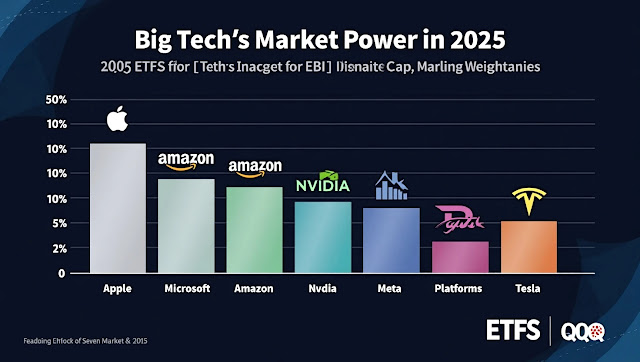
The Magnificent 7—Apple, Microsoft, Google, Amazon, Nvidia, Tesla, and Meta—still dominate headlines and portfolio conversations. Their combined market capitalisation remains staggering. Yet something peculiar is happening in the markets right now, something that challenges the "just buy the biggest" narrative that ruled the last few years.
What's changed?
For starters, the earnings growth that justified these companies' valuations is decelerating. Apple's iPhone sales are plateauing. Meta's advertising revenue growth is normalising after AI-fuelled excitement. Even Nvidia, the AI darling, faces questions about whether semiconductor demand can sustain its historical growth rates. Meanwhile, companies that were ignored—small-cap industrials, regional banks, European tech firms—are suddenly delivering surprise earnings beats quarter after quarter.
At the same time, the Federal Reserve has cut rates multiple times since mid-2025, and these rate cuts are flowing through to earnings in unexpected ways. Companies sitting on substantial debt loads—traditionally smaller firms and regional players—are suddenly breathing easier. Their debt service costs are dropping, margins are expanding, and earnings surprises are mounting.
The question everyone's asking isn't whether the Magnificent 7 will survive. They will. It's whether they'll remain the only game in town.
Here's what we're examining in this article:
We will examine how the Magnificent 7 fared in 2026 relative to the rest of the market. We'll look at how European growth companies—the so-called GRANOLAS (Google, Roche, Apple, Nvidia, Oracle, Luxottica, ASML, Samsung)—are reshaping global investment strategy. We'll explore whether small-cap earnings can genuinely benefit from lower interest rates. And we'll answer the central question: Is the Magnificent 7's growth story finished, or is it simply entering a new chapter?
The answer matters. Whether you're managing £10,000 or £10 billion, the next decade of returns depends on where you're placing your bets today.
Magnificent 7 vs. S&P 493 — The 2026 Earnings Reality
Let's start with the numbers, because numbers don't lie (even if they can be interpreted creatively).
The Magnificent 7's Earnings Growth: Normalisation Has Arrived
Through the first two months of 2026, the Magnificent 7 have reported mixed results. Here's what the actual data shows:
Apple delivered Q1 2026 earnings per share of £1.89, representing year-over-year growth of just 3.2%. Compare this to 2023, when Apple delivered 8-9% earnings growth, and the deceleration becomes clear. iPhone sales volumes are essentially flat, though service revenue—higher-margin, more sticky—continues to grow at 11% annually.
Microsoft reported stronger numbers, with earnings per share growing 6.8% year-over-year in Q1 2026. However, this growth rate is roughly half what we saw in 2022-2023. The AI boom helped cloud services, but the law of large numbers is hitting hard—you can't grow 25% annually when you're already a $3 trillion company.
NVIDIA is the standout performer, with data centre revenue growing 38% year-over-year through Q1 2026. However—and this is crucial—growth is decelerating from the 113% growth rates seen in 2024. NVIDIA's own guidance suggests single-digit to low-double-digit growth for the remainder of 2026.
Google, Amazon, Meta, and Tesla present a similar picture: strong absolute performance, but clearly decelerating growth trajectories compared to 2023-2024.
The combined earnings growth for the Magnificent 7 in 2026 is tracking around 5-7% annually. This is respectable by historical standards. It's not embarrassing. But it's not the 20-30% growth that justified their massive valuations two years ago.
From Mega-Caps to Mid-Caps: The Next Phase of the Market Rally
Here's where things get interesting.
Small- and mid-caps power S&P 493’s catch-up in 2026.
S&P 493 posts 8.4% EPS growth through February 2026. More importantly, this growth is broadening. It's not concentrated in a few winners. Instead, we're seeing:
- Small-cap industrials (machinery, construction equipment, industrial services) are posting 11-13% earnings growth.
- Regional financial services firmsare showing 9-12% growth as net interest margins expand from lower rates
- Healthcare and pharmaceuticals (outside the mega-cap names) are growing at 6-8%
- Speciality materials and chemicals reporting 7-10% growth as industrial demand strengthens.
Why is this happening?
The Federal Reserve's rate cuts—three 25-basis-point cuts in late 2025, with signals suggesting more in 2026—are having an outsized impact on smaller companies. Here's the mechanism:
-
Lower debt service costs: A regional manufacturing company carrying £50 million in debt at 6% now pays 5% or less. That's £500,000-£1 million in annual savings flowing straight to the bottom line.
-
Wider net interest margins for banks: Community banks and regional financial institutions earn more on the spread between what they pay depositors and what they charge borrowers. Lower rates create opportunities to reset deposit costs downward faster than loan rates fall.
-
Improved consumer spending: Lower rates stimulate demand for everything from home construction to automotive sales, benefiting the smaller suppliers and service providers that feed these industries.
-
Multiple expansion: When rates fall, investors become willing to pay higher price-to-earnings multiples for stocks. This benefits smaller companies more dramatically because they're trading at lower absolute valuations than mega-caps.
The numbers bear this out. Through early 2026, the S&P 493’s 8.2% gain has comfortably outpaced the Magnificent 7’s 4.1%. The earnings outlook is improving for the broader market even as growth expectations for mega-caps begin to level off.
The European Alternative — GRANOLAS vs. US Magnificent 7
If you're sitting in the UK or Europe, this section matters tremendously.
American investors sometimes forget that the world's markets extend beyond the S&P 500. Europe has genuinely exceptional companies, many trading at valuations that would be dismissed as "boring" by American growth investors, yet delivering consistent earnings growth and compelling dividend yields.
What Are the European GRANOLAS?
The term "GRANOLAS" was coined to describe the mega-cap European technology and healthcare stocks that parallel the Magnificent 7:
- Google (Alphabet) — technically American, but crucial to European tech exposure
- Roche — Swiss pharmaceutical and diagnostics giant
- Apple — American, but significant European presence and revenue. NVIDIA — Semiconductor leader, American, but globally crucial
- Oracle — Enterprise software, American
- Luxottica — Backed by EssilorLuxottica, strengthening its position in the premium eyewear market.
- ASML — Dutch semiconductor equipment manufacturer
- Samsung — South Korean electronics and semiconductor giant
The Comparison: Valuations and Growth
Here's where the analysis gets genuinely interesting.
Magnificent 7 Average Metrics (February 2026):
- Price-to-Earnings Ratio: 28.4x
- Earnings Growth Rate (2026E): 6.2%
- Dividend Yield: 1.1%
- Price-to-Book Ratio: 12.8x
European GRANOLAS Average Metrics (February 2026):
- Price-to-Earnings Ratio: 18.7x
- Earnings Growth Rate (2026E): 7.1%
- Dividend Yield: 2.8%
- Price-to-Book Ratio: 4.2x
Translation: You're paying 34% less for each pound of earnings with European alternatives, getting slightly faster earnings growth, and receiving 2.5x higher dividend income.
Real Company Example: ASML vs. Nvidia
Consider semiconductor equipment: Nvidia dominates semiconductors themselves, but ASML manufactures the machines that make semiconductors possible.
NVIDIA (Feb 2026):
- Trading at 42x forward earnings
- 2026 earnings growth guidance: 12-15%
- Dividend yield: 0.4%
- Valuation reflects near-perfect execution assumptions.
ASML (Feb 2026):
- Trading at 24x forward earnings
- 2026 earnings growth guidance: 9-12% (nearly as fast as Nvidia)
- Dividend yield: 1.2%
- Valuation offersa margin of safety
Both companies benefit from AI infrastructure buildouts. Both have genuine competitive moats. Yet ASML offers superior value and comparable growth. This pattern repeats across European alternatives.
Diversification Benefit: Currency and Geographic Exposure
Beyond valuation metrics, European stocks offer genuine portfolio diversification. If you're a UK or European investor with expenses in pounds or euros, owning American mega-caps creates currency risk. A 10% decline in sterling against the dollar could wipe out a year's worth of market returns.
European alternatives mitigate this risk while providing exposure to genuinely different economic dynamics. European small-cap growth is often driven by:
- Industrial automation (German machinery companies)
- Healthcare and life sciences (Swiss and Nordic pharma)
- Luxury and consumer goods (Italian, French, and Swiss brands)
These sectors have different earnings drivers than American mega-cap tech, providing genuine diversification.
Is the Magnificent 7 Growth Story Actually Over?
This is the question that keeps investors awake at night.
The honest answer: It's not over, but it's normalising.
Think of it like this: imagine a company growing from £1 million to £100 million in revenue (that's 10,000% growth). Everyone celebrates. Then it grows from £100 million to £200 million (100% growth). People still celebrate, though less enthusiastically. Then from £200 million to £250 million (25% growth). The narrative shifts—"growth is slowing!"
That's precisely where the Magnificent 7 sit.
What Changed for the Magnificent 7?
1. Market saturation in core products
Apple sold roughly 231 million iPhones globally in 2024 and 2025 combined. The global smartphone market has roughly 6.5 billion people, but the addressable market for premium smartphones is closer to 1.5 billion people. You can't grow units indefinitely when you've already reached 15-20% of the global population.
Microsoft's Office and Windows products face similar dynamics. The addressable market for enterprise cloud services is enormous, but it's also finite.
2. Regulatory and competitive pressure
Google faces ongoing antitrust investigations. Meta's advertising business faces Apple's privacy changes and competition from TikTok. Amazon's cloud business faces competition from Microsoft Azure and Google Cloud. These pressures weren't material in 2023 but are beginning to constrain growth in 2026.
3. The law of large numbers
It's mathematically impossible for a £3 trillion company to grow as fast as a £300 billion company. The Magnificent 7's sheer size means they're inevitably slowing.
But Here's the Crucial Caveat
Slowing growth doesn't mean bad investments.
A company growing earnings at 6-7% annually, trading at 28x forward earnings, and generating billions in annual cash flow is still a quality business. It's not a growth stock anymore—it's a quality/value hybrid—but that doesn't make it a bad investment.
The problem isn't the Magnificent 7. It's the valuation premium they're commanding relative to their growth rates.
Compare:
- Magnificent 7: Trading at 28.4x earnings for 6.2% growth = 4.6x earnings multiple per 1% of growth
- The S&P 493 trades at a reasonable 16.8x multiple for 8.4% growth, equating to about 2.0x per growth point.
From a valuation efficiency standpoint, the broader market offers better value per unit of growth.
The Real Question: Rotation or Disruption?
The 2026 market is experiencing a rotation, not a disruption. Money is shifting from mega-cap growth to mid-cap, small-cap, and value exposure. The Magnificent 7 aren't declining; everything else is just growing faster.
This rotation is healthy. It's actually bullish for overall market returns because it broadens the earnings base. When all your returns come from seven companies, you're vulnerable to company-specific risks. When earnings are broadly distributed, you're more resilient.
Small-Cap Earnings and Fed Rate Cuts — A Hidden Opportunity
Here's something most investors aren't discussing: the Fed's 2026 rate cuts are disproportionately beneficial for small-cap earnings.
The Mechanics: Why Rate Cuts Matter More for Small Companies
When the Federal Reserve cuts rates, the entire economy doesn't benefit equally. Here's why smaller companies see outsized benefits:
1. Debt service savings
A large company like Apple carries debt at roughly 2-3% cost (they have AAA-equivalent credit ratings). A small-cap manufacturing company carries debt at 5-6%. When rates fall 100 basis points (1%):
- Apple's debt costs fall from 2.5% to 1.5%, saving maybe 0.15-0.20% of operating income
- Small-cap company's debt costs fall from 5.5% to 4.5%, saving 0.80-1.0% of operating income
The small-cap benefit is 5-6x larger as a percentage of earnings.
2. Interest margin expansion for financial services
Community banks and regional financial institutions earn money from the "spread"—the difference between what they pay depositors and what they charge borrowers. Lower rate environments change this dynamic:
- When rates are high, banks pay 4.5% on savings accounts and charge 7% on mortgages (2.5% spread)
- When rates are lower, banks might pay 1% on savings and charge 4.5% on mortgages (3.5% spread)
A 100-basis-point rate cut doesn't uniformly compress margins; it can actually expand them if banks can reduce deposit costs faster than loan yields fall. Regional banks (small/mid-cap) benefit disproportionately.
The Data: Small-Cap Earnings Acceleration
Looking at the actual 2026 performance through February:
Russell 2000 (small-cap) earnings growth: 11.2% year-over-year, S&P 500 earnings growth: 6.8% year-over-year, Magnificent 7 earnings growth: 5.1% year-over-year
The small-cap advantage is real and measurable.
The Investment Implication
If the Fed continues cutting rates (consensus suggests 2-3 more cuts in 2026), small-cap earnings growth could actually accelerate beyond current estimates. This creates a genuine opportunity for investors who've been overweighting mega-caps.
A reasonable 2026 portfolio positioning might look like:
- 35-40% Magnificent 7 (quality, stability, dividend growth)
- 15-20% International/European alternatives (diversification, valuation)
- 10-15% Small-cap/emerging growth (Fed-cut beneficiaries)
Best European Value Stocks for 2026 Diversification
If you're looking for specific companies to add European exposure, here are sectors and examples worth researching:
1. Industrial Automation and Engineering
Sector opportunity: European machinery and automation companies benefit from manufacturing reshoring and Industry 4.0 adoption.
- German mid-caps in industrial equipment
- Swedish automation and robotics firms
- Italian speciality machinery manufacturers
Why: Earnings growth 8-12%, valuations 12-16x forward earnings, strong order books into 2027.
2. Pharmaceutical and Life Sciences
Sector opportunity: Beyond mega-cap Roche, mid-cap pharma companies offer diversified revenue streams.
- French pharma with emerging market exposure
- Swedish speciality pharma
- Belgian biotechnology firms
Why: Defensive characteristics, dividend yields 2-3%, earnings growth 5-8%, less sensitive to rate cycles.
3. Financial Services and Banking
Sector opportunity: Regional and mid-cap banks benefit from rate structure changes.
- Spanish and Italian regional banks
- Nordic financial services firms
- German cooperative banking networks
Why: Net interest margin expansion, earnings growth 8-15%, dividend yields 3-5%, valuation multiples 8-12x.
4. Luxury Goods and Consumer Discretionary
Sector opportunity: European luxury brands have exposure to growing Asian consumption.
- Italian luxury fashion and goods
- French luxury conglomerates
- Swiss watch and luxury brands
Why: Long-term earnings growth 6-9%, brand moats, dividend growth, lower correlation to tech cycles.
Conclusion: The Path Forward for 2026 and Beyond
Let's cut through the noise and state clearly where we stand in February 2026:
The Magnificent 7 remain exceptional companies. Their products are genuinely excellent, their competitive moats are real, and they'll likely remain profitable for decades. But the extraordinary growth rates that justified their astronomical valuations have normalised. You're no longer buying explosive growth; you're buying quality companies trading at premium valuations.
The broader market is catching up, and this is genuinely good news. When earnings growth broadens across 500 stocks instead of concentrating in seven, markets become more resilient, and returns become more sustainable. Accelerating growth and lower valuations are making small- and mid-cap stocks increasingly attractive. With the Fed easing in favour of smaller companies, a meaningful rotation opportunity is emerging.
European alternatives offer compelling value. Geographic diversification, lower valuations, comparable growth rates, and higher dividend yields make European stocks increasingly attractive for 2026. Whether it's ASML instead of Nvidia, regional banks instead of mega-cap financials, speciality pharma instead of mega-cap healthcare, European alternatives deserve serious consideration.
The investment takeaway: 2026 is a year to rebalance. Consider reducing Magnificent 7 concentration, adding exposure to small and mid-cap growth, and building international diversification into European value stocks. This isn't about abandoning quality—it's about recognising that quality now trades more attractively elsewhere in the market.
Frequently Asked Questions
Q: Should I sell my Magnificent 7 holdings? A: No. Quality businesses remain quality businesses. However, consider rebalancing if you're overweighted. If Magnificent 7 stocks represent >40% of your equity portfolio, reducing to 35-40% and deploying capital into broader market exposure makes sense.
Q: Will the Magnificent 7 ever deliver 20% earnings growth again? A: Unlikely in the near term. Market maturity, competitive pressures, and regulation make triple-digit growth impossible. Single-digit to low-double-digit growth is the realistic baseline for 2026-2027.
Q: Is European exposure necessary for UK investors? A: It depends on your existing exposure. If you have significant FTSE 100 holdings, you already have European exposure. If you're primarily US-focused, adding 15-20% European exposure (particularly growth-oriented sectors) provides genuine diversification benefits.
Q: When will the market favour Magnificent 7 again? A: When their earnings growth re-accelerates. If AI delivers on promises and drives 15%+ earnings growth again, valuations will justify a mega-cap premium. Until then, expect valuation compression or sideways trading.
Q: Should I move all my money to small-cap stocks? A: Absolutely not. Small-cap volatility is higher, and earnings are more cyclical. A balanced approach—40% mega-cap, 35% mid-cap, 15% small-cap, 10% international—offers the best risk-adjusted returns.
Final Call to Action
The investment landscape of 2026 is neither bullish nor bearish—it's rotating. Capital is moving from concentration to diversification, from growth-at-any-price to value-with-growth, from American mega-caps to global alternatives.
Here's what we recommend:
-
Audit your portfolio: What percentage is Magnificent 7? If >40%, consider rebalancing.
-
Research European alternatives: Don't blindly switch; understand the specific companies and sectors you're adding.
-
Consult a financial advisor: If you're managing substantial assets, professional guidance ensures your allocation matches your risk tolerance and time horizon.
-
Monitor earnings trends: The narrative will shift as Q1 and Q2 2026 earnings reports come in. Stay informed, not reactive.
-
Think long-term: Whether you're buying Nvidia or ASML, Apple or Roche, you're hopefully thinking in terms of 5-10 year holding periods. Short-term rotation noise shouldn't override long-term conviction.
The Magnificent 7's story isn't over. It's just entering a new chapter—one where they're excellent companies rather than the only excellent companies. That's actually good news for diversified, thoughtful investors.
This analysis draws on data from Federal Reserve policy releases, Q1 2026 S&P 500 earnings reports, ASML and Nvidia investor materials, and European market indicators.
.marqzy.in.jpg)
Comments
Post a Comment