Western Digital’s Q2 2026 Earnings Show Strong Growth Driven by AI Demand
Western Digital (WDC) reported impressive Q2 FY2026 results on January 29, 2026, with revenue of $3.02 billion (up 25% year-over-year) and non-GAAP EPS of $2.13 (beating expectations). This beat was largely powered by surging demand for high-capacity hard disk drives (HDDs) in AI data centres.
Key Points
- Earnings Beat: Revenue exceeded estimates by about 3%, and EPS beat by around 10%, with strong margins (non-GAAP gross margin 46.1%).
- AI as the Driver: Demand for high-capacity HDDs from cloud providers and AI workloads led the growth; the company guided for ~40% revenue increase in Q3 FY2026.
- Stock Outlook: Despite a post-earnings dip to around $250, analysts are bullish, with average price targets around $270–$300 and some as high as $335, suggesting upside potential in 2026.
- Broader Context: Global AI spending is projected to reach $2.5 trillion in 2026 (Gartner), fuelling massive data storage needs where cost-effective HDDs play a central role alongside SSDs.
- Balanced View: While momentum is strong, risks include supply chain constraints, competition from SSDs, and market volatility after the recent stock drop.
Financial Highlights Table
| Metric | Q2 FY2026 | YoY Change | vs. Expectations |
|---|---|---|---|
| Revenue | $3.02 billion | +25% | Beat ($2.94B est.) |
| Non-GAAP EPS | $2.13 | +78% | Beat (~$1.95 est.) |
| Non-GAAP Gross Margin | 46.1% | +770 bps | Strong expansion |
| Q3 FY2026 Guidance | ~$3.2 billion | +40% YoY | Optimistic |
Shareholder Returns: Western Digital has declared a quarterly cash dividend of $0.125 per share, payable on March 18, 2026, to shareholders of record as of March 4, 2026.
Kahan badlein: The company successfully shipped. section mein jahan aapne technology ki baat ki hai.
Kya likhein: > “The company successfully shipped over 3.5 million units of its high-capacity ePMR (energy-assisted perpendicular magnetic recording) drives this quarter, meeting the high-density storage needs of AI giants.”

datacenterdynamics.com
Western Digital’s recent Q2 2026 earnings have captured attention across financial markets and the tech industry. The results underline how artificial intelligence is reshaping the storage landscape, particularly boosting demand for traditional hard drives in an era dominated by headlines about flash memory and SSDs.
In a world where AI models require enormous amounts of data for training and inference, storage solutions must balance performance, capacity, and cost. While SSDs offer speed, HDDs remain unbeatable for bulk, nearline storage in hyperscale data centres. Western Digital, one of the world’s leading suppliers of HDDs, appears to be capitalising on this trend effectively.
The company’s fiscal second quarter (ended December 2025, reported January 2026) delivered results that surprised positively on several fronts. Revenue reached $3.02 billion, a solid 25% increase from $2.41 billion a year earlier. This topped analyst consensus estimates of around $2.94 billion. Non-GAAP diluted earnings per share came in at $2.13, up 78% year-over-year and ahead of the $1.95 or so that Wall Street expected. This growth was primarily driven by the Cloud segment, which now accounts for a massive 89% of Western Digital’s total revenue.
Gross margins expanded dramatically — non-GAAP gross margin hit 46.1%, up 770 basis points from the previous year. This reflects better pricing power, higher volumes of premium high-capacity drives, and operational discipline. CEO Irving Tan highlighted the company’s ability to “deliver reliable, high-capacity HDDs at scale” amid AI-driven demand. CFO Kris Sennesael pointed to continued data centre strength and adoption of high-capacity products as reasons for expecting strong revenue growth and profitability gains.
Guidance for the third quarter (January–March 2026) is equally encouraging: revenue around $3.2 billion (plus or minus $100 million), implying roughly 40% year-over-year growth at the midpoint. Non-GAAP EPS is projected at $2.30 (plus or minus $0.15), with gross margins in the 47–48% range. These figures suggest the momentum is not slowing down.
Why AI Is Supercharging Demand for High-Capacity HDDs
AI workloads generate and store colossal volumes of data. Training a single large language model can require petabytes of storage, and inference at scale adds even more. Hyperscalers (Amazon, Microsoft, Google, Meta) need cost-effective ways to keep cold and warm data accessible without breaking the bank.
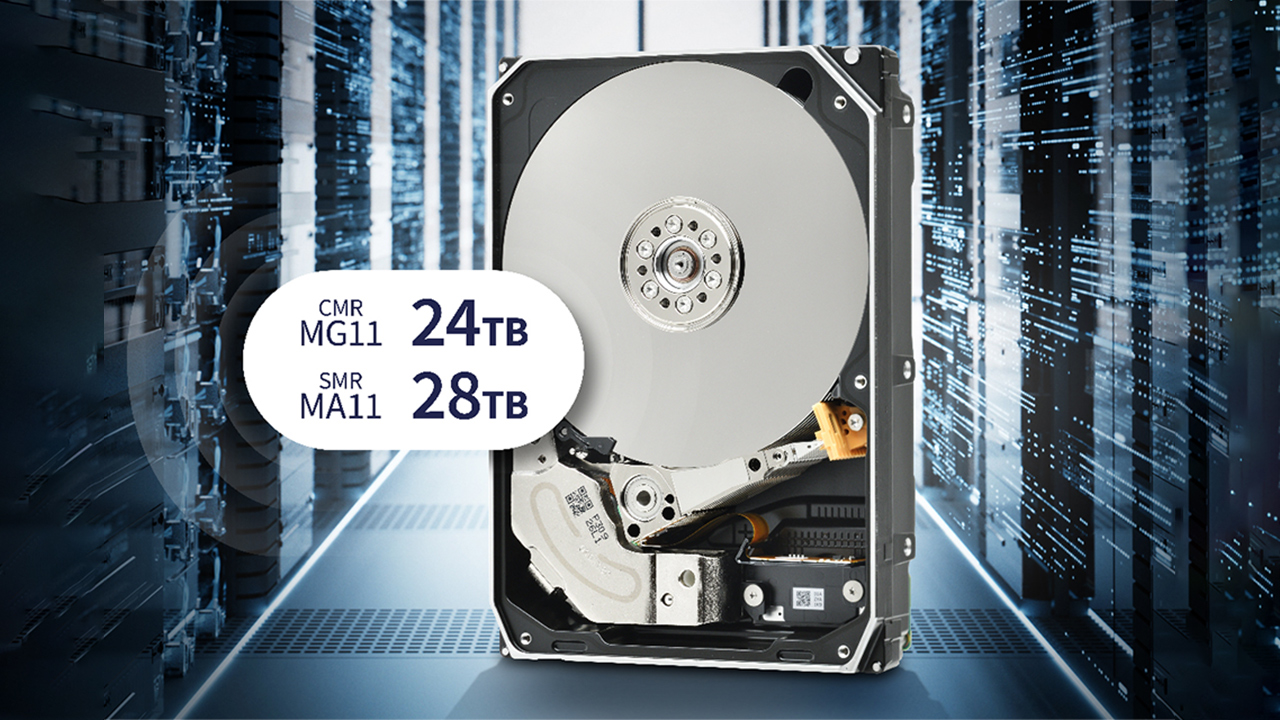
HDDs excel here. They offer the lowest cost per terabyte, high reliability for archival and nearline use, and massive capacities — Western Digital and competitors now ship 20–30TB+ drives routinely. Recent market dynamics have amplified this:
- HDD prices rose sharply in late 2025 and early 2026 due to tight supply and AI-driven orders.
- Lead times for nearline HDDs stretched beyond 50 weeks in some cases.
- SSD costs remain significantly higher — analyses show datacentre storage costs for SSD capacity were 16x higher than HDD in early 2026.
Western Digital has invested heavily in technologies like Heat-Assisted Magnetic Recording (HAMR) and Ultra Shingled Magnetic Recording (UltraSMR)Western Digital has invested heavily in technologies like Heat-Assisted Magnetic Recording (HAMR) and Ultra Shingled Magnetic Recording (UltraSMR) to push capacities higher while keeping costs down. Notably, the company successfully shipped over 3.5 million units of its high-capacity ePMR (energy-assisted perpendicular magnetic recording) drives this quarter, meeting the high-density storage needs of AI giants. Management repeatedly emphasised that AI data centres rely on a mix of flash for hot data and HDDs for everything else.”
WDC Stock Performance and 2026 Price Targets
As of January 30, 2026, WDC closed at $250.23, down about 10% on the day despite the earnings beat — a common reaction when guidance, while strong, may not have exceeded sky-high expectations. Yet the longer-term picture is bright. The stock had already quadrupled in 2025, reflecting earlier recovery and AI tailwinds.
Analysts have responded positively to the results. Recent updates include:
- Goldman Sachs: Maintained a neutral stance with a target of $220,
- Barclays: $325
- Wedbush: $325 (outperform)
- Morgan Stanley: $306
- J.P. Morgan: $320 (overweight)
Average targets cluster around $270–$300, implying 8–20% upside from current levels, with some bulls seeing 30%+ potential. Factors supporting optimism include margin expansion, free cash flow strength (over $650 million in Q2), and aggressive shareholder returns (over 100% of free cash flow returned via buybacks and dividends).
Mini Case Study: Hyperscalers’ Hybrid Storage Strategy
Consider a major cloud provider building AI infrastructure. In 2025–2026, such companies faced bottlenecks not just in GPUs but in storage capacity. Lead times for high-capacity HDDs ballooned, forcing hybrid deployments: SSDs for high-performance caching and HDDs for massive datasets used in model fine-tuning, inference logs, and backup.
One real-world parallel is seen in public comments from cloud giants and storage analysts. On its earnings call, Western Digital pointed to sustained data centre demand and rising uptake of high-capacity drives, aligning with reports that nearline HDDs represent roughly two-thirds of global unit shipments. unit shipments. HDDs in 2025, with further growth expected in 2026 as AI inference scales.
The economics are compelling: a hybrid SSD-HDD setup can reduce total cost of ownership by tens of per cent compared to SSD-only arrays, especially for exabyte-scale archives. Western Digital’s ability to ramp high-capacity products positions it well in this shift.
Global Trends Supporting Storage Growth
Authoritative forecasts paint a rosy picture for data storage demand. Gartner predicts worldwide AI spending will reach $2.52 trillion in 2026, a 44% year-over-year increase. This explosion requires underlying infrastructure, including storage.
Data creation itself is accelerating. Statista estimates global data generation will roughly triple between 2025 and 2029. IDC and others highlight that cloud-managed storage capacity will continue growing rapidly, with HDDs retaining a dominant share in cost-sensitive tiers.
The Federal Reserve and World Bank note steady global economic expansion, supporting enterprise IT investments. While inflation and geopolitical risks linger, the AI megatrend appears resilient.
Frequently Asked Questions
1. Why did WDC stock drop after a strong earnings beat?
Markets sometimes sell on the news if results were partially priced in or if guidance didn’t exceed lofty expectations. The 10% pull-back on January 30 is a byproduct of these conditions, yet long-term fundamentals remain exceptionally strong.
2. Will SSDs replace HDDs in AI data centres soon?
Not entirely. SSDs are faster but far more expensive per TB. Hybrid architectures are the norm, and HDDs are expected to handle the majority of capacity needs through at least 2027–2028.
3. What is the 2026 share price target for Western Digital?
Analyst consensus leans toward $270–$300, with bullish targets up to $335. This depends on sustained AI demand and execution.
4. How does AI affect hard drive prices?
Driven by robust demand, average prices surged 46% between September 2025 and January 2026, resulting in significant shortages of models 30TB and larger.
5. Is Western Digital a good investment in 2026?
Many analysts say yes, citing AI tailwinds and margin improvement. However, consider risks like cyclicality in storage and competition. Always do your own research.
Conclusion
Western Digital’s Q2 2026 earnings demonstrate that AI is not just a buzzword — it’s translating into real revenue and profit growth for storage leaders. With robust guidance, expanding margins, and strong analyst support, WDC looks well-positioned for continued momentum.
If you’re an investor interested in AI infrastructure plays, Western Digital deserves a closer look. Review the latest filings, track analyst updates, and consider your risk tolerance. What are your thoughts on WDC stock — opportunity or wait-and-see? Share in the comments below, and subscribe for more tech and investing insights.
Disclaimer: All content on Marqzy is for educational purposes only and is not financial advice. We are not SEBI-registered advisors. Investments carry risks; please consult a professional and perform your own due diligence before investing. Marqzy is not liable for any financial losses.