Table of Contents
Trump’s Greenland Tariffs – Is a 2026 Recession Actually Coming?
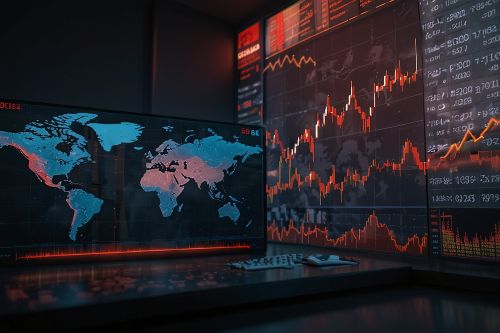
Let me just put this out there. If you were watching the markets on the morning of January 21, 2026, you probably thought the world was ending. European stocks were tanking. And I mean tanking. Everyone from taxi drivers to hedge fund guys was talking about the same weird thing: Greenland. Honestly, who would’ve guessed that a giant frozen rock in the Arctic would be the reason your BMW shares or LVMH stock suddenly looked like a rollercoaster ride?
I remember checking my own portfolio that day. Red everywhere.Messages coming in: “Did you see what Trump just did? It was like going back to March 2020, but with icebergs and politics replacing the virus.
That “Tariff Shock” Was No Joke
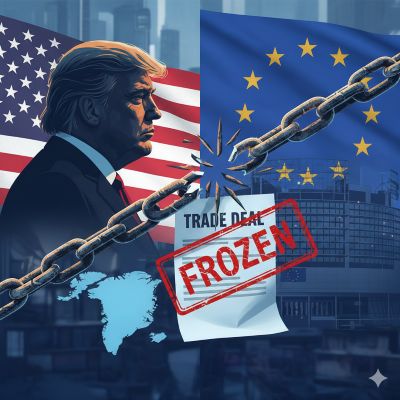
So here’s what happened. Trump – yeah, that Trump – was celebrating one year back in office. And he committed once more to an “America First” strategy. He threatened 10% tariffs on eight European countries: Germany, France, the UK, Italy, Spain, the Netherlands, Sweden, and Denmark. And get this – he said those tariffs would jump to 25% by June if Europe didn’t give in.
The reason? Because they wouldn’t let him buy Greenland. I know, it sounds like a bad Netflix script. But the market didn’t laugh. The STOXX 600 fell 1.2% in a single day. That might not sound huge, but for a broad European index, that’s a proper panic move. Suddenly, people started whispering “recession” like it was a when, not an if.
I talked to a trader friend in Frankfurt that afternoon. He said, and I quote: “We haven’t seen this kind of fear since the COVID crash.” That’s when you know it’s serious.
Why Greenland? The Crazy Geopolitical Backstory
Trump’s thing for Greenland isn’t new. He tried before, remember? Back in 2019, he floated the idea, and everyone laughed. But in early 2026, it became a full‑blown crisis. Why? Because the Arctic is melting – literally. New shipping routes are opening up. There are earth minerals, oil, gas, and military positioning against China and Russia. Trump sees the island as a national security treasure.
Denmark said no. Flat out. And Europe stood with Denmark. The Danish prime minister called it “absurd.” But Trump didn’t back down. He doubled down.
Then things got wild. Denmark actually sent elite combat soldiers to Greenland – not a huge number, but enough to send a message. France’s Macron started talking about something called the “Trade Bazooka.” Basically, Europe was ready to hit back with €93 billion in tariffs – on bourbon, on Harley-Davidson, on aircraft, on agricultural products. A proper standoff.
If you owned Volkswagen, BMW, Mercedes, or Kering shares that week, you watched your portfolio bleed 3–4% in just a few hours. Painful. I saw one guy on Twitter post a screenshot of his Porsche stock down 5% in a single morning. He just wrote: “Thanks, Greenland.”
The Davos U‑Turn – Talk About a Plot Twist
Right when everyone thought a trade war was unavoidable, Trump did what he does best: a massive pivot. He was at the World Economic Forum in Davos on the evening of January 21. And out of nowhere, he announced he was “suspending” the February 1 tariffs.
I swear you could almost hear the sigh of relief from European leaders all the way across the Atlantic. Trump claimed he’d reached a “framework for a future deal” with NATO on Arctic security. Did anyone actually see a deal? No. But markets don’t care about details – they care about “no tariffs for now.”
Markets bounced back fast. The S&P 500 jumped 1.2%. European indices recovered half their losses by the next morning. Some people called it a classic “Trump Always Chickens Out” moment – yeah, the TACO thing. Others said it was a negotiating tactic all along. But honestly? The tension is still there. Not gone.
The Economic Math – Are We Actually Safe?
Even with that “pause,” the damage to confidence was already done. Germany was already fragile after two rough years – high energy prices, slower Chinese demand, and now this. Fitch analysts estimated a 10% tariff could shave 0.5% off European GDP by 2027. If the full 25% had hit, growth would’ve taken a 1% hit – enough to push Germany and the UK into a clear, proper recession.
Let me put that in plain English. A 1% GDP hit doesn’t sound like much, but for a country like Germany that was already barely growing, that’s the difference between stagnation and contraction. And when Germany sneezes, the rest of Europe catches a cold.
The Trade Bazooka is back in the cupboard for now. But the IMF has warned that this kind of uncertainty is terrible for global growth. They’re still forecasting 3.3% for 2026, but they say if trade threats ever turn into real action, we could see a sharp slowdown. Think of the global economy like someone getting over a bad fever – upright, but one more jolt could knock them flat again.
What This Means for Your Money
If you hold European ETFs or stocks with heavy US exposure, expect bumps. The US‑Europe relationship is genuinely strained, tariffs or not. This isn’t going away after one Davos speech.
· Luxury brands (LVMH, Kering, Hermès): They’re caught between weak Chinese demand and US tariff threats. Chinese buyers aren’t spending like they used to. And if the US hits luxury goods with tariffs? Margins get crushed. It’s a compounding mess, honestly.
· Auto sector (BMW, Porsche, Mercedes, VW): German cars are always the first target when trade talks go south. Keep one eye on Truth Social and one on Davos news. Any hint of trouble and these stocks will drop like a rock.
· Gold: Hit record highs during the Greenland scare as a “safe haven.” I’m not saying go all in, but keeping a little gold in your back pocket? Still a smart move. When people get scared, they buy gold.
The Long View – A Fragile Peace
2026 is shaping up to be the year of “geopolitical finance.” It’s no longer just about interest rates or inflation. It’s about who’s fighting who over land, trade routes, and natural resources. The Greenland saga proved that even a “crazy” idea can move billions of dollars in a single day.
The IMF still sees growth holding up, but a full‑blown trade war is the ultimate black swan. If Trump thinks the Arctic security deal is moving too slowly, those tariffs could come back by summer. For now, we have a fragile peace. But as an investor? Don’t get comfortable. Not for a second.
Keep your portfolio diversified. Don’t bet the farm on European luxury or German autos alone. And maybe – just maybe – keep a little cash on the sidelines for the next “Greenland moment.” Because trust me, there will be a next one.
FAQ (Everything You Actually Need to Know)
Q: Did Trump really try to buy Greenland in 2026?
Yeah, honestly. He pushed hard after his second inauguration, even refusing to rule out military force before the Davos reversal. Denmark and the EU flat‑out rejected it, which led to the whole tariff standoff.
Q: What’s the “Trade Bazooka” everyone keeps talking about?
It’s the EU’s Anti‑Coercion Instrument. Basically, it lets Europe slap back with €93 billion in tariffs, block US companies from public contracts, and restrict access to the European market. It’s their ultimate weapon against geopolitical bullying.
Q: Will the 10% tariffs ever actually happen?
Not right now – they’re “suspended.” Trump and NATO are negotiating a new Arctic framework. If those talks fail, the threat returns. But the February 1 deadline is gone for now, so we’ve got a little breathing room.
Q: How bad would a recession be if the tariffs hit?
Pretty bad. Germany could’ve lost up to 1.8% of its growth, which likely would’ve triggered a full Eurozone recession. The Davos pivot saved us from that – at least for now.
Q: Is it safe to invest in European luxury stocks now?
They’re cheaper than they were, but still risky. Between US tariff threats and slow Chinese demand, these companies are in a tough spot. Diversify, diversify, diversify. Don’t put all your eggs in one luxury basket.
Q: Should I sell my European ETFs right now?
Not necessarily. But you should expect volatility. If you have a long‑term horizon, holding is fine. If you need the money in the next year, maybe trim a little. No one ever went broke taking profits.
Q: What’s the single biggest risk going forward?
That Trump gets impatient. If he thinks NATO is stalling on Arctic security, he could re‑impose tariffs overnight. That’s the black swan. No one can predict it, but you can prepare for it.
Note: This is for educational purposes only. Not financial advice. We are not SEBI-registered.