- AI Supercycle and Market Bubbles: Is 2026 the Boom or the Bust for Tech Investors?
- Key Points
- Introduction
- Understanding the AI Supercycle
- What Is an AI Supercycle?
- Navigating Tech Market Volatility in 2026
- What is the AI supercycle?
- Is the AI market in a bubble in 2026?
- How does generative AI ROI impact investors?
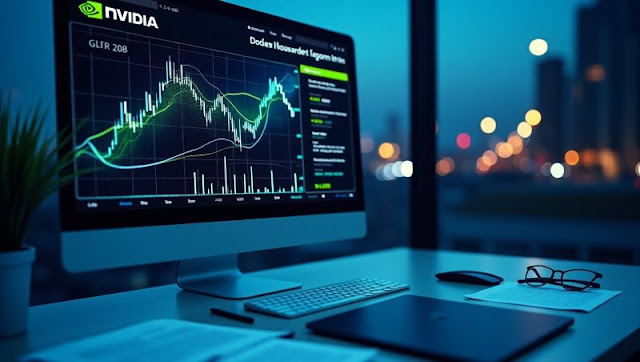
- What’s Nvidia’s valuation outlook for 2026?
- Why is the S&P 500 tech-heavy a risk?
- How is AI affecting global economies?
AI Supercycle and Market Bubbles: Is 2026 the Boom or the Bust for Tech Investors?
Key Points
- The AI supercycle is driving massive investments in tech infrastructure, but high valuations raise bubble concerns—investors should focus on sustainable ROI rather than hype.
- While NVIDIA has a plausible path toward a $7–8 trillion valuation by late 2026, growing volatility in the S&P 500’s tech segment could pressure sentiment, making portfolio diversification increasingly critical.
- Real-world examples like John Deere show AI integration boosting productivity, yet global trends from the IMF and World Bank warn of uneven economic impacts.
- Generative AI offers high potential returns, but over-reliance on tech could lead to market corrections—balance with emerging sectors for stability.
- While not a full bubble, 2026’s tech volatility demands careful monitoring; evidence leans toward a long-term supercycle if adoption accelerates.
Introduction
Picture this: it’s early 2026, and the world is buzzing with talk of artificial intelligence transforming everything from farming to finance. Headlines scream about trillion-dollar investments in data centres and AI chips, while stock markets soar on the promise of endless growth. But whispers of a bubble grow louder—could this be another dot-com crash in disguise? Welcome to the era of the AI supercycle, a term that’s become shorthand for the explosive wave of innovation and spending in tech. Even amid the excitement, worries remain that valuations are inflating faster than underlying fundamentals can justify.
The AI supercycle refers to a prolonged period of high investment and growth driven by AI technologies. It’s not just about chatbots or image generators; it’s a fundamental shift in how businesses operate, economies expand, and markets behave. Think of it like the industrial revolution, but with algorithms instead of steam engines. Analysts from firms like Goldman Sachs describe it as a “supercycle” because of the unprecedented scale—think $3 trillion in data centre investments by 2030, as per JLL’s 2026 Outlook Report. This isn’t hype; it’s backed by real demand. Companies are pouring money into AI to stay competitive, from improving supply chains to personalising customer experiences.
But here’s the hook: is this supercycle a golden opportunity or a ticking time bomb? Market bubbles happen when asset prices inflate far beyond their intrinsic value, often fuelled by speculation. In 2026, we’re seeing echoes of past bubbles—like the dot-com era of the late 1990s, where tech stocks ballooned before crashing in 2000. With tech nearing 34% of the index, AI-linked stocks have become the S&P 500’s dominant force, exceeding long-term averages. NVIDIA, a key player in AI chips, has seen its valuation soar, with predictions it could hit $7-8 trillion by year’s end.IMF research suggests that AI-led capital investment isoffsetting trade-related and wider macro pressures, supporting global growth close to 3.3% in 2026.
Let’s break it down: the supercycle is driven by generative AI—technology that creates new content, such as text or images, from data inputs. Its ROI—return on investment—is a hot topic. Businesses are seeing gains in efficiency; for instance, generative AI could add $4.4 trillion to global GDP annually, according to McKinsey. But critics argue the costs—massive energy use, data centres, and chips—are outpacing profits. Earnings Jolts Send Tech Stocks Swinging, Rocking the S&P 500. Remember the “Magnificent Seven” tech giants? Their dominance has pushed the index to new highs, but any stumble could ripple through markets.
In Germany, it’s called “KI Superzyklus”—AI supercycle—reflecting the same global frenzy. Terms like “Tech-Blasé 2026” (tech bubble 2026) and “Aktienblase Künstliche Intelligenz” (stock bubble artificial intelligence) capture the scepticism. Yet, evidence points to a supercycle, not a bubble. The World Bank’s Digital Progress and Trends Report 2025 emphasises “Small AI” solutions—affordable tools running on everyday devices—that are already boosting sectors like agriculture and health in developing countries. This isn’t speculative; it’s practical.
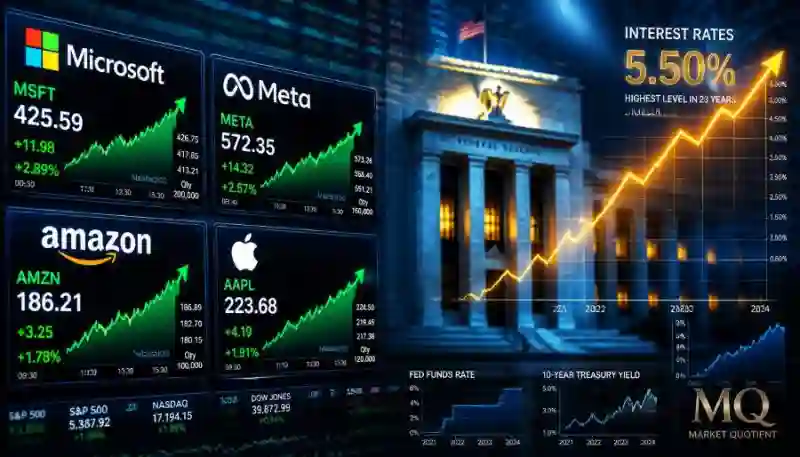
The Federal Reserve’s statements add nuance. In a 2026 speech, Vice Chair Michelle Bowman noted that AI supports economic activity amid labour market fragility. She highlighted productivity growth from AI adoption, but warned of equity price corrections if AI returns disappoint. According to IMF estimates, AI is expected to lift global growth by roughly 0.3% in 2026, helping absorb geopolitical risks.
So why the bubble fears? Valuations are stretched—Nvidia’s forward P/E of around 24 reflects rising expectations that may already price in years of success. Generative AI is delivering meaningful efficiency gains of 20–30% for some firms, but high integration costs continue to limit returns elsewhere. Heavy tech concentration means a sector pullback would quickly spill over into the S&P 500. Yet this cycle differs from past bubbles. AI adoption is translating into real-world productivity—John Deere’s use of AI in precision farming has cut herbicide use by nearly two-thirds, supporting operational gains and stronger stock performance.
As we dive deeper, remember: markets thrive on balance. The AI supercycle could redefine 2026, but ignoring bubble risks is foolish. Investors, tech enthusiasts—stay informed. This intro sets the stage; let’s explore the details.
Understanding the AI Supercycle
What Is an AI Supercycle?
An AI supercycle is like a long, powerful wave in the ocean of technology. It’s a phase where investments in AI surge, leading to rapid growth across industries. Unlike short-term trends, this cycle could last years, driven by breakthroughs in machine learning and data processing. In 2026, we’re seeing it play out with billions funnelled into AI infrastructure.
Take data centres: JLL forecasts $3 trillion in investments by 2030, growing at 14% annually. This isn’t random; it’s fuelled by demand for AI tools. Generative AI, which creates new content, is a star here. Its ROI can be huge—firms using it for customer service report 25% cost savings, per Deloitte stats.
But why “supercycle”? It’s super because it spans hardware (chips), software (algorithms), and applications (like chatbots). NVIDIA’s chips power this, with their valuation reflecting expected $320-330 billion in data centre revenue for 2026. At roughly 34%, tech’s weight has turned S&P 500 volatility into a proxy for tech volatility.
Europe is experiencing its own “KI Superzyklus,” as Germany’s AI-driven tech sector posts roughly 20% year-on-year growth. Practical tips? Investors, watch for companies with real AI integration, not
just buzzwords. Bullet points for spotting winners:
- Strong balance sheets to weather volatility.
- Proven ROI from AI projects.
- Diversified revenue beyond pure tech.
This cycle boosts economies, but bubbles lurk if hype overtakes reality.
Signs of Market Bubbles in Tech
Market bubbles form when prices rise unsustainably, often popping with a crash. In 2026, AI’s hype raises red flags. Tech-Blasé 2026—tech bubble 2026—captures fears of overvaluation.
Look at Nvidia’s valuation: stock at 24x forward earnings, cheap historically but risky if AI slows. Reuters notes investors hunting value beyond AI, as rally matures. S&P 500 tech-heavy dominance—34% weight—echoes dot-com concentration.
Generative AI ROI is mixed: promising a $100 billion HBM market by 2028, but high costs question sustainability. Oliver Wyman warns of bubble-burst scenarios: equity crash or debt-fueled hybrid.
Examples? The dot-com bubble saw valuations soar, then plummet. Today, AI investments like $3T data centres risk overbuild if demand falters. Practical tips: Monitor debt levels—rising private credit at $1.6T signals peril.
Bullet points on bubble signs:
- Rapid capital inflows without profits.
- Concentrated market gains ina few stocks.
- Hype over fundamentals.
Mini Case Study: John Deere’s AI Integration
John Deere, the farming giant, offers a perfect lens on how AI fits into the supercycle without bubbling over. Their stock performance ties directly to AI adoption, making it a real-world example amid 2026’s volatility.
John Deere’s AI journey began in 2017 with a $305 million acquisition of Blue River Technology. That investment led to See & Spray, an AI-powered system that detects weeds in real time and applies herbicides with pinpoint accuracy, cutting chemical use by roughly two-thirds. According to Deere’s disclosures, the technology helped farmers save about 8 million gallons of herbicide in 2024 alone. By 2025, revenue from precision agriculture climbed to roughly $3 billion, up about 20% year over year—highlighting how AI is translating into tangible operational and financial gains.
Stock-wise, Deere’s shares rose 50% post-AI push, per Barron’s. Analysts predict 2026 growth from AI, with targets of $500. Why? AI boosts ROI: farmers see 15-20% yield gains via data-driven decisions. Deere’s Operations Centre integrates AI for real-time insights, like predicting equipment failures.
Fed trends support this: Bowman noted AI aiding productivity in fragile markets. IMF’s 2026 outlook sees AI offsetting trade woes, vital for ag exports. World Bank’s Small AI trends fit Deere’s mobile tools, usable offline.
Challenges? High integration costs—$100,000+ for AI kits—but ROI pays off in 2-3 years. Example: Brazilian farmers ordered 1,500 kits in Q1 2025.
Deere avoids bubble pitfalls by focusing on tangible value. Unlike pure AI firms, it’s diversified. Investors: Consider Deere for stable AI exposure.
Navigating Tech Market Volatility in 2026
Tech market volatility is spiking in 2026, driven by AI hype. Per Seeking Alpha, technology still dominates roughly 31% of the S&P 500’s 2026 growth forecast, but signs of leadership broadening point to a rotation beyond mega-cap tech.
Aktienblase Künstliche Intelligenz (AI) — stock bubble—: Widerstände mount. Reuters sees earnings at 30% for tech vs 15.5% overall. Tips: Use stop-losses, diversify.
Generative AI ROI: McKinsey estimates $4.4T GDP added, but energy costs rise. Bullet points for managing:
- Track capex vs revenue.
- Invest in undervalued AI plays.
- Monitor Fed statements on volatility.
Conclusion
AI remains the central engine of the 2026 tech upswing, but elevated valuations leave markets vulnerable to sharp reversals. Real-world deployments and efficiency gains offer reassurance, aligning with macro forecasts that remain cautiously optimistic. The upside hinges on sustained adoption; if returns disappoint, volatility will follow.CTA: Subscribe for more insights on AI investments—don’t miss the next wave!
FAQs
What is the AI supercycle?
The AI supercycle is a long-term growth phase driven by AI investments, potentially adding trillions to GDP, as per McKinsey.
Is the AI market in a bubble in 2026?
Not fully—JLL sees a $3T supercycle, but high valuations like Nvidia’s raise concerns. It’s more innovation than speculation.
How does generative AI ROI impact investors?
It offers 20-30% efficiency gains but high costs; focus on proven applications for sustainable returns.
What’s Nvidia’s valuation outlook for 2026?
Predictions suggest $7-8T market cap, with shares at $330 midpoint, implying 70% upside.
Why is the S&P 500 tech-heavy a risk?
A 34% tech weighting amplifies market swings, while rotation into industrials could help stabilise performance.
How is AI affecting global economies?
World Bank highlights Small AI boosting developing sectors; Fed notes productivity gains amid labour fragility.
Disclaimer: All content on Marqzy is for educational purposes only and is not financial advice. We are not SEBI-registered advisors. Investments carry risks; please consult a professional and perform your own due diligence before investing. Marqzy is not liable for any financial losses.