- Key points
- Introduction
- What the India-EU FTA actually does (short explainer with keywords)
- Which Indian trade flows (the $11 billion) are most exposed?
- Mini case study — European carmakers vs Japanese and US automakers
- Who wins — and who loses?
- Winners
- Potential losers or at-risk groups
- Deep dive — facts, figures and the economic context
Key points
-
The India-EU Free Trade Agreement (FTA) drastically lowers tariffs and opens big parts of India’s market to EU firms.
-
Over $11 billion of India’s trade, currently supplied by Japan, the UK, and the US, will face stronger competition from EU exporters.
-
Big winners likely: European carmakers, premium wines & spirits, chemicals, and pharma. Big risks: non-EU exporters in protected product lines.
-
Global growth and trade context (IMF, World Bank) suggest room for exports to expand — but domestic politics and implementation timing will shape outcomes.
Introduction
Imagine walking into a shop where two very different price tags hang on the same shirt. One tag shows the price when the shirt is imported from the UK. The other shows the lower price if the shirt came from a nearby country that now pays much less duty. Shoppers would naturally pick the cheaper option. That is the basic effect the India-EU Free Trade Agreement (FTA) will have in many parts of the Indian market when it comes into effect in 2026–27.
After nearly two decades of talks, the India-EU pact is being called the “mother of all deals.” It cuts or removes duties on most goods by value, opens services and investment channels, and adds new rules for trade in technologies and standards. For India, the deal promises better access to a huge European market. For the EU, it opens a fast-growing market of more than a billion consumers. For many non-EU exporters — particularly firms from Japan, the UK and the United States — it suddenly raises the bar. Products they have supplied to India for years will now meet a fresh, often cheaper, competitor from Europe.
Why does this matter? Because trade is not only about goods moving across borders. It shapes investments, factory decisions, supply chains and even the types of products consumers see on shop shelves. A tariff cut of several dozen percentage points on cars or wine changes how companies price and where they sell. A new customs rule for textiles or chemicals can shift where manufacturers choose to source fibres and parts.
This post will explain how the India-EU FTA will reshape more than $11 billion of trade (the sum widely quoted in Indian business press as the immediate pool exposed to new EU competition), which sectors are most affected, who wins and who risks losing, and what Japan, the UK and the US should do to respond. We’ll use simple language and clear examples, including short practical tips for business readers and a mini case study to anchor the story in real company choices. We also flag credible international trends from organizations such as the IMF and the World Bank so that you can see the bigger picture.
What the India-EU FTA actually does (short explainer with keywords)
The core parts that matter for trade competition are these:
-
Tariff cuts on goods. The deal removes or cuts duties on a very large share of goods by value. That directly lowers the price of many EU exports to India.
-
Market access for services. European firms gain easier entry into finance, professional services and some digital activities in India.
-
Rules on auto parts, chemicals and standards. The deal includes phased tariff reductions for cars (industry headlines mention cuts from very high rates down to single digits over several years) and rules on parts and standards that help integrated manufacturers.
-
Safeguards and exclusions. Some sensitive agricultural items remain protected; quotas and special rules apply to a few sectors.
Why that matters for Japan, the UK and the US: Companies from these countries will now face EU exporters offering similar goods but often with lower duties or better market access. Where price or service access is the main buyer choice, EU suppliers may win market share quickly.
Which Indian trade flows (the $11 billion) are most exposed?
Journalists and trade analysts have pointed to roughly $11 billion of India’s annual imports and exports that will see immediate, direct competition from the EU. The most exposed product groups include:
-
Passenger cars and auto components — Europe’s premium carmakers and parts suppliers get phased reductions in India’s car duties, which matters a lot given India’s high car tariffs.
-
Wines and premium spirits — Tariff cuts make European wines and spirits cheaper in India relative to US or UK brands.
-
Chemicals and pharmaceuticals — Better EU market access and customs simplifications boost competitiveness for EU chemical and API makers.
-
High-value engineering and machinery — European machinery and precision engineering will find it easier to bid for Indian projects.
-
Textiles and apparel — The deal opens routes for Indian textiles into Europe, but also shapes competition for who supplies India with higher-quality inputs; EU textile machinery and premium fabric makers will be stronger players.
Moneycontrol and other business outlets calculated the immediate pool of goods at risk as exceeding $11 billion — a figure that captures the head-to-head exposure where EU suppliers will be meaningfully cheaper or more competitive.
Mini case study — European carmakers vs Japanese and US automakers
The issue: India’s car market has long been protected by very high import duties (up to ~110% for some fully built cars in earlier years). That made it hard for European premium brands to compete on price. The FTA phases down duties to single digits over several years for many cars and removes duties on parts. This changes the business case.
Example players: Mercedes-Benz / BMW (EU) versus Toyota / Honda (Japan) and Ford (US).
What could happen in plain terms:
-
With duties falling, Mercedes and BMW can price more competitively and sell more complete cars rather than fully-knocked-down kits. They may increase local investment (plants, sales networks) or simply import more finished cars to meet demand.
-
Japanese makers like Toyota and Honda have strong local manufacturing in India. Their edge is local supply chains and low price models. They will defend market share by emphasizing local content, expanding affordable EVs, and offering after-sales service advantages.
-
US brands that rely on exports into India or higher price tiers will face new competition from EU brands unless they lower prices, improve localisation or compete on technology and financing.
Business lesson: When a tariff falls, competition shifts from a price barrier to product, service and supply-chain performance. For non-EU brands, the practical responses include deeper local sourcing, faster model refreshes, competitive financing offers, or partnerships with Indian firms.
Who wins — and who loses?
Winners
-
EU exporters — obvious short-term winners in cars, wine, chemicals and machinery.
-
Indian exporters of textiles, gems and some engineering goods — the FTA opens EU markets for many Indian goods.
-
Consumers in India — lower prices and more choice for many products, notably premium items.
-
MSMEs that tie into export value chains — improved access can lift some clusters and jobs.
Potential losers or at-risk groups
-
Non-EU exporters (Japan, UK, US) in the exposed $11B+ categories. The CBAM Challenge: Despite the tariff removals, Indian exporters of steel and aluminum do not have a waiver from the EU’s Carbon Border Adjustment Mechanism (CBAM). This means Indian heavy industries must urgently adopt greener production methods to remain competitive in the European market,t despite the F.TA.
-
Domestic firms in India in the protected sectors cannot upgrade quality or cost base quickly.
-
Firms facing EU carbon rules (CBAM) without a clear plan may see added costs even as tariffs fall.
Deep dive — facts, figures and the economic context
(Short, clear bullet facts followed by an explanation)
-
Tariff cuts by value: The deal reduces or removes tariffs on roughly 96–99% of goods by value for the two sides over staged timetables. This is one of the broadest modern FTAs between a major trading bloc and a large developing economy.
-
Estimated duty savings: European firms could save roughly €4 billion per year in duties on goods sent to India, according to EU statements.
-
$11 billion at risk: Independent business reporting in India has identified more than $11 billion of trade where competition will intensify between EU suppliers and existing non-EU suppliers (Japan, UK, US).
-
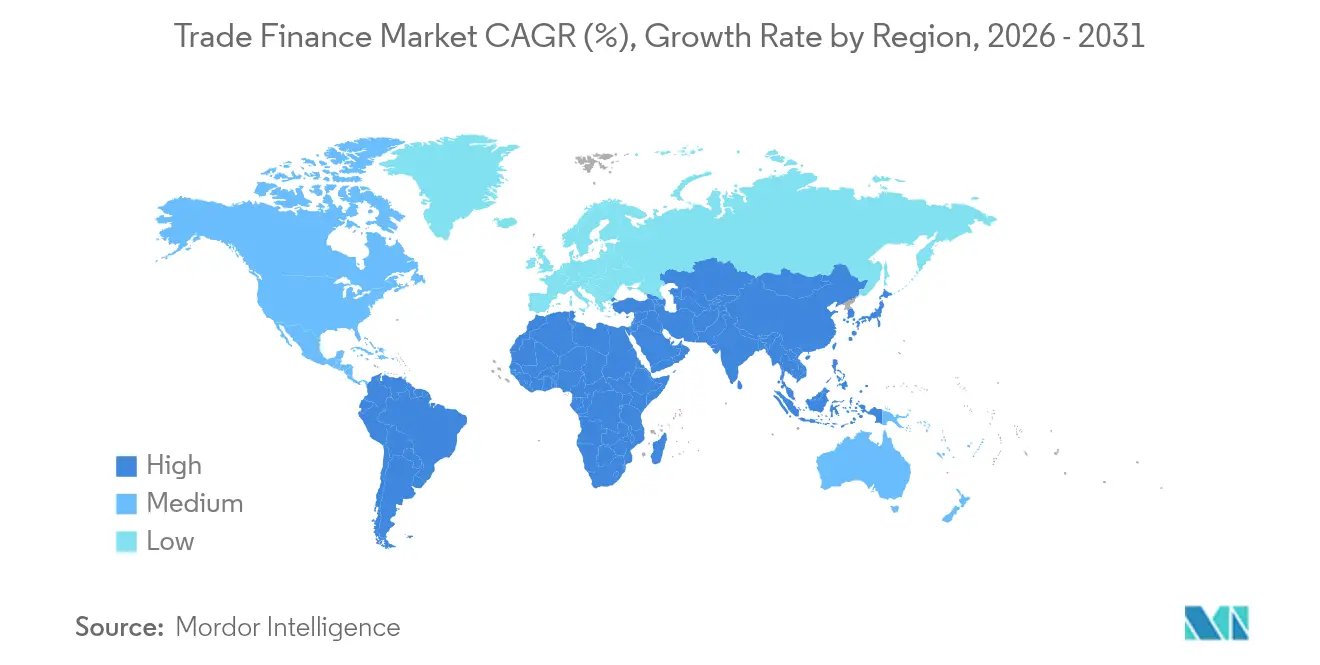
Region outlook: World Bank forecasts indicate growth in developing economies will remain solid, though with some moderation; trade policy shifts like this FTA can materially influence export trajectories in Asia.
-
The pressure is particularly intense for the United States and the United Kingdom. In the absence of their own finalized FTAs with India, UK exporters of aircraft parts and scrap metal, along with US suppliers of medical diagnostic equipment, are likely to lose ground to European firms who now enjoy lower entry costs.
What these numbers mean in practice:
Lower tariffs work like a price cut for imported goods. If a European car had a 100% tariff and the FTA brings that to 10% over five years, the effective landed cost falls sharply. Buyers who were previously priced out now become potential customers. For companies from Japan, the UK or the US that relied on tariff protection to maintain margins, this can mean a rapid squeeze.
At the macro level, the IMF and World Bank estimates show the world economy in 2026 is not collapsing — growth is steady. That helps structural trade shifts because demand exists to absorb new imports and exports. But the size of the prize depends on local Indian demand, tax and non-tariff rules, and the speed with which businesses reorganize supply chains.
Investor angle (brief): Markets will watch winners in EU manufacturing and Indian exporters who gain market access. Sectors such as autos, chemicals and premium consumer goods may see direct beneficiary flows — though implementation and ratification timing will influence near-term moves.
Sector The EU Advantage Risk to Japan/US/UK
Practical tips — how Japan, the UK and US firms can respond
-
Localize faster. Increase local sourcing and set up assembly lines or joint ventures in India to match landed costs.
-
Focus on service & finance. Offer better after-sales, longer warranties and competitive financing to keep buyers.
-
Shift to niche differentiation. Compete on product features, reliability or sustainability rather than price alone.
-
Collaborate with Indian partners. Partnerships can reduce market entry costs and speed regulatory clearances.
-
Lobby and adapt. Monitor safeguards, rules of origin and technical standards — use trade law tools if needed.
Policy and timing — what to watch next
-
Ratification and legal vetting. The deal must be legally vetted and ratified; full implementation timing will determine how fast market share shifts.
-
Quotas and safeguard clauses. Watch for temporary safeguards if rapid import surges hit domestic producers.
-
CBAM and carbon rules. EU carbon policies could add costs for some Indian exports unless managed.
Mini action plan for Indian exporters and policymakers
-
For exporters: Upgrade quality, secure EU certifications, and target tariff lines where reductions are most generous.
-
For policymakers: Support MSMEs to meet EU standards, invest in compliance help and consider transition assistance for vulnerable sectors.
Trending FAQs
When is the India–EU Free Trade Agreement expected to come into effect?
A: The deal requires legal checks and ratification. Officials have expressed hope for implementation within the calendar year after signing, but full rollout will be phased and depends on each side’s ratification process.
Q: Will this deal make European cars much cheaper in India immediately?
A: Tariff reductions are phased. Major cuts occur over several years, so price changes will be gradual. However, some premium models may become noticeably more competitive soon after key tariff steps take effect.
Q: Which Indian industries gain the most?
A: Textiles, gems and jewellery, chemicals, and engineering goods are seen as key winners from better EU access and lower tariffs.
Q: Does the FTA hurt US, UK and Japanese firms?
A: It raises competition for certain product lines worth more than $11 billion in India. Firms from those countries will need to adapt through localization, pricing, or differentiation.
Q: How does the IMF/World Bank view this deal?
A: IMF and World Bank outlooks show global growth in 2026 is steady, which helps trade. These institutions emphasize that trade agreements can boost growth if implemented transparently and paired with domestic reforms.
Conclusion
The India-EU FTA is a major trade shift for 2026. It opens large parts of India to European exporters and gives Indian firms stronger access to Europe. That change puts more than $11 billion of trade into a new contest where price, local presence and standards matter. Japan, the UK and the US are not powerless — strategic localization, better service and smarter partnerships will matter more than ever.
If you run a business that trades with India, now is the time to:
-
map which products you sell that face EU competition,
-
stress-test pricing and supply chains, and
-
plan for faster localization or partnerships.
Want help turning this into a practical plan for your company or blog? I can draft a one-page action checklist for your sector (autos, textiles or chemicals) with priority steps and timelines. Tell me which sector you want, and I’ll write it in simple, step-by-step form.
Disclaimer: All content on Marqzy is for educational purposes only and is not financial advice. We are not SEBI-registered advisors. Investments carry risks; please consult a professional and perform your own due diligence before investing. Marqzy is not liable for any financial losses.