Key Takeaways from the Greenland Tariff Crisis
- Research suggests the 2026 US-EU trade tensions, driven by tariffs over Greenland, could reduce European GDP by up to 0.5% by 2027, with Germany facing the heaviest losses due to its export reliance.
- Auto industry tariffs will likely exacerbate European stock market volatility, as seen in BMW’s shares dropping over 4% amid fears of reduced US market access.
- Growing signs suggest broader global trade disruptions, as the International Monetary Fund warns that rising tariffs risk a “dangerous downward spiral” in transatlantic ties, potentially undermining NATO alliances.
Overview of the Crisis
The “Greenland Tariff” crisis erupted in January 2026 when US President Donald Trump announced escalating tariffs on eight European countries to pressure Denmark into selling Greenland. Grounded in national security arguments and Arctic resource control, the policy sets an initial 10% tariff from February 1, escalating to 25% by June, absent a negotiated deal. This has sparked fears of a full-blown US-EU trade war, echoing past tensions but heightened by the country’s geopolitical stakes.
Economic Impacts
Tariffs threaten key sectors like autos and luxury goods. European exporters to the US, valued at over $500 billion annually, face higher costs, potentially passed to consumers. The Federal Reserve has noted that increased market uncertainty could delay rate cuts, while the World Bank highlights risks to global supply chains.
Sector Spotlight: Auto Industry
German automakers such as BMW remain particularly exposed, with the U.S. contributing roughly 20–26% of revenues. Shares dropped sharply after the announcement, highlighting sensitivity to tariff risks, while analysts warn of a potential 2–3% drag on earnings if tariffs persist.
For more details, see the comprehensive survey below. Supporting sources: IMF on trade tensions, World Bank statement.
Deep Dive: The Greenland Tariff Crisis and What It Means for Global Trade
In 2026, global geopolitics has entered a renewed phase of tension, with the so-called “Greenland Tariff” crisis emerging as a central flashpoint. What started as Donald Trump’s revived push to acquire Greenland—a mineral-rich Arctic territory under Danish sovereignty—has since spiraled into a broader trade confrontation between the United States and the European Union. This standoff not only highlights strained US-Europe trade relations but also underscores broader implications for global economic stability, stock market volatility, and specific industries like autos. Drawing on recent developments, economic forecasts from institutions like the IMF and World Bank, and market data, this report delves into the origins, impacts, and potential trajectories of the crisis.
How Trump’s Greenland Policy Triggered Escalating Tariff Threats
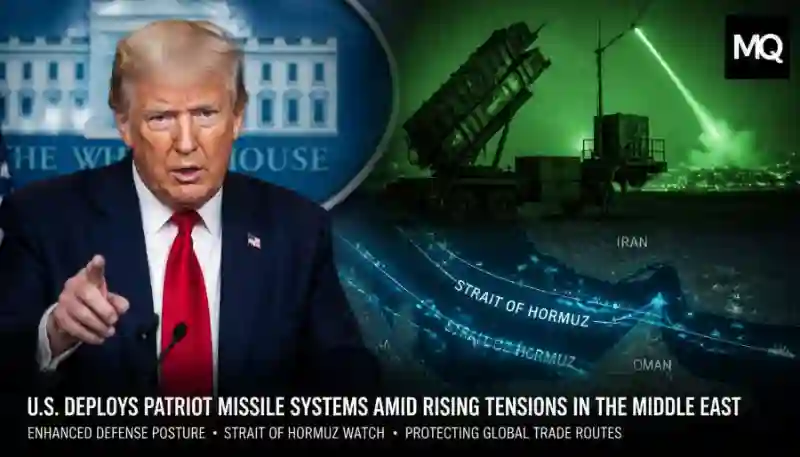
President Donald Trump’s interest in Greenland dates back to 2019, but it sharpened considerably in 2026 amid rising concerns over Arctic security and intensifying competition with China and Russia. On January 17, 2026, Donald Trump said the United States would introduce a 10% import tariff on eight European countries via a Truth Social announcement. Germany, the UK, the Netherlands, and Finland, starting February 1, with rates climbing to 25% by June 1 unless talks concluded with the “complete and total purchase” of Greenland. He framed the move as vital to U.S. national security, pointing to Greenland’s strategic Arctic position and its untapped resources, including rare earth minerals crucial for technology and defense.
The policy represents an extraordinary use of trade measures to advance territorial ambitions—an approach without precedent in modern United States foreign policy. Labeling the policy “blackmail,” European leaders reacted forcefully, as German Chancellor Friedrich Merz pledged collective action and French President Emmanuel Macron pushed for deployment of the European Union’s anti-coercion instrument. mechanism—often dubbed the bloc’s trade “bazooka.” The standoff has already triggered emergency EU meetings and raised fears of an existential crisis for NATO, as the tariffs directly target allies involved in joint Arctic military exercises.
Realistic trends from global institutions paint a grim picture. The IMF has warned that such tariffs could trigger a “dangerous downward spiral” in transatlantic ties, estimating a 0.5% hit to European GDP by 2027 if unresolved. Similarly, the World Bank highlights risks to global supply chains, projecting inflation spikes in affected sectors due to disrupted trade flows. The Federal Reserve, in its latest minutes, noted heightened uncertainty could delay monetary easing, as tariff-induced volatility weighs on US consumer confidence.
Impact on European Stock Market Volatility
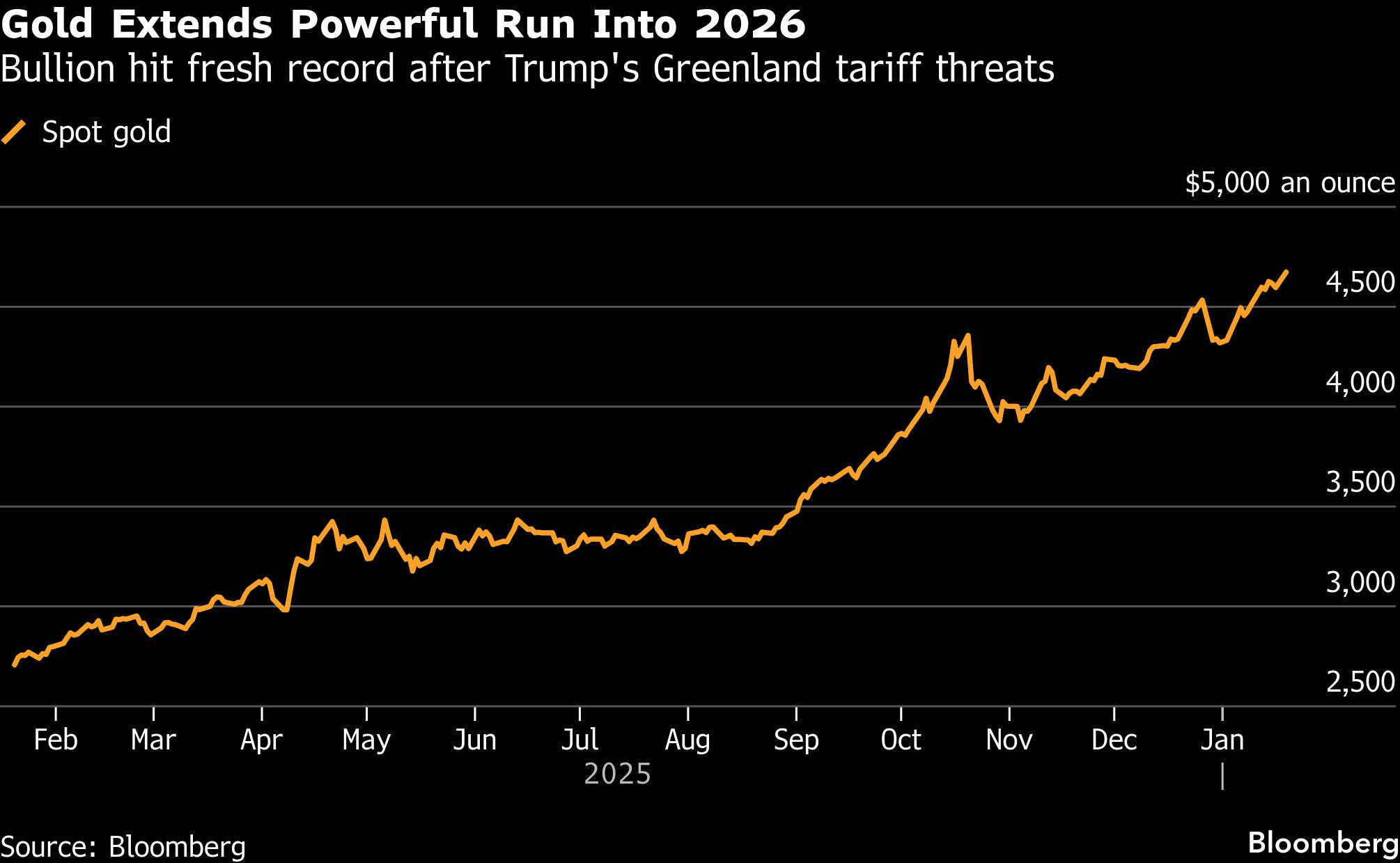
European markets slid after the announcement, with the Stoxx Europe 600 Index sinking more than 1% in its worst day in two months amid a pullback from riskier sectors. Trade-sensitive stocks like autos and luxury goods led the selloff, reflecting fears of reduced US market access. Gold and silver surged to records, with gold topping $4,660 an ounce, as safe-haven demand spiked amid the dollar’s weakening.
Volatility is expected to persist, with Fitch Ratings warning that tariffs raise transatlantic risks, potentially weakening NATO credibility and accelerating European defense spending. J.P. Morgan analysts estimate a 2-3% drag on European earnings-per-share growth, exacerbating existing pressures from inflation and geopolitical tensions.
Here’s a table summarizing recent market reactions:
| Sector/Asset | Pre-Announcement Level (Jan 16, 2026) | Post-Announcement Change (Jan 19, 2026) | Key Driver |
|---|---|---|---|
| The Stoxx Europe 600 Index fell about | ~520 | -1.15% (to ~514) | Tariff fears on exports |
| Auto Stocks (e.g., BMW) | €95/share | -4.1% (to €91) | US market exposure |
| Luxury Goods (e.g., LVMH) | €650/share | -3.9% (to €625) | Reduced US consumer demand |
| Gold | $4,597/oz | +1.68% (to $4,674) | Safe-haven buying |
| US Dollar Index | 105.2 | -0.5% (to 104.7) | Trade war risks |
This data illustrates the immediate flight to safety, with hard assets like gold benefiting while equities suffer.
Auto Industry Tariffs: Challenges and Practical Tips
The auto sector is particularly vulnerable, with machinery and vehicles comprising a significant portion of EU-US trade. Tariffs could add $1-3,000 per vehicle, per J.P. Morgan estimates, squeezing margins already thin from EV transitions and supply chain disruptions. In 2025, despite tariffs, US vehicle sales rose 2.4% to 16.2 million, but 2026 projections show a potential 800,000-unit drop if escalations continue.
Practical tips for auto firms:
- Diversify Supply Chains: Shift production to non-tariffed regions like Southeast Asia to mitigate costs.
- Leverage USMCA Renegotiations: Advocate for exemptions during 2026 talks to protect North American operations.
- Invest in Localization: Boost US manufacturing, as BMW has with its Spartanburg plant, to avoid import duties.
- Monitor Compliance: Use tools like AI-driven valuation for accurate tariff assessments.
Mini Case Study: BMW Stock Price Analysis Amid Tariffs
BMW, a German auto giant, exemplifies the crisis’s toll. With the US comprising ~20% of revenues, BMW’s shares plunged 4.1-6.7% post-announcement, hitting a 52-week low. Analysts at Morgan Stanley project a 2-3% EPS drag, compounded by existing 25% tariffs on parts. In 2025, BMW sold over 374,000 US vehicles, but tariffs could erode this by raising prices by $2,500-3,000 per unit.
Historical parallels: During Trump’s first-term tariffs, BMW’s stock volatility spiked 15%, but diversification helped recovery. For 2026, if tariffs hold, BMW may accelerate EV localization in the US to offset losses, per CEO Oliver Zipse’s calls for swift EU-US trade ratification.
Table: BMW Performance Metrics
| Metric | 2025 Value | Projected 2026 Impact (with Tariffs) | Mitigation Strategy |
|---|---|---|---|
| US Sales | 374,000 units | -10-15% decline | Increase Spartanburg output |
| Revenue from the US | ~€20B | 2-3% EPS reduction | Supply chain diversification |
| Stock Volatility | 12% avg. | +15-20% | Lobby for exemptions |
| Tariff Cost | $1.1B est. | +$500M | EV incentives push |
This case underscores how tariffs amplify sector vulnerabilities, urging adaptive strategies.
US-Europe Trade Relations: Broader Geopolitical Ramifications
The crisis strains US-Europe ties, with Europe considering €93 billion in retaliatory tariffs. NATO’s future hangs in the balance, as Trump’s tactics risk alliance fractures. The IMF cautions against protectionism, projecting global growth slowdowns if tensions persist.
Suggested internal links: Understanding USMCA Renegotiations, EV Market Shifts Post-Tariffs, Arctic Resource Wars.
Expanded FAQs: Trending Questions on the Crisis
What triggered the 2026 Greenland Tariff crisis? Trump’s push for US control of Greenland for security and resources led to tariffs on opposing EU nations.
How will tariffs affect everyday consumers? Expect higher prices for imported goods like cars (up $2,500-3,000) and luxury items, per J.P. Morgan.
Is a US-EU trade war inevitable? Not necessarily; diplomacy at Davos could de-escalate, but the IMF warns of GDP hits if not.
What does this mean for BMW investors? Short-term volatility likely; long-term, focus on US production ramps to hedge tariffs.
Could tariffs impact global inflation? Yes, the Federal Reserve notes potential delays in rate cuts due to uncertainty.
How might Greenlanders be affected? Protests highlight sovereignty fears; economic isolation could follow if annexed.
Conclusion
The Greenland Tariff crisis encapsulates 2026’s volatile geopolitics, blending trade warfare with territorial ambitions. While tariffs aim to secure US interests, they risk economic fallout, market instability, and alliance strains. As the IMF and World Bank emphasize, de-escalation through dialogue is crucial to avert broader disruptions. For businesses, adaptability—via diversification and advocacy—will be key.
Call to Action: Stay informed on evolving trade dynamics—subscribe to our newsletter for weekly updates and expert insights.