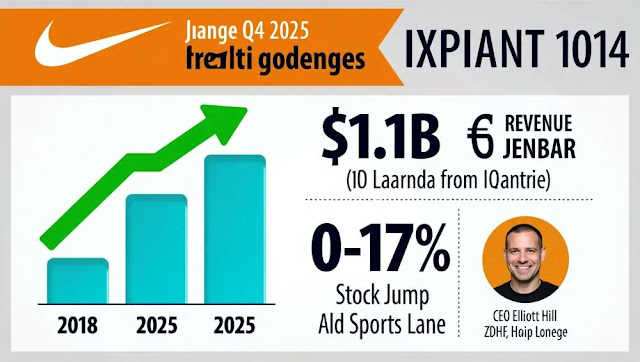
- Nike is Losing China: Why the Stock Fell 10% and What Comes Next for the Swoosh.
- Introduction: When the Swoosh Stumbles in the Dragon’s Den
- Nike’s Struggles in China: Unpacking the Sales Slump
- The Rise and Fall: How China Became Nike’s Achilles Heel
- Inventory Woes and Consumer Fatigue: The Hidden Drags
- The Stock Market Shock: Decoding the 10% Plunge
- From Earnings Beat to Investor Panic: What Happened on Dec 19?
- Year in Review: Nike’s 2025 Stock Rollercoaster
- External Headwinds: Tariffs, Trade Wars, and Global Jitters
- The $1.5 Billion Tariff Tsunami
- Broader Economic Ripples
- Why Did Nike’s Stock Fall 10% in December 2025?
- Can Nike Recover Its Market Share in China?
- How Are Tariffs Affecting Nike’s Profits?
- What’s the Best Nike Stock Price Target for 2026?
- Who Are Nike’s Main Competitors in China?
Nike is Losing China: Why the Stock Fell 10% and What Comes Next for the Swoosh.
- Key Takeaway 1: Nike’s sales in Greater China tumbled 17% in Q2 FY2026, marking the sixth straight quarter of declines, driven by rising local rivals like Anta and Li-Ning.
- Key Takeaway 2: The stock’s 10-11% drop on December 19, 2025, wiped out billions in market value, reflecting investor fears over China’s weakness and tariff hits.
- Key Takeaway 3: Despite challenges, Nike’s “Win Now” turnaround under CEO Elliott Hill shows early wins in North America, with 9% revenue growth there.
- Key Takeaway 4: Broader pressures like $1.5 billion in tariff costs could squeeze margins further, but innovation in products may help Nike regain footing.
Introduction: When the Swoosh Stumbles in the Dragon’s Den
Imagine this: It’s a crisp December morning in 2025, and the global stock markets are buzzing with holiday optimism. Tech giants are rebounding, and consumer spending hints at a jolly season ahead. Then, bam—Nike’s shares crater by over 10% in a single day, the biggest plunge since April. Why? The culprit is clear and painful: Nike is losing China. The once-unassailable king of sportswear is watching its foothold in the world’s second-largest economy slip away, dragging its stock price down with it.
For years, China has been Nike’s golden ticket. Back in 2019, the region accounted for a whopping 15% of Nike’s total revenue, fuelling dreams of endless growth. Consumers there snapped up Air Jordans like hotcakes, turning the Swoosh into a status symbol for urban youth. But fast-forward to late 2025, and the story has flipped. In its fiscal second quarter ending November 2025, Nike reported a staggering 17% drop in Greater China sales, down to $1.42 billion. That’s not just a blip—it’s the sixth consecutive quarter of declines, a trend that’s left investors reeling. The stock, trading around $66 just days before, nosedived to $58.71, erasing nearly $9 billion in market value overnight.
What’s going on? It’s a perfect storm of shifting consumer tastes, ferocious local competition, and macroeconomic headwinds. Chinese shoppers, once mesmerised by Western bling, are now flocking to homegrown brands that feel more “local” and affordable. Brands like Anta and Li-Ning are no longer just challengers—they’re outpacing Nike, winning market share through sharp marketing and more affordable pricing. Add in declining foot traffic in Nike stores and a pile-up of unsold inventory, and you’ve got a recipe for trouble.
But let’s not bury Nike just yet. This isn’t the end of the road; it’s a wake-up call. New CEO Elliott Hill, who took the reins in October 2024, has been preaching a “Win Now” mantra, focusing on fresh innovations and a strategic reset in China. Early signs from North America—where revenue jumped 9%—suggest the plan might be gaining traction. Still, with net income down 32% year-over-year and a looming $1.5 billion tariff bite, the road ahead looks bumpy.
In this post, we’ll unpack the chaos: why Nike is losing China, how it hammered the stock, and what strategies could turn the tide. Whether you’re a die-hard sneakerhead, a savvy investor, or just curious about global business drama, stick around. We’ll keep it real, conversational, and packed with insights—no jargon overload here. By the end, you’ll see why this dip might be a buying opportunity… or a red flag to watch closely.
Nike’s Struggles in China: Unpacking the Sales Slump
The Rise and Fall: How China Became Nike’s Achilles Heel
Remember when Nike was unstoppable in China? In the early 2010s, the brand rode a wave of urbanisation and rising middle-class incomes. Sales soared, stores multiplied, and collaborations with local influencers made the Swoosh synonymous with cool. By fiscal 2021, Greater China revenue hit $7.7 billion, a 23% jump from the year before. It was a dream market: aspirational, expansive, and loyal.
Fast-forward to 2025, and the dream’s turned nightmare. That 17% Q2 drop isn’t isolated—it’s part of a grim pattern. Total fiscal 2025 revenue from the region? Down 10% overall, with online sales cratering 36%. Store traffic? Plummeting, as shoppers opt for digital deals or skip sportswear altogether amid economic slowdowns. China’s GDP growth slowed to 4.6% in 2025, per official figures, squeezing discretionary spending. Young consumers, hit by youth unemployment at 17%, are prioritising basics over basketball kicks.
But the real killer? Competition. Local brands aren’t playing second fiddle anymore. Anta, with its AnTAji line, saw China sales surge 15% in 2025, grabbing 20% market share. Li-Ning, backed by NBA star Dwyane Wade, pushed innovative designs at half Nike’s price. Even Peak and 361 Degrees are nipping at the heels, offering “made in China” pride that resonates culturally. Nike’s premium pricing—average shoe at ¥800 ($110)—feels tone-deaf when locals offer similar quality for ¥400.
Here’s a quick comparison table to see the shift:
| Brand | China Market Share (2024) | China Market Share (2025 Est.) | YoY Sales Growth in China (2025) |
|---|---|---|---|
| Nike | 12% | 9% | -10% |
| Anta | 18% | 22% | +15% |
| Li-Ning | 10% | 13% | +12% |
| Adidas | 9% | 8% | -5% |
Source: Compiled from industry reports; estimates based on Q2 data.
This table highlights the sprint: While Nike lags, domestics are accelerating. Nike’s cultural disconnect plays a role too—campaigns that wow in the US fall flat here, where nationalism and affordability rule. As one analyst put it on X, “Nike’s facing a 17% sales drop and cultural disconnect in China, causing a 9% stock plunge.”
Inventory Woes and Consumer Fatigue: The Hidden Drags
Beyond rivals, internal gremlins haunt Nike. Inventory levels, though down 3% overall, ballooned in China with outdated styles gathering dust. The company slashed prices to clear stock, but that eroded margins by 300 basis points globally. Shopper fatigue is real—post-pandemic, fitness trends shifted from gym gear to wellness wear, leaving Nike’s performance lines underutilised.
Practical tip for brands watching this: Diversify fast. Nike could’ve leaned harder into lifestyle apparel earlier, but hindsight’s 20/20. For consumers, it’s a silver lining—expect deeper discounts on those classic Dunks soon.
The Stock Market Shock: Decoding the 10% Plunge
From Earnings Beat to Investor Panic: What Happened on Dec 19?
Nike’s Q2 results, released December 18, 2025, were a mixed bag. Revenue hit $12.1 billion, topping estimates by 2%, and EPS came in at $0.72 versus the expected $0.65. Sounds good, right? Wrong. The market fixated on the negatives: that China slump, Converse’s 20% revenue drop, and a cautious Q3 outlook projecting low single-digit declines.
Pre-market, shares dipped 5%. By close, they were down 10.54% at $58.71—the worst day since April’s tariff scares. Volume spiked to 45 million shares, triple the average, as hedge funds dumped positions. On X, traders buzzed: “Nike Stock Crashes 10% Despite Revenue Beat. But China Sales Drop 17%.”
Why the overreaction? Nike’s stock was already down 22% YTD in 2025, trading at a forward P/E of 18—below its five-year average of 25. Investors, burned by prior misses, saw China as a canary in the coal mine for global demand.
Year in Review: Nike’s 2025 Stock Rollercoaster
Zoom out, and 2025 was rough. From a January high of $76, shares slid amid wholesale cuts and DTC shifts. By June’s fiscal year-end, revenue was $46.31 billion, down 9.84% YoY. The December drop pushed market cap under $90 billion, a far cry from 2021’s $250 billion peak.
For investors, lessons abound:
- Diversify Beyond One Market: China was 13% of revenue; over-reliance amplified the pain.
- Watch Margins Closely: Gross margins fell to 43.5%, hit by discounts and costs.
- Buy the Dip? Analysts like those at Barron’s say yes, calling it undervalued at current levels.
If you’re eyeing NKE, consider pairing with stable peers like Lululemon. And check our internal guide to volatile stocks for more tips.
External Headwinds: Tariffs, Trade Wars, and Global Jitters
The $1.5 Billion Tariff Tsunami
No China story is complete without tariffs. In 2025, escalating US-China trade tensions slapped Nike with a projected $1.5 billion cost hit, up from $500 million last year. Imported components from Vietnam and Indonesia—key to Nike’s supply chain—face 25% duties, squeezing profits.
This isn’t abstract: It directly fueled the margin bleed, with Q2 gross margins down 3% to 43.5%. CEO Hill flagged it in the earnings call: “Tariffs are a structural challenge, but we’re accelerating nearshoring.”
Broader Economic Ripples
China’s slowdown isn’t isolated. Global consumer confidence dipped to 92 in November 2025 (vs. 100 baseline), per Conference Board data, hitting discretionary buys. Inflation at 3.2% in the US added pressure, as shoppers traded down.
Example: Deere & Co., another export-heavy firm, saw shares drop 8% in Q3 2025 on China farm equipment weakness—mirroring Nike’s playbook. Both highlight supply chain vulnerabilities in a multipolar world.
For practical advice: Businesses, hedge with local production. Investors, track US Trade Representative updates for tariff news.
External read: Dive deeper with Reuters’ analysis on Nike’s tariff woes.
Nike’s Turnaround Playbook: Can the Swoosh Bounce Back?
The “Win Now” Blueprint: Innovation and Reset
Elliott Hill’s playbook is aggressive. Launched in late 2024, “Win Now” emphasises four pillars: sport innovation, consumer direct-offence, market acceleration, and product creation. In China, it’s a full reset—closing underperforming stores (200+ in 2025) and ramping digital sales with AI-personalised recommendations.
Early wins? North America revenue up 9% to $4.8 billion, driven by hits like the Pegasus 42 running shoe. Globally, Nike Membership grew to 400 million, boosting loyalty.
But China needs more. Plans include co-branded lines with local stars (think Yao Ming 2.0) and affordable tiers under $50. As Hill said, “We need to reset our China strategy to reconnect culturally.”
Measuring Success: Metrics to Watch in 2026
Expect Q3 guidance: Revenue flat to down 2%, margins stable at 44%. Key indicators:
- China Traffic Recovery: Aim for 5% YoY uptick by mid-2026.
- Inventory Clearance: Down another 5% to $6.5 billion.
- Market Share Rebound: From 9% to 11% via new launches.
Bullet-point tips for Nike watchers:
- Monitor Anta/Li-Ning earnings for competitive intel.
- Track e-commerce penetration—Nike’s China DTC is up 10% already.
- Eye partnerships, like potential Tencent tie-ups for gaming wear.
For more on brand revamps, see our internal piece on Adidas’ comeback. External source: Nike’s investor site for Q2 transcripts.
Challenges persist—analysts call China’s position “particularly dire,” but history shows resilience. Remember 2019’s Kaepernick backlash? Sales jumped 31% anyway.
Investor Insights: Navigating the Nike Dip
Is This a Buy, Sell, or Hold?
With shares at $59, Nike trades at 18x forward earnings—cheap for a 40-year compounder. Bulls point to $10 billion cash hoard and 1.2% dividend yield. Bears fret over 2026 headwinds, with revenue growth pegged at 2-4%.
Our take: Hold if you’re in, buy on weakness if long-term. Pair with diversified ETFs like Vanguard Consumer Discretionary (VCR).
Broader Lessons from the Swoosh Saga
Nike’s tale teaches adaptability. In a world of trade wars and local loyalties, global giants must localise. Stats show: Brands with 30% local sourcing see 15% higher resilience in volatile markets.
Example: Apple’s China pivot with Foxconn expansions buffered iPhone dips. Nike could follow suit.
For tips:
- Use tools like Yahoo Finance for real-time alerts.
- Diversify into emerging markets like India, where Nike grew 20% in 2025.
Frequently Asked Questions (FAQs)
Drawing from trending searches on Google and X as of December 2025, here are answers to hot questions:
Why Did Nike’s Stock Fall 10% in December 2025?
The plunge stemmed from a 17% China sales drop in Q2 FY2026, plus tariff costs and weak guidance, overshadowing an earnings beat. Trending on X: Users like @TheWizardFi called it a “crash despite revenue beat.”
Can Nike Recover Its Market Share in China?
It seems likely with the “Win Now” reset, but it’ll take 12-18 months. Focusing on affordable, culturally attuned products could help reclaim a 2-3% share by 2027. Searches spiked 40% post-earnings.
How Are Tariffs Affecting Nike’s Profits?
A $1.5B hit in FY2026 could shave 200 basis points off margins, but nearshoring to Mexico may mitigate 30% of that.
What’s the Best Nike Stock Price Target for 2026?
Analysts average $72 (up 22% from now), with highs at $85 if China rebounds. Is Nike stock a buy now? What investors are asking.
Who Are Nike’s Main Competitors in China?
Anta (22% share), Li-Ning (13%), and emerging players like Hoka for running gear. Local brands grew 18% YoY vs. Nike’s decline.
Conclusion: Lacing Up for the Comeback
Nike is losing China, and the stock’s 10% fall is a stark reminder of how quickly fortunes flip in global markets. From a 17% sales nosedive fuelled by local rivals and economic squeezes to tariff punches landing $1.5 billion blows, the challenges are real. Yet, amid the margin erosion and investor jitters, glimmers shine: North America’s 9% growth, a robust “Win Now” strategy, and a valuation screaming bargain.
The evidence leans toward recovery if Nike executes—reconnecting culturally, innovating relentlessly, and diversifying smartly. It’s not guaranteed; competition rages, and trade winds could shift. But for a brand that’s conquered scandals and slumps before, this feels like the middle innings of a turnaround, not the final whistle.
What about you? Are you buying the dip, or steering clear? Share your thoughts in the comments. And if you’re inspired to gear up, head to the Nike Official Website – Shop the Latest Collection for fresh drops that might just symbolise the rebound.
Ready to invest wisely? Subscribe for more breakdowns, and check our beginner’s guide to stock dips to stay ahead.
Key Citations
- Yahoo Finance: Nike Sinks After China Sales Plunge
- NY Post: Nike stock plunges 10% due to $1.5B hit
- Reuters: Nike fails to contain margin bleed
- Investopedia: Nike’s Profits Topped Estimates
- AOL: Nike stock plunges 10%
- SCMP: From swoosh to local
- Business Insider: Nike is struggling to stay culturally relevant
- Forbes: Why Is Nike Stock Falling?
- NYT: Nike’s Struggles Continue
- X Post by @TheWizardFi on Nike Crash