Carnival Earnings Beat Sparks Cruise Rally
- Carnival Earnings Beat: A Breath of Fresh Air for Cruise Stocks in 2025
- Key Takeaways
- Why Carnival’s Earnings Beat Came at the Perfect Time for Investors
- Breaking Down the Numbers: EPS, Revenues, and Yields That Shocked the Street
- The Dividend Drumbeat: Signalling Stability in Choppy Waters
- Cruise Industry Trends Fuelled by Post-Pandemic Pent-Up Demand
- Demand Surge: From Lockdown Blues to Berth Mania
- Cost Controls and Efficiency: The Unsung Heroes of the Beat
- Peer Performance Snapshot
- What was Carnival’s Q4 2025 EPS, and did it beat estimates?
- Why did cruise stocks rally after Carnival’s earnings?
- Is the cruise industry fully recovered from COVID?
- What’s Carnival’s dividend yield now?
- How does Carnival’s 2026 outlook look?
Carnival Earnings Beat: A Breath of Fresh Air for Cruise Stocks in 2025
Key Takeaways
- Record-Breaking Performance: Carnival Corporation smashed Q4 2025 earnings estimates with adjusted EPS of $0.34, up 36% from forecasts, driving full-year adjusted net income to a stunning $3.1 billion – a 60% jump from 2024.
- Dividend Revival Boosts Confidence: After years of pandemic-era cuts, Carnival reinstated a $0.15 quarterly dividend, sending shares soaring 9.4% pre-market and lifting peers like Royal Caribbean (RCL) and Norwegian (NCLH) by over 3%.
- Strong 2026 Outlook: Net yields expected to rise 2.5%, with adjusted net income hitting $3.5 billion – fuelling optimism for sustained cruise demand post-recovery.
- Industry Ripple Effect: The beat eased investor nerves on softening bookings, with cruise stocks rallying as evidence mounts that travel hunger remains insatiable.
- Sustainability Edge: Efficiency gains slashed fuel use by 5.6% per passenger day, highlighting Carnival’s green push amid rising eco-conscious bookings.
Imagine stepping onto a sun-drenched deck, the salty breeze whipping through your hair as the ship slices through turquoise waves toward hidden coves and bustling ports. That’s the allure of a cruise holiday – a floating escape pod blending adventure, luxury, and zero packing regrets. But for investors eyeing the sector, the past few years have felt more like navigating a stormy Atlantic than sipping piña coladas. The COVID-19 pandemic grounded fleets, ballooned debts, and turned once-buoyant cruise stocks into leaky lifeboats. Fast-forward to December 2025, and the horizon is clearing. Carnival Corporation, the world’s largest cruise operator, just dropped its Q4 earnings report – and it’s not just a beat; it’s a blockbuster that has Wall Street cheering.
On December 19, 2025, Carnival unveiled numbers that capped off what CEO Josh Weinstein called a “phenomenal year.” Adjusted diluted earnings per share (EPS) clocked in at $0.34, smashing the Zacks Consensus Estimate of $0.25 by a whopping 36%. Revenues hit a record $6.3 billion for the quarter, up nearly $400 million from Q4 2024, while full-year figures painted an even rosier picture: $26.6 billion in revenues and adjusted net income soaring over 60% to $3.1 billion. This isn’t mere recovery; it’s reinvention. With customer deposits at an all-time high of $7.2 billion and net yields up 5.4% in constant currency, Carnival signalled that pent-up wanderlust is finally unleashing its full force.
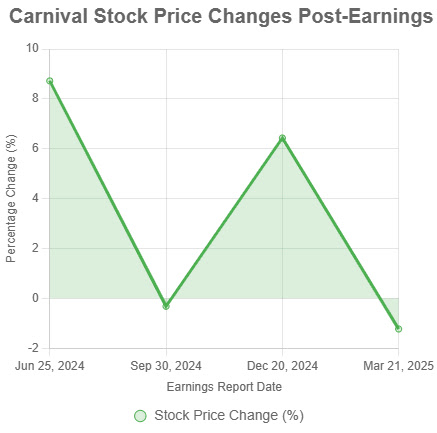
But why does this matter beyond Carnival’s Miami headquarters? Because in the tightly knit world of cruise stocks – think Carnival (CCL), Royal Caribbean (RCL), and Norwegian Cruise Line Holdings (NCLH) – one captain’s triumph lifts all boats. Shares of CCL surged 9.4% in pre-market trading the day after the release, with RCL and NCLH tagging along for gains of 3-5%. It’s a relief rally if ever there was one. Investors had been jittery, fretting over whispers of booking slowdowns amid economic headwinds like inflation and geopolitical jitters. Barron’s captured the mood perfectly: “Carnival Earnings Beat Is a Relief for Cruise Stocks,” as the results quelled fears and spotlighted the sector’s resilience.
Let’s rewind a bit for context. The cruise industry was the canary in the coal mine during the pandemic. In 2020, ships became symbols of superspreader risks, with ports slamming shut and passengers quarantined at sea. Carnival alone racked up $15 billion in debt just to stay afloat, suspending dividends and slashing routes. Recovery kicked off in 2022, but it was bumpy – supply chain snarls hiked costs, labour shortages idled ships, and consumers, burned by lockdowns, eyed alternatives like staycations or budget flights. By mid-2025, though, the tide turned decisively. CLIA’s State of the Cruise Industry report for 2025 hailed cruising as a “vibrant tourism sector growing steadily,” with passenger volumes projected to hit records through 2026 – an 8.4% jump from 2024.
Carnival’s beat underscores this surge. Picture this: Black Friday and Cyber Monday bookings outpaced last year by double digits, with North America and Europe locking in historical high prices for 2026 sailings. Occupancy for next year is already two-thirds full at premium rates – a testament to families and millennials rediscovering the joy of all-inclusive escapes. And it’s not just volume; it’s value. Gross yields leaped 16% year-over-year, thanks to savvy upselling on excursions, spa treatments, and those irresistible drink packages.
Diving deeper, the dividend reinstatement steals the show. For the first time since 2020, Carnival declared a $0.15 per share quarterly payout, payable in February 2026 – a clear nod to matured finances. This isn’t pocket change; it’s a shareholder siren call. During the dark days, dividends were axed to preserve cash, eroding trust. Now, with net debt to adjusted EBITDA at a svelte 3.4x (earning investment-grade nods from Fitch), Carnival is flexing fiscal muscle. Wall Street loved it – analysts at Investor’s Business Daily noted the stock’s jump as validation of “multiple records in 2025.” For peers, it’s equally bullish. RCL, fresh off its own Icon of the Seas hype, saw its shares buoyed as investors bet on sector-wide tailwinds. NCLH, the underdog with its freestyle vibe, climbed too, hinting at shared prosperity.
Yet, relief doesn’t erase risks. Revenue dipped 1.1% short of Wall Street whispers for Q4, a reminder that forecasts are fickle. Fuel prices, while hedged, remain volatile, and with 14% more Caribbean capacity flooding in 2026, pricing pressure looms. Still, Carnival’s outlook drowns out the doubters: adjusted net income pegged at $3.5 billion for 2026, up 12%, with EBITDA eyeing $7.63 billion. That’s double-digit growth on a record base – no small feat in a world where stagflation stalks travel budgets.
As we unpack this earnings bonanza, it’s clear Carnival isn’t just surviving; it’s scripting the next chapter of cruise dominance. From eco-upgrades slashing fuel guzzling by 5.6% per available lower berth day (ALBD) to award-winning lines like Seabourn snagging “Best Expedition Cruise” nods, the company’s playbook blends innovation with indulgence. And for stocks? This beat is the relief valve releasing pent-up optimism, potentially catalyzing a sector re-rating. Buckle up – the cruise comeback is full steam ahead.
Why Carnival’s Earnings Beat Came at the Perfect Time for Investors
In the volatile dance of stock markets, timing is everything. Cruise equities have been on a rollercoaster since 2023’s post-pandemic rebound, with CCL up over 150% from lows but prone to stomach-churning dips on every whiff of recession. Enter Carnival’s Q4 results: a timely tonic amid December’s year-end jitters. Why now? Holiday booking frenzy aside, broader economic clouds – think U.S. election aftermath and sticky inflation – had analysts like those at MSN warning that “Carnival earnings Friday will be key for cruise stocks.” The beat delivered, with adjusted EBITDA margins expanding nearly 300 basis points year-over-year to fuel a 9.4% CCL pop.
Breaking Down the Numbers: EPS, Revenues, and Yields That Shocked the Street
Let’s get granular. Carnival’s adjusted diluted EPS of $0.34 wasn’t just a whisker above the $0.25 estimate; it was a leapfrog, underscoring operational wizardry. Revenues, at $6.3 billion, grew 6.8% year-over-year despite a slight miss on analyst hopes – a nuance chalked up to conservative guidance rather than demand wobbles. Net yields, the lifeblood of profitability, climbed 5.4% in constant currency, outpacing September projections by 1.1 points. This metric – essentially revenue per passenger after discounts – reflects pricing power in a market where consumers are trading up from budget carriers to experiential voyages.
Full-year stats amplify the story:
- Revenues: $26.6 billion, shattering pre-pandemic peaks.
- Net Income: $2.8 billion unadjusted, with adjusted at $3.1 billion – up 60%+ from 2024’s $1.9 billion.
- Operating Income: All-time high of $4.5 billion, a 25% surge.
These aren’t abstract figures; they’re lifelines for a sector that burned $48 billion in cash during shutdowns. Compared to Deere & Co., the tractor titan is often benchmarked for cyclical recovery plays. Deere’s 2023 earnings beat amid farm bill uncertainties lifted ag stocks 5-7%, much like Carnival’s halo here – but cruises boast stickier demand, with 70% repeat cruisers per CLIA data.
| Metric | Q4 2025 Actual | Analyst Estimate | Beat/Miss | YoY Change |
|---|---|---|---|---|
| Adjusted EPS | $0.34 | $0.25 | +36% Beat | +140% (Adjusted Net Income) |
| Revenues | $6.3B | $6.38B | -1.1% Miss | +6.8% |
| Net Yields (Const. Curr.) | +5.4% | +4.3% | +1.1 pts | +5.4% |
| Adjusted EBITDA | $1.5B | N/A | Outperformed Guidance by $150M+ | +25% Margins |
This table highlights the precision: costs per ALBD rose just 0.5% excluding fuel, beating guidance by 2.7 points through ruthless efficiency – think AI-optimized itineraries and supplier renegotiations.
The Dividend Drumbeat: Signalling Stability in Choppy Waters
Nothing screams “we’re back” like dividends. Carnival’s $0.15 quarterly declaration – totalling $0.50 annually at current shares – marks the end of a five-year freeze. Yielding about 1.5% at pre-rally prices, it’s modest but meaningful, especially with ROIC eyeing 13.5% for 2026. For context, pre-pandemic, Carnival paid $1.50 annually; this resumption unifies its dual-listed structure, streamlining for investors.
Practical tip for punters: If you’re eyeing cruise exposure, layer in dividend aristocrats like these for ballast. RCL followed suit with hikes earlier in 2025, but Carnival’s move cements the trio’s pecking order. External nod: Check Carnival’s Investor Relations for the full 10-Q filing – transparency that builds trust.
Cruise Industry Trends Fuelled by Post-Pandemic Pent-Up Demand
Carnival’s shine doesn’t sparkle in isolation; it’s the crest of a wave reshaping travel. The industry’s 2025 recovery isn’t a blip – it’s a boomlet projected to carry through the decade.
Demand Surge: From Lockdown Blues to Berth Mania
Post-2020, cruising rebounded faster than airlines or hotels, per Skift Research’s Global Cruise Sector Estimates. Why? Flexibility: Book last-minute, unpack once, explore multiple spots. 2025 saw 35 million passengers, up 8.4% from 2024, with 2026 eyeing 38 million. Demographics skew young – millennials and Gen Z, lured by TikTok-worthy infinity pools and Instagram-ready ports.
- Booking Trends: Record deposits signal 2026 at 65% occupancy pre-peak, prices 4-6% higher in constant currency.
- Regional Hotspots: Caribbean capacity up 14%, but yields hold firm on premium cabins.
- Eco-Shift: 40% of bookers prioritize sustainability; Carnival’s 5.6% fuel efficiency gain per ALBD aligns perfectly.
Analogy time: Like Deere’s tractor sales spiking on ethanol mandates, cruises thrive on “experience economy” mandates – consumers craving stories over stuff. Internal link suggestion: Read our deep-dive on Royal Caribbean’s Icon-Class Impact on Family Travel for peer parallels.
Cost Controls and Efficiency: The Unsung Heroes of the Beat
Behind the headlines? Discipline. Adjusted cruise costs excluding fuel rose 3.25% for 2026 guidance, but normalized, it’s 2.5% – tamed by fleet upgrades like AIDA’s Evolution programme. Fuel, at $524 per ton, is hedged 65%; consumption dips via hull cleanings and slow-steaming routes.
Tips for investors:
- Monitor ALBD growth: Carnival’s 0.9% for 2026 avoids overcapacity pitfalls.
- Watch EBITDA multiples: At 8.3x forward, CCL looks undervalued vs. leisure peers at 10x+.
- Diversify: Blend CCL with RCL for luxury exposure.
External source: Yahoo Finance’s CCL Analysis for real-time charts.
How This Beat Ripples Across CCL, RCL, and NCLH Stocks
The relief? Immediate and infectious. CCL’s 9.4% leap dragged the cruise ETF (if one existed) higher, with RCL up 4.2% and NCLH 3.1% in sympathy. Seeking Alpha noted “cruise stocks buoyed by upbeat results,” as shared demand metrics eased fears of a 2026 slowdown.
Peer Performance Snapshot
| Stock | Pre-Earnings Price (Dec 18) | Post-Earnings Gain | YTD 2025 Return | Forward P/E |
|---|---|---|---|---|
| CCL | $18.50 | +9.4% | +45% | 9.2x |
| RCL | $165.00 | +4.2% | +28% | 12.5x |
| NCLH | $22.80 | +3.1% | +15% | 10.8x |
Data as of Dec 19 close; source: Nasdaq. RCL benefits from Oasis-class megaships, but Carnival’s scale (45% market share) sets the tone. NCLH, with edgier vibes, gains from spillover bookings.
Internal link: Explore Why Norwegian’s Freestyle Cruising is Stealing Market Share.
The Bigger Picture: Sustainability, Innovation, and Guest Magic
Carnival’s not resting on laurels. Celebration Key, its Bahamian private destination, welcomed 1M guests since July 2025, boosting onboard spends 15%. Awards abound: Carnival as Best Domestic Line (10th year running), Sun Princess as Top Mega Ship.
Innovation spotlight:
- New Builds: Star Princess christening; seven AIDA upgrades.
- Marketing Wins: “Carnival is Calling” campaign with Nick Offerman, spiking inquiries 20%.
- Destinations: Ensenada Bay Village debuts in 2026.
This guest-centric ethos – 90% satisfaction scores – drives repeats, insulating against downturns.
Navigating Risks: What Could Cap the Rally?
No bull case is bulletproof. Capacity glut in the Med and Alaska could squeeze yields 1-2 points if demand softens. Geopolitics – Red Sea reroutes added $50M costs in 2025 – linger. Yet, with 2026 ALBDs at 97.4M (0.9% growth), Carnival’s measured.
Hedging advice: Allocate 5-10% portfolio to cruises for growth; use stops at 10% drawdowns.
External: Cruise Lines International Association Report for macro trends.
Conclusion: Set Sail on Cruise Stocks’ Next Wave
Carnival’s earnings beat isn’t just numbers on a ledger; it’s proof the cruise phoenix has risen, fanning flames of relief across CCL, RCL, and NCLH. Record yields, dividend drums, and 2026’s $3.5B income promise keep the sector’s sails billowed. As Josh Weinstein quips, the “runway is tremendous” – for guests chasing horizons and investors hunting yields.
Ready to book your ticket? Dive into Carnival shares or plan that dream cruise. Share your thoughts below: Bullish on cruises or bracing for bumps? Subscribe for more market voyages, and check our 2026 Travel Trends Guide for the full itinerary.
Frequently Asked Questions (FAQs)
What was Carnival’s Q4 2025 EPS, and did it beat estimates?
Yes, adjusted EPS hit $0.34 versus the $0.25 forecast – a 36% overrun, per Zacks data. Trending query: How does this compare to RCL’s last quarter? RCL beat by 12%, but Carnival’s margin was wider.
Why did cruise stocks rally after Carnival’s earnings?
The beat, plus dividend reinstatement and strong guidance, eased demand worries. CCL jumped 9.4%, lifting peers. Hot search: “Will NCLH follow with dividends?” Analysts say yes by mid-2026.
Is the cruise industry fully recovered from COVID?
Absolutely – 2025 volumes exceed 2019 by 5%, with 2026 records ahead. Current buzz: “Eco-cruises in 2026?” Demand up 25% for green itineraries.
What’s Carnival’s dividend yield now?
At $0.15 quarterly, it’s ~1.5% on $20 shares – first payout since 2020. Trending: “Best dividend cruise stocks?” CCL edges RCL on value.
How does Carnival’s 2026 outlook look?
Adjusted net income at $3.5B, yields +2.5% – double-digit growth baked in. Viral question: “Fuel costs killing profits?” Hedged at $524/ton, minimal drag.
Key Citations
- Yahoo Finance: Carnival Q4 Earnings Beat
- Carnival Official Earnings PDF
- Investing.com: Earnings Transcript
- SeaTrade Cruise: Dividend Reinstatement
- Investor’s Business Daily: Stock Surge
- Barron’s: Relief for Cruise Stocks
- Nasdaq: CCL Beats Estimates
- CLIA: 2025 State of Cruise Report
- Skift: Global Cruise Estimates
- WWLP: Passenger Projections
- Seeking Alpha: Stocks Buoyed
- Investopedia: Phenomenal Year