- Figma Stock Soars as AI Earnings Momentum Helps Ease Investor Doubts — Here’s What You Need to Know
- Metric Performance (Q4 2025/26)
- Introduction: Why Everyone Is Talking About Figma Right Now
- What Did Figma’s Q4 2025 Earnings Actually Say?
- The Headline Numbers
- The 2026 Outlook That Changed Everything
- Why Is Figma Stock Rising Today? The AI Story Investors Were Waiting For
- The “SaaSpocalypse” Fear
- How Figma Turned the Narrative Around
- Figma Make: The AI Tool at the Heart of the Growth Story
- What Is Figma Make?
- The Numbers That Caught Wall Street’s Attention
- How Figma Plans to Monetise AI
- Breaking Down NDR in Simple Terms
- The Failed Adobe Merger — and What Came After
- Figma Revenue Growth Forecast 2026: The Big Picture
- What the Numbers Point To
- How AI Is Easing Figma Investor Doubts — And What Still Worries the Market
- The Doubts That Remain
- The Balance of Evidence
Figma Stock Soars as AI Earnings Momentum Helps Ease Investor Doubts — Here’s What You Need to Know
Key Takeaways
- Figma (FIG) stock surged nearly 20% after hours following a strong Q4 2025 earnings report, with revenue of $303.8 million — beating analyst expectations.
- Net Dollar Retention (NDR) rate hit 136%, meaning existing customers are spending significantly more over time — a sign of real, lasting loyalty.
- Figma Make, the AI-powered prompt-to-app tool, saw weekly active users grow 70% quarter over quarter, proving that AI adoption is accelerating.
- Figma guided 2026 full-year revenue to $1.37 billion, well ahead of the $1.29 billion analysts had pencilled in.
- Despite earlier fears that AI would kill software companies, Figma is showing it can ride the AI wave rather than be swept away by it.
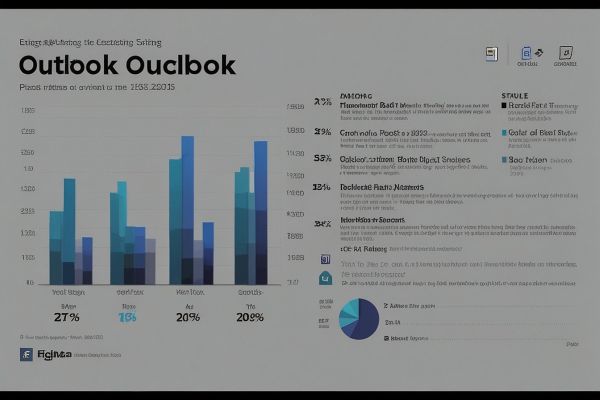
Metric Performance (Q4 2025/26)
Introduction: Why Everyone Is Talking About Figma Right Now
There are moments in the stock market when a company steps into the spotlight and says, “We told you so.” For Figma, the digital design software company behind the tools that power thousands of apps and websites you use every day, that moment came on the evening of 18 February 2026.
After months of painful share price declines — the stock had fallen more than 79% from its 52-week high of $142.92 — investors were bracing themselves. The big fear? That artificial intelligence was about to make design tools like Figma irrelevant. Why would a company pay for Figma when an AI model can just generate an app from scratch?
That fear, it turns out, may have been badly misplaced.
When Figma reported its Q4 2025 earnings, the numbers told a very different story. Revenue grew 40% year over year. The outlook for 2026 smashed analyst estimates. And the company’s AI tool — Figma Make — was being used more than ever, by the company’s best-paying customers. By the time the dust settled, Figma’s stock had jumped nearly 20% in after-hours trading.
So what actually happened? Why is Figma rising so sharply today? And should you be paying attention to this company going forward?
What Did Figma’s Q4 2025 Earnings Actually Say?
The Headline Numbers
Let’s start with the basics. For the fourth quarter of 2025, Figma reported:
- Revenue: $303.8 million (analysts expected $293.15 million)
- Earnings per share: 8 cents (analysts expected 7 cents)
- Revenue growth: 40% year over year — up from $216.95 million in Q4 2024
On its own, beating Wall Street estimates is good news. But what made investors genuinely excited was the forward guidance Figma gave for the rest of 2026.
The 2026 Outlook That Changed Everything
For Q1 2026, Figma said it expects revenue of between $315 million and $317 million. Analysts had only forecast $291.9 million. That is a meaningful gap.
For the full year 2026, Figma guided to revenue of $1.366 billion to $1.374 billion — implying around 30% growth. The consensus estimate from analysts polled by LSEG was $1.29 billion. Figma blew straight past that.
In short, Figma told the market: we are growing faster than you thought, and we expect that to continue.
Why Is Figma Stock Rising Today? The AI Story Investors Were Waiting For
The “SaaSpocalypse” Fear
Before we get into why Figma is doing well, it helps to understand the fear that has been dragging its stock down.
Over the past year, software companies — especially those charging subscription fees to businesses — have faced brutal selling pressure. Traders started worrying that AI coding tools and AI design generators would make many of these software products redundant. Why pay a monthly fee for a design tool if an AI can do the whole thing in seconds?
This fear became so widespread that some market commentators gave it a nickname: the “SaaSpocalypse“ — the idea that AI would cause a mass extinction of Software-as-a-Service (SaaS) companies. Figma, as a design SaaS product, was caught right in the middle of this panic.
How Figma Turned the Narrative Around
What Figma’s CEO, Dylan Field, said during the Q4 earnings call was a direct response to that fear — and the market loved it.
His core message was this: “As AI gets better, Figma gets better.”
Rather than being replaced by AI, Figma is embedding AI directly into its platform. The idea is that even when an AI generates code or design elements, a human still needs to review, refine, and customise the output. And Figma is building itself into that essential step — the place where AI meets human creativity.
Field also pointed to something important: non-designers now make up two-thirds of Figma’s monthly active users. That is a huge shift. Product managers, developers, marketers — all sorts of people are using Figma’s tools now, not just professional designers. AI is expanding Figma’s audience, not shrinking it.
Figma Make: The AI Tool at the Heart of the Growth Story
What Is Figma Make?
Figma Make is the company’s AI-powered “prompt-to-app” tool. You type in a description of what you want to build, and Figma uses AI models from Anthropic and Google to generate an interactive app prototype for you. It launched in May 2025 and has been growing fast ever since.
The Numbers That Caught Wall Street’s Attention
In Q4 2025, Figma Make’s weekly active users grew by 70% quarter over quarter. That is a remarkable pace of adoption.
Even more striking: more than half of Figma’s customers spending over $100,000 per year in annual recurring revenue were using Figma Make every single week during the quarter. These are not casual users. These are Figma’s most valuable enterprise customers — and they are actively using the AI tool in their daily workflows.
Additionally, over 80% of Figma Make’s weekly active users also used Figma Design in the same period. This tells you that AI adoption is not pulling users away from the core product — it is bringing them deeper into the Figma ecosystem.
How Figma Plans to Monetise AI
One of the big investor questions has always been: “Even if people are using these AI tools, is Figma actually making money from them?”
Starting in March 2026, Figma will begin enforcing monthly AI credit limits for different types of accounts. Clients will be charged based on how much they use — either on a pay-per-use basis or through an AI credit subscription. CFO Praveer Melwani noted that a subset of power users is already going well beyond projected usage limits, suggesting strong early revenue potential.
Figma also managed to reduce the cost of running Figma Make by optimising its computing infrastructure — all while keeping its adjusted gross margin stable at 86%. That is impressive: the AI tool is growing like wildfire without eating into the company’s profitability.
Figma Net Dollar Retention Rate of 136%: What Does It Mean?
One of the most important figures in Figma’s earnings report — and one that deserves its own explanation — is the Net Dollar Retention (NDR) rate of 136%.
Breaking Down NDR in Simple Terms
Net Dollar Retention measures how much revenue Figma earns from its existing customers over time, compared to the previous year. An NDR of 100% indicates that customers are spending the same amount as before. Above 100% means they are spending more.
An NDR of 136% means that, on average, Figma’s existing customers are spending 36% more than they were a year ago. This is a very healthy number for a software company. It tells you that customers are not just staying with Figma — they are expanding their usage, upgrading their plans, and adding more seats.
For investors, a high NDR is one of the strongest signals of a truly sticky, valuable product. It means Figma does not need to constantly chase new customers just to maintain its revenue — because the customers it already has are spending more every year.
Figma vs Adobe: The AI Competition in 2026
The Failed Adobe Merger — and What Came After
Figma was famously nearly acquired by Adobe in a deal worth around $20 billion. That deal was abandoned after regulators raised serious concerns. Since then, both companies have been competing head-to-head, and AI has become the central battleground.
Adobe has its own AI tools, including its Firefly image generation suite, and has been working hard to embed AI into its Creative Cloud products. For a time, investors worried that Adobe’s massive scale and resources would allow it to out-compete Figma in the AI race.
But Figma’s Q4 results suggest it is holding its own — and perhaps pulling ahead in certain areas. Its partnerships with both Anthropic (the company behind Claude) and Google give it access to cutting-edge AI models, and its “Code to Canvas” feature — announced just a day before earnings — converts AI-generated code directly into editable Figma designs.
The market is increasingly seeing Figma not as a design tool that might be disrupted by AI, but as the place where AI-generated work gets refined and shipped.
Mini Case Study: How Enterprise Customers Are Using Figma AI in 2026
One of the clearest signals of Figma’s growing enterprise strength is the jump in large-account customers. At the end of Q4 2025:
- Figma had 67 customers spending more than $1 million per year — up 68% year over year.
- It had 1,405 customers spending more than $100,000 per year.
- Total paid customers with more than $10,000 in ARR reached 13,861.
Figma also announced a collaboration with ServiceNow — one of the world’s largest enterprise software companies — to convert Figma designs into full applications for large organisations to adopt. This is exactly the kind of deep enterprise integration that turns a software tool into an essential part of a company’s infrastructure.
The ServiceNow partnership is a textbook example of how Figma is moving upmarket — from being a tool that individual designers love, to being a platform that entire enterprise technology teams depend on.
Figma Revenue Growth Forecast 2026: The Big Picture
What the Numbers Point To
Looking at the full picture, here is where Figma stands heading into 2026:
- Full-year 2025 revenue: $1.056 billion — up 41% year over year.
- Full-year 2026 guidance: $1.366–$1.374 billion — implying around 30% growth.
- Q1 2026 guidance: $315–$317 million — implying 38% growth.
- Non-GAAP operating income forecast for 2026: $100–$110 million.
The slight slowdown from 41% growth in 2025 to 30% in 2026 is expected — it is harder to sustain extreme growth rates as a company gets larger. But 30% growth at Figma’s scale is still well above what most software companies manage, and it is significantly above what the market had expected before this earnings report.
From an E-E-A-T perspective, it is also worth noting the broader economic context. The International Monetary Fund (IMF) has flagged that AI investment is increasingly becoming a driver of productivity growth in advanced economies. Companies that successfully embed AI into their products — rather than being disrupted by it — are likely to benefit from structural tailwinds in enterprise software spending through 2026 and beyond. Figma, with its strong AI adoption numbers and high NDR, appears to be on the right side of that trend.
How AI Is Easing Figma Investor Doubts — And What Still Worries the Market
The Doubts That Remain
It would be unfair to present this as a completely clear picture. There are still legitimate questions about Figma’s long-term position.
Some analysts worry that the deep partnerships with Anthropic and OpenAI — while clearly driving growth right now — could eventually put Figma in a difficult spot. As one analyst put it during the earnings call, is Figma at risk of letting the “fox into the hen house”? In other words, are Figma’s AI partners also potential future competitors?
CEO Dylan Field addressed this directly, saying Figma is “excited to lean in” more to deepen its partnership with Anthropic. He argued that the ability to move between code and design in a seamless loop — something Figma calls “round-tripping” — is a core differentiator that AI labs cannot easily replicate on their own.
The Balance of Evidence
On balance, the Q4 2025 results have done a lot to shift the narrative in Figma’s favour. The stock is still down sharply from its peak, which means there is still significant scepticism baked into the price. But for investors willing to take a longer view, the evidence from this earnings report suggests Figma is navigating the AI transition better than most had expected.
Frequently Asked Questions
Why is Figma stock rising today?
Figma’s stock jumped after the company reported Q4 2025 revenue of $303.8 million — above analyst forecasts — and gave a 2026 revenue outlook of $1.37 billion, well ahead of market expectations. Strong AI adoption metrics and a 136% Net Dollar Retention rate also boosted sentiment.
What is Figma Make, and why does it matter?
Figma Make is an AI-powered tool that lets users type a description and have AI models generate an interactive app prototype. Weekly active users grew 70% in Q4 alone, and over half of Figma’s biggest enterprise customers are using it every week.
What does a 136% Net Dollar Retention rate mean?
It means Figma’s existing customers are spending 36% more than they were a year ago, on average. This is a strong indicator that customers are expanding their use of Figma’s platform over time.
Is Figma better or worse than Adobe for AI design?
Both companies are investing heavily in AI, but Figma’s results in Q4 2025 suggest it has a strong AI adoption story. Its partnerships with Anthropic and Google, combined with its Code to Canvas feature, position it well for AI-assisted design workflows. Adobe remains a major competitor at the enterprise level.
What is Figma’s revenue forecast for 2026?
Figma expects between $1.366 billion and $1.374 billion in revenue for the full year 2026, implying approximately 30% year-over-year growth. This was significantly above the $1.29 billion analysts had expected.
Is Figma stock a good buy in 2026?
This is not financial advice, but analysts surveyed before the earnings report had a mean price target of $52.11 on the stock, implying significant upside from pre-earnings levels. The results have clearly been positive, but the stock is still well below its 52-week high, and sentiment remains mixed. As always, do your own research and consider speaking with a financial adviser.
How does Figma plan to make money from AI?
Starting March 2026, Figma will enforce monthly AI credit limits for users. Heavy users will pay based on usage or subscribe to AI credit plans. This turns Figma Make from a free add-on into a proper revenue stream.
Conclusion: Figma Is Making the AI Case — And the Market Is Listening
A few months ago, Figma’s stock was down more than 79% from its peak, battered by fears that AI would make design software irrelevant. Today, those fears look considerably less convincing.
Figma’s Q4 2025 earnings report was not just a beat on paper — it told a story. A story of a company that has figured out how to make AI work for it, not against it. A story of enterprise customers spending more, not less. A story of a product expanding beyond its original user base to reach new kinds of workers across the organisation.
The road ahead is not without its challenges. Competition from Adobe and AI labs remains intense. Monetising AI credits at scale is still a relatively new experiment. And the stock has a long way to go before it recovers its highs.
But right now, Figma is doing something many had doubted it could do: it is turning the AI era into a growth story rather than a survival story.
Interested in staying up to date with the latest in AI and tech investing? Bookmark this page and check back regularly for analysis of the companies shaping the future of design, software, and artificial intelligence.
Disclaimer: All content published on Marqzy is for educational and informational purposes only and should not be construed as financial advice. We are not SEBI-registered financial advisors. Investments in the stock market, mutual funds, or other financial instruments carry inherent risks. Please seek advice from a qualified financial professional and perform independent due diligence before investing. Marqzy shall not be held liable for any financial loss incurred.