MARQZY

CFA in 2026: Survival Guide & Algo Trading Rules

 Is the CFA Still Worth It in 2026? Algorithmic Trading Skills That Actually Get You Hired

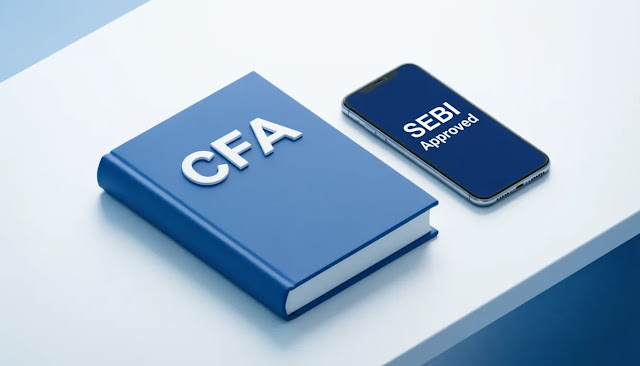
CFA textbook on a desk

Key Takeaways

  • The CFA charter is still valuable in 2026 — but only if you pair it with tech skills like Python and machine learning.
  • SEBI's new Algo Trading Rules (2026) now require a Unique Algo ID for every retail trading bot — ignoring this could get your account blocked.
  • Python for finance is no longer optional; it is the new Excel for CFA candidates and professionals.
  • Quant skills and CFA knowledge together are far more powerful than either one alone.
  • Retail algo registration in India is now a real, regulated process — and knowing how to navigate it is a career advantage.

Introduction: The Finance World Has Changed — Have You?

Picture this. Two candidates walk into a fund manager's office in Mumbai in 2026. Both have passed all three levels of the CFA exam. Both are sharp, well-read, and confident. But one of them can also write a Python script that backtests a momentum trading strategy in under ten minutes. The other cannot.

Who gets the job? You already know the answer.

The world of finance has quietly — and then very loudly — shifted under our feet. The 2008 financial crisis pushed banks to hire more quants. The 2020 pandemic supercharged retail investing. And by 2026, artificial intelligence, machine learning, and algorithmic trading bots will no longerbe the exclusive toys of Goldman Sachs and Renaissance Technologies. Today, a college student in Pune can deploy a trading algorithm on the NSE using a mobile phone and a broker's API.

This is the new reality. And it raises a very important question for anyone studying for the CFA, or already working in finance: Is the CFA still relevant in 2026?

The short answer is yes — but with a very important asterisk. The CFA is like a brilliant foundation, but the building you construct on it now needs Python bricks, machine learning floors, and a SEBI-compliant roof.

This article will walk you through exactly what skills matter in 2026, why the CFA still holds weight, how algo trading has changed the rules, and what India's new SEBI regulations mean for anyone who wants to trade — or build tools that trade — automatically.

Whether you are a CFA student, a finance professional trying to stay relevant, or simply a curious person who has heard terms like "algo trading bot" and "quant skills" and wants to understand them, this guide is written for you. No unnecessary jargon. No confusing formulas. Just clear, honest, practical information.

Let us begin.


What Is Algorithmic Trading, and Why Should CFA Holders Care?

Algorithmic trading — or algo trading — simply means using a computer programme to make trading decisions automatically, based on a set of rules you have defined. Instead of sitting at your screen watching share prices, a bot does it for you. It can buy a stock when a certain condition is met, sell when another condition triggers, and repeat this thousands of times a day, faster than any human ever could.

According to estimates from the World Federation of Exchanges, algorithmic trading now accounts for over 60–70% of daily equity trading volume in major global markets. In India, SEBI (the Securities and Exchange Board of India) has reported that algorithmic trading by institutional investors makes up a significant share of NSE and BSE volumes.

Now, here is where the CFA connection becomes clear.

The CFA Teaches You What to Trade. Algo Trading Teaches You How to Trade It at Scale.

The CFA curriculum covers portfolio theory, equity valuation, risk management, derivatives, fixed income, and ethics. This is the intellectual backbone of any good investment decision. It teaches you why a momentum strategy works, why a P/E ratio matters, and why hedging with options makes sense.

Algorithmic trading, on the other hand, is the engine that executes those strategies at machine speed. A CFA holder who also understands how to build or oversee an algorithmic trading strategy has a rare combination that most employers in 2026 are actively seeking.

Think of it this way: the CFA is your pilot's licence. Python and algorithmic trading skills are the cockpit controls. You need both.


Python for CFA 2026 — The Skill You Can No Longer Ignore

Let us talk about Python. If you have been putting off learning it because "you are a finance person, not a coder," this section is especially for you.

Python is now the dominant language in finance. From hedge funds to asset managers to fintech startups, Python is used for:

  • Pulling live market data from APIs (like NSE data feeds or Bloomberg)
  • Building and backtesting trading strategies
  • Automating portfolio rebalancing
  • Running risk models and stress tests
  • Cleaning and analysing large financial datasets

What Level of Python Does a CFA Professional Need in 2026?

You do not need to be a software engineer. You need to be functionally fluent. Here is what that looks like:

  • Pandas and NumPy — for handling financial data (returns, price series, correlations)
  • Matplotlib / Plotly — for visualising stock performance or portfolio risk
  • yFinance / NSE API — for pulling live or historical price data
  • Backtrader or Zipline — for testing your trading strategy on historical data before risking real money
  • Basic OOP (Object-Oriented Programming) — so you can build and maintain your own trading bots

CFA Institute has recognised this shift. Their curriculum now includes data science and Python modules. Python training sessions have been added to CFA study packages by providers like Kaplan and Salt Solutions.

Practical Tip: Start with free resources like CS50P (Harvard's Python course on edX) or Kaggle's Python course. Spend 30 minutes a day for 90 days, and you will have enough Python to be genuinely useful in a finance role.


Quant Skills vs CFA in 2026 — Is One Better Than the Other?

This is one of the most searched questions on finance forums right now. Let us settle it clearly.

Quant skills refer to the mathematical and statistical abilities used in quantitative finance — things like statistical modelling, probability theory, time series analysis, linear algebra, and the ability to write code that implements these models.

A CFA is a professional qualification that covers investment analysis, portfolio management, and financial ethics broadly.

They are not competitors. They are complements.

Skill Area CFA Strength Quant/Python Strength
Investment theory ✅ Very strong ❌ Limited
Ethics and regulation ✅ Very strong ❌ Limited
Data analysis ❌ Basic only ✅ Very strong
Strategy backtesting ❌ None ✅ Core skill
Client communication ✅ Strong ❌ Often weak
Model building ❌ Conceptual only ✅ Strong

The most in-demand finance professionals in 2026 sit squarely in the overlap. Investment banks, asset managers, and family offices are specifically looking for people who can speak to a client about risk-adjusted returns using CFA language AND build a Python model that calculates those returns automatically.


Machine Learning for Trading — Hype or Reality in 2026?

Machine learning (ML) is the branch of artificial intelligence where computers learn patterns from data without being explicitly programmed. In trading, ML is used to:

  • Predict short-term price movements based on historical data
  • Detect anomalies in market behaviour (useful for risk management)
  • Classify stocks into categories based on financial ratios
  • Optimise portfolio weights dynamically

H3: Mini Case Study — Two Sigma and the Machine Learning Edge

Two Sigma Investments, a New York-based quant hedge fund, manages over $60 billion in assets. Unlike traditional funds, Two Sigma runs almost entirely on data science and machine learning. The firm employs more engineers and data scientists than traditional finance analysts.

Their approach shows what is possible when ML meets financial expertise. Their funds have consistently delivered strong risk-adjusted returns, not by predicting the market perfectly — nobody can — but by finding small, repeatable statistical edges and executing them millions of times through algorithms.

The IMF, in its 2024 Global Financial Stability Report, noted that AI-driven trading strategies are increasing market efficiency in developed economies but also creating new flash crash risks in emerging markets when multiple algorithms react to the same signal simultaneously. This is a real concern. SEBI is watching closely.

For CFA professionals: You do not need to build machine learning models from scratch. But understanding how they work, what their limitations are, and how to evaluate their output is increasingly part of the job description — especially in risk management and portfolio oversight roles.


Algo Trading Bots in 2026 — What Is Actually Possible for Retail Investors?

Gone are the days when algorithmic trading was reserved for institutions with Bloomberg terminals and server farms. In 2026, retail investors in India can deploy their own trading bots through broker APIs provided by platforms like Zerodha (Kite Connect), Upstox, Angel One (SmartAPI), and Fyers.

Here is what a simple retail algorithm bot might do:

  • Monitor the Nifty 50 every minute
  • Buy a stock when its 20-day moving average crosses above its 50-day moving average (a classic "golden cross" signal)
  • Set an automatic stop-loss at 2% below the purchase price
  • Sell when the price target of 5% gain is reached

This kind of bot can be built in Python in a few hundred lines of code. It costs almost nothing to run. And it operates 24/7 without emotional bias — one of the biggest advantages over manual trading.


SEBI Algo Rules 2026 — What Every Indian Trader Must Know

This is the section that most blog posts skip — and it is arguably the most important one if you are trading in India.

SEBI (Securities and Exchange Board of India) released a circular in 2021 proposing a regulatory framework for algorithmic trading by retail investors, and by 2024–2026, enforcement has become significantly stricter.

The Unique Algo ID — What It Is and Why It Matters

Under SEBI's framework, every algorithmic trading strategy used by a retail investor must be:

  1. Registered with your broker before it is deployed
  2. Assigned a Unique Algo ID — a specific identification number tied to that strategy
  3. Approved by the broker, who is responsible for ensuring the algo complies with SEBI's risk management norms

This means you cannot simply run a Python bot that fires orders into your Zerodha account without your broker's knowledge. SEBI requires brokers to have systems that detect and flag unregistered algo activity. If your bot places orders too quickly or in patterns that look algorithmic, your broker is obligated to investigate.

Retail Algo Registration in India — Step by Step

Here is a simplified overview of how retail algo registration works in 2026:

  • Step 1: Choose a SEBI-registered broker that supports API trading and retail algo registration (Zerodha, Upstox, and Angel One all have frameworks).
  • Step 2: Submit your algorithm details to the broker — including the logic, entry/exit conditions, and risk parameters.
  • Step 3: The broker reviews the algo for compliance with SEBI's risk management norms (position limits, order frequency, stop-loss requirements).
  • Step 4: Once approved, your algo receives a Unique Algo ID.
  • Step 5: Every order placed by your algorithm must carry this ID in its metadata so it can be traced and audited.

Why does this matter for CFA professionals? Because if you are advising clients on automated strategies, managing a PMS (Portfolio Management Service), or working at a firm that uses algorithms, understanding SEBI's regulatory framework is not optional — it is a professional requirement.

The World Bank's 2023 report on emerging market financial regulation highlighted that India is among the most proactive regulators globally in bringing retail algo trading under formal oversight, citing it as a model for other developing market regulators.

External Resource: For the most current SEBI circulars on algorithmic trading, visit: https://www.sebi.gov.in (Search: "Algo Trading Retail Circular")

External Resource: CFA Institute's technology and data science resources: https://www.cfainstitute.org


Is the CFA Still Relevant in 2026? The Honest Answer

Yes — but the nature of its relevance has evolved.

In 2010, a CFA charter alone was enough to land you a strong investment role. In 2026, the CFA is a powerful signal of your investment knowledge, ethical grounding, and analytical rigour. But employers — from Avendus Capital to BlackRock India to quantitative hedge funds in Singapore — are now screening for candidates who combine CFA-level finance knowledge with at least some programming and data literacy.

The CFA charter remains one of the most respected credentials in global finance. The CFA Institute reports over 200,000 charterholders worldwide, and the designation continues to carry significant weight in portfolio management, equity research, wealth management, and risk roles.

But here is the practical truth: if you are a CFA Level 1 candidate who also knows Python, you will often out-compete a CFA charterholder who does not. The charter plus tech skills is the 2026 gold standard.

Suggested Internal Links:

  • How to Start Learning Python as a Finance Professional (Beginner's Guide)
  • SEBI's New Regulations for Retail Investors in 2026 — A Full Breakdown
  • Top 10 CFA Study Resources for 2026 That Actually Work

Frequently Asked Questions (FAQs)

Q1: Can I do algorithmic trading in India without a CFA? Absolutely yes. Many successful algorithmic traders in India have no formal finance qualification. However, CFA knowledge significantly helps you build better strategies, understand risk, and manage client portfolios legally and ethically.

Q2: Do I need SEBI approval to run a trading bot in 2026? You need approval through your broker, not directly from SEBI. Your broker registers your algorithm with SEBI on your behalf and assigns a Unique Algo ID. Running an unregistered bot risks account suspension.

Q3: How much Python do I need to know to work in algo trading? Beginner to intermediate level is sufficient for most roles. Focus on Pandas, NumPy, API connections, and backtesting libraries like Backtrader. You can get started without a formal CS qualification.

Q4: Is machine learning replacing fundamental analysis? No. Machine learning is a powerful tool, but it still needs humans who understand why markets behave the way they do. CFA-trained professionals who understand fundamentals are better positioned to design, validate, and oversee ML models than pure data scientists with no finance background.

Q5: What is the best broker for retail algo trading in India in 2026? Zerodha (Kite Connect API), Upstox, and Angel One (SmartAPI) are the three most popular platforms for retail algo traders in India. Each has its own registration process for algorithmic strategies.

Q6: Will the CFA curriculum add more Python and AI content? It already has. CFA Institute introduced portfolio analytics and Python-based content into Level 1 and Level 2 from 2023 onwards, with further updates expected. The direction is clear.


Conclusion: Your 2026 Finance Career Roadmap

The finance profession in 2026 rewards people who refuse to stand still.

The CFA is not dying — far from it. It is evolving. The key is to evolve with it rather than resist it. If you are studying for the CFA, add Python to your routine. If you are already a CFA charterholder, spend three months learning the basics of algorithmic trading. If you are a retail investor in India, curious about building your own trading bot, understand SEBI's Unique Algo ID framework before you deploy a single line of code.

The professionals who will thrive in the next decade of finance are not purely analysts, nor purely engineers. They are translator-professionals — people who can sit between a spreadsheet and a server, between a client and a codebase, between a regulatory circular and a trading strategy.

That is the profile. That is the goal. With this, you know precisely how to move forward.


Ready to take the next step? Start with one free Python lesson today. Open a paper trading account. Read the latest SEBI circular. The gap between knowing and doing is the only gap that matters now.


 Disclaimer: All content published on Marqzy is for educational and informational purposes only and should not be construed as financial advice. We are not SEBI-registered financial advisors. Investments in the stock market, mutual funds, or other financial instruments carry inherent risks. Please seek advice from a qualified financial professional and perform independent due diligence before investing. Marqzy shall not be held liable for any financial loss incurred.