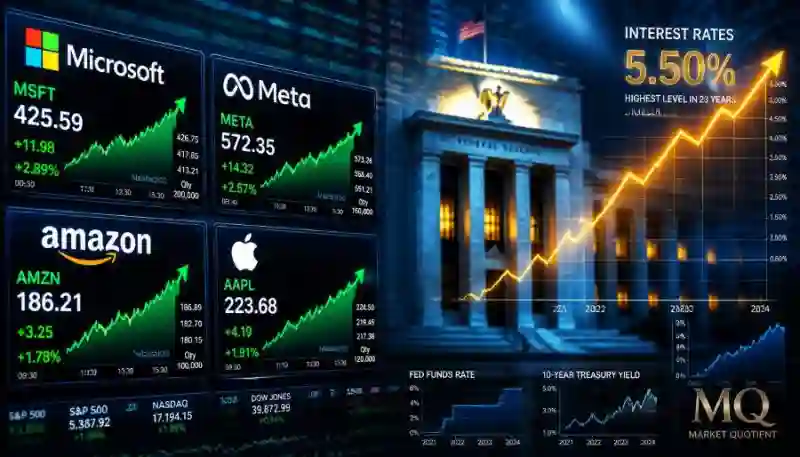
Wall St Week Ahead: Earnings Start and Inflation Data Pose Tests for Resilient US Stocks
Key Points
- US stocks have surged nearly 2% in early 2026, extending a bull market fueled by strong profits and policy easing.
- Earnings season begins with major banks, projecting 8.3% S&P 500 growth for Q4 2025.
- December CPI data, expected at 2.7% y/y, may influence Fed rate cuts amid labor market concerns.
- Geopolitical tensions add volatility, but resilient fundamentals offer opportunities for savvy investors.
- Global outlooks from the International Monetary Fund and the Federal Reserve point to moderate U.S. economic growth of roughly 2.1% in 2026.
Understanding the Current Market Landscape
U.S. stocks have started 2026 strongly, with major indexes such as the S&P 500 and Dow Jones reaching record highs, even as geopolitical tensions and recent U.S. actions create uncertainty in the global backdrop. in Venezuela and talks about Greenland. This resilience stems from solid corporate earnings, easing Fed policies, and hopes for stimulus under the new administration. However, the week ahead brings pivotal tests: the start of earnings season and fresh inflation data. These could either reinforce the bull run or introduce volatility, especially as markets seem somewhat numb to risks.
What Investors Should Watch
Focus on big bank earnings for clues on consumer spending, which drives most of the economy. Inflation reports will shape expectations for Fed rate cuts—markets anticipate one or two in 2026, but surprises could shift that. While stocks appear strong, analysts warn of underappreciated risks, suggesting a defensive approach like diversifying or using options. Overall, the evidence leans toward continued growth, but with hedging for complexity in a “near-perfection” priced market.
For more on stock trends, check sources like Reuters or Federal Reserve updates.
Introduction
Imagine starting the new year with stock markets hitting fresh highs, shrugging off everything from government shutdowns to international military maneuvers. That’s exactly what’s happening on Wall Street in early 2026. The S&P 500 has risen nearly 2% so far in January, building on a standout 2025 in which the index delivered its third consecutive year of double-digit gains. Investors are buzzing with optimism, thanks to booming corporate profits, the Federal Reserve’s rate cuts, and whispers of fiscal stimulus from the Trump administration. But hold on—things might get bumpy. This week, corporate earnings season kicks off, and key inflation data drops, posing real tests for these resilient US stocks. Will the bull run continue, or are cracks starting to show? In this article, we’ll dive deep into what’s ahead, breaking down the risks, opportunities, and what it all means for you as an investor. Whether you’re a seasoned trader or just dipping your toes in, understanding these dynamics could be the key to navigating 2026’s market twists. Let’s unpack it step by step.
The Current State of the US Stock Market: A Resilient Bull Run
Hey, if you’ve been following the markets, you know US stocks aren’t just hanging in there—they’re thriving. As of January 12, 2026, the S&P 500 closed at around 6,966, up 0.65% from the previous session, marking another record high. The Dow Jones Industrial Average also advanced, closing at 49,504 after posting a 0.48% gain. And the Nasdaq? It’s leading the pack with tech stocks pushing it up 2.57% for the month.
This momentum follows a blockbuster 2025, during which the S&P 500 delivered annual gains of more than 13.5%. What’s driving this? A mix of solid corporate earnings, AI-driven investments, and the Fed’s three rate cuts in late 2025 to support a softening labor market. But resilience doesn’t mean invincibility. Geopolitical headlines—like the US seizing Venezuela’s leader or debates over acquiring Greenland—have barely dented sentiment. Analysts like Michael Arone from State Street note that the market feels “a little too quiet,” hinting at underappreciated risks.
In fact, the VIX volatility index remains low, suggesting investors are somewhat “numb” to these events. Yet, with stocks “priced near perfection,” any hiccup could spark a pullback. For context, historical data shows that after three years of gains, markets often face corrections—think the dot-com era or post-2008 recovery. But today’s fundamentals, like expected 15% earnings growth in 2026, provide a buffer.
Practical Tip: If you’re investing now, consider dollar-cost averaging to mitigate volatility. It’s a simple way to buy in gradually without timing the market perfectly.
Earnings Season Kickoff: What to Expect from Corporate Reports
Earnings season is like report card day for companies, and this Q4 2025 batch starts with a bang. Big banks lead the charge: JPMorgan Chase reports on Tuesday, January 13, followed by Citigroup, Bank of America, and Goldman Sachs. Why banks first? They’re seen as “on the front lines” for consumer health, with metrics like credit card defaults offering clues on spending. Consumer spending powers over two-thirds of the US economy, so any weakness here could ripple out.
Analysts forecast S&P 500 earnings growth at 8.3% for Q4 2025, with the financial sector up about 7%. Looking ahead, 2025 saw 13% overall growth, and 2026 projections top 15%. That’s optimistic, driven by sectors like tech and finance. But remember the 43-day government shutdown in late 2025? It delayed data, adding uncertainty to these reports.
Here’s a quick table of key earnings this week:
| Company | Report Date | Expected Focus |
|---|---|---|
| JPMorgan Chase | Jan 13 | Loan defaults, consumer lending |
| Citigroup | Jan 13-15 | Global operations, credit trends |
| Bank of America | Jan 13-15 | Retail banking health |
| Goldman Sachs | Jan 13-15 | Investment banking fees |
| Delta Air Lines | Jan 15 | Travel demand indicators |
| TSMC | Jan 15 | Semiconductor outlook |
(Source: Compiled from Yahoo Finance and Investopedia earnings calendars. )
If earnings beat expectations, stocks could push higher. But misses? Expect volatility. As Jack Janasiewicz from Natixis puts it, banks give the “best insights” into the consumer.
Bullet Points on Preparing for Earnings:
- Review company guidance: Look beyond profits to forward outlooks.
- Diversify sectors: Balance tech-heavy portfolios with defensives like utilities.
- Use options for protection: Consider puts if you’re worried about downside.
Inflation Data: The Make-or-Break Moment for Fed Policy
Inflation—it’s the word that keeps investors up at night. This Tuesday, January 13, at 8:30 AM ET, the Bureau of Labor Statistics releases December 2025 CPI data. Markets expect headline and core CPI to both run at 2.7% year over year and 0.3% month over month. But ranges are wide due to shutdown distortions—some nowcasts see headline as low as 2.57%.
Why does this matter? It shapes Fed expectations. After cutting rates to the 3.50%–3.75% range in December 2025, the Federal Reserve has markets pricing in one to two additional rate cuts during 2026. A cooler CPI could reopen easing bets, boosting stocks. Hotter? It might force fewer cuts, pressuring equities. Nanette Abuhoff Jacobson from Hartford Funds calls these numbers “critical” for risk sentiment.
Table of Recent CPI Trends:
| Month | Headline CPI (y/y) | Core CPI (y/y) |
|---|---|---|
| Nov 2025 | 2.5% | 2.6% |
| Dec 2025 (Forecast) | 2.7% | 2.7% |
| Jan 2026 (Expected) | ~2.6% | ~2.7% |
(Based on BLS and consensus forecasts. )
Tip: Monitor bond yields post-release—they often signal market reactions faster than stocks.
Potential Risks and Opportunities in a Volatile Week
With earnings and CPI converging, volatility could spike. The market’s low VIX suggests complacency, but events like the Venezuela seizure remind us of tail risks. Opportunities? While strong earnings support S&P 500 targets of 7,500–8,000, renewed inflation pressures or weak consumer data could challenge the outlook.
Bullet Points on Strategies:
- Go defensive: Add bonds or gold if inflation heats up.
- Seek value stocks: Undervalued sectors like industrials might shine.
- Stay liquid: Keep cash for dips.
For more on volatility, check our internal post: Navigating Market Turbulence in 2026. Or Investing Basics for Beginners.
External sources: Federal Reserve’s rate data here and IMF outlooks here.
Mini Case Study: John Deere’s Earnings Outlook as a Market Bellwether
Let’s zoom in on a real company to see how earnings can sway stocks. John Deere (DE), the global agricultural equipment leader, provides a clear example. In fiscal 2025 (ending October 2025), Deere reported net income of $5.027 billion, down from $7.1 billion the prior year due to softening farm demand and higher costs. Shares have gained 13% in 2025 but lagged the S&P.
For 2026, Deere forecasts net income of $4-4.75 billion, missing analyst estimates of $5 billion. This led to a 4-6% stock drop post-announcement. Why? Persistent low commodity prices and farmer caution amid inflation. Yet, Deere’s Q4 2025 sales rose 11% to $12.4 billion, showing resilience in equipment ops.
This case highlights broader themes: Industrials like Deere are sensitive to inflation and consumer (farmer) spending. If CPI comes in hot, borrowing costs stay high, hurting big-ticket buys. But with expected 13.1% earnings growth, Deere could rebound if stimulus boosts ag. As of Jan 9, shares trade at $488, down 2.54%. Lesson: Earnings misses test resilience, but strong balance sheets offer long-term value.
Insights from Global Institutions: IMF, World Bank, and Federal Reserve Trends
To ground this in expertise, let’s look at big-picture outlooks. According to the IMF, U.S.Growth is projected at 2.1% in 2026, occurring alongside a broader moderation in global growth to around 3.1%. Inflation is expected to hover above 2%, with affordability issues persisting. The World Bank echoes this, noting resilient consumption but trade deceleration.
The Fed’s stance? It plans slight rate cuts in 2026 to address labor risks, with the funds rate gliding to around 3%. In its 2026 stress tests, the baseline assumes moderate growth. These trends support stock resilience but warn of shocks if inflation deviates.
Table of US Economic Projections:
| Institution | GDP Growth 2026 | Inflation Outlook | Key Risk |
|---|---|---|---|
| IMF | 2.1% | High-2% range | Global trade slowdown |
| World Bank | ~2% | Persistent above 2% | Supply shocks |
| Federal Reserve | Moderate | Cooling to target | Labor market weakness |
(Compiled from official reports. )
Conclusion
As Wall Street braces for earnings and inflation data, the resilient US stock market faces its first big tests of 2026. With projected earnings growth of around 15% and continued support from the Fed, the outlook remains constructive, though volatility could emerge if data disappoints. From bank reports to CPI reads, these events will set the tone for the year. Remember the Deere case: Individual stocks can swing, but diversified strategies win out.
Ready to stay ahead? Subscribe to our newsletter for weekly market insights, or consult a financial advisor to tailor your portfolio. Don’t miss out—act now to turn challenges into opportunities!
FAQs: Trending Questions on US Stocks, Earnings, and Inflation
Based on current searches and trends in January 2026:
- When does the US CPI data come out in January 2026? It’s released on January 13 at 8:30 AM ET by the BLS.
- What is the forecast for December 2025 CPI? Consensus expects both headline and core inflation at 2.7% year over year, with month-over-month gains of 0.3%.
- Which companies report earnings this week? Big banks like JPMorgan, Citigroup, and others start on Jan 13.
- Will the Fed cut rates in 2026? Markets expect 1-2 cuts, depending on inflation and jobs data.
- The S&P 500 has climbed nearly 2% in early 2026, reaching record highs despite ongoing geopolitical tensions.
- What are the 2026 earnings growth expectations? More than 15% for the S&P 500, following roughly 13% growth in 2025.
- Is the stock market overvalued in 2026? Some say “priced near perfection,” but fundamentals support gains.
- How might inflation impact stocks? Higher readings could delay rate cuts, pressuring prices.
- What’s John Deere’s 2026 outlook? Net income $4-4.75B, reflecting farm sector challenges.
- What do the IMF and Fed say about the US economy in 2026? Moderate growth ~2.1%, with inflation above 2%.