- US Still the UK’s Closest Ally? Rachel Reeves’ Statement on US Trade and Its Implications
- Why This Matters
- Potential Challenges
- Looking Ahead
- Key Points
- Introduction
- Unpacking the US-UK Alliance Rift
- The Greenland Controversy and Its Role in the Rift
- Rachel Reeves’ Statement on US Trade: A Closer Look
- Impact of the US-UK Rift on Markets and Global Economic Impact
- UK Finance Policy 2026: Navigating the Special Relationship
US Still the UK’s Closest Ally? Rachel Reeves’ Statement on US Trade and Its Implications
Key Takeaways on US-UK Relations Amid Recent Tensions
- Enduring Alliance: Research suggests that despite ongoing rifts over issues like Greenland and tariffs, the US remains the UK’s closest ally, as stated by Finance Minister Rachel Reeves, highlighting shared military, intelligence, and trade interests.
- Call for De-escalation: It seems likely that both nations prioritise avoiding tariff escalations, with Reeves expressing confidence in maintaining economic deals to benefit businesses and people on both sides.
- Economic Impacts: The evidence leans toward potential market disruptions, such as stock declines and trade volume shifts, but growth forecasts remain steady if tensions are managed diplomatically.
- Global Ripple Effects: There could be broader implications for transatlantic trade and global markets, with organisations like the IMF warning of risks from prolonged uncertainties, though opportunities for stronger alliances exist.
- Balanced Outlook: While controversies highlight challenges in the special relationship, empathetic diplomacy from all sides could mitigate negative effects on UK finance policy in 2026 and beyond.
Why This Matters
In a world where trade ties can make or break economies, Rachel Reeves’ recent comments at the World Economic Forum in Davos remind us that alliances like the US-UK one are built on mutual benefits. But with rifts over Greenland and tariff threats, it’s worth watching how this plays out for everyday businesses and markets. Reeves’ emphasis on de-escalation shows a pragmatic approach, acknowledging that no country, even powerhouses like the US or UK, can go it alone.
Potential Challenges
Trade tensions could lead to higher costs for goods, affecting everything from farming equipment to consumer prices. For instance, companies like John Deere have already felt the pinch from tariffs, with stock dips and profit warnings. Yet, if handled well, this could strengthen long-term partnerships.
Looking Ahead
For the UK, 2026 finance policies might focus more on diversifying trade to cushion any impacts. Overall, the situation underscores the need for open dialogue in global economic matters.
Key Points
- The US-UK special relationship remains strong despite tensions over Greenland and tariffs, as affirmed by Rachel Reeves.
- De-escalation of trade disputes is key to protecting global economic stability and transatlantic trade.
- Potential market impacts include stock fluctuations and trade volume shifts, with examples like John Deere highlighting real-world effects.
- UK finance policy in 2026 may prioritise diversified partnerships to mitigate risks from the US-UK alliance rift.
- Global economic forecasts from the IMF and the World Bank suggest steady growth if tensions are managed, but warn of escalation risks.
Introduction
Hey there, reader! Imagine two old friends having a bit of a spat over something as massive as an entire island – that’s sort of what’s happening between the US and UK right now. However, the outlook isn’t entirely bleak. UK Finance Minister Rachel Reeves recently stepped up at the World Economic Forum in Davos and said, loud and clear, that the US is still “the closest of allies” with the UK, even with this rift bubbling up. It’s a reminder that in the world of global politics and economics, relationships like the US-UK special relationship are tough to break.
This all kicked off with US President Donald Trump‘s renewed interest in acquiring Greenland – that huge, icy territory belonging to Denmark. Europe’s not thrilled, and the UK, caught in the middle as a close US ally but also a European neighbour, is walking a tightrope. Trump even threw in some tariff threats against the UK and other European countries if they don’t play ball. Ouch! But Reeves, in her chat with CNBC, stressed that military ties, intelligence sharing, university links, and trade are too important to let slip away. She described the relationship as critically important and long-standing.
Why should you care? Well, this isn’t just diplomatic chit-chat. It affects real stuff like the prices you pay for goods, stock markets, and even jobs. Trade between the US and UK was a whopping £331.2 billion in 2025, and any hiccup could ripple out to global markets. Plus, with UK inflation ticking up to 3.4% in December 2025, adding tariff woes could make things trickier for everyday folks.
In this article, we’ll dive into the details: what caused this rift, what Reeves really said, how it might shake up markets, and what it means for UK finance policy in 2026. We’ll look at facts from reliable spots like the IMF and World Bank, throw in a mini case study on a company feeling the heat, and even suggest some practical tips for businesses navigating this. Stick around – by the end, you’ll feel like an expert on US-UK trade relations!
Unpacking the US-UK Alliance Rift
The US-UK special relationship has been a cornerstone of global affairs since World War II. It’s often called “special” because of deep ties in defence, intelligence (think Five Eyes alliance), and economics. But lately, cracks have shown, mainly over geopolitical moves by the US.
The Greenland Controversy and Its Role in the Rift
Greenland, that vast Arctic island under Danish control but with its own government, has become a flashpoint. President Trump has pushed for the US to buy or control it, citing strategic reasons like resources and military positioning amid climate change, opening new shipping routes. Europe, including the UK, sees this as overreach – it’s about sovereignty, after all.
Reeves addressed this head-on: “We’ve been very clear on the issue of Greenland.” The UK, under Prime Minister Keir Starmer, has called for more talks while defending Greenland’s right to decide its fate. But Trump isn’t backing down; he’s threatened extra tariffs on eight European nations, including the UK, for opposing him. This echoes his earlier “Liberation Day” tariffs in April 2025, which disrupted global trade.
Add to that Trump’s criticism of the UK’s 2025 deal on the Chagos Islands. The UK handed sovereignty to Mauritius but leased back the Diego Garcia military base for £101 million a year. Trump called it “an act of great stupidity” on Truth Social, adding more strain.
Practical tip: If you’re a business owner dealing in transatlantic trade, keep an eye on official statements from the UK government website for updates on how this might affect import duties.
- Key Stats on Greenland’s Importance: Greenland holds about 10% of the world’s freshwater reserves and vast mineral deposits, making it a prize in the race for Arctic resources.
- Potential Outcomes: If talks fail, tariffs could rise from 10% to 25%, hitting UK exports hard.
Rachel Reeves’ Statement on US Trade: A Closer Look
Finance Minister Rachel Reeves, speaking at Davos on 20 January 2026, didn’t mince words. “The US remains the ‘closest of allies’ with the UK,” she told CNBC, despite the growing rift with Europe. She highlighted mutual interests: “Whether that’s about our military and intelligence links, our university and trade links, that continues because it’s in our interests that the relationship endures.”
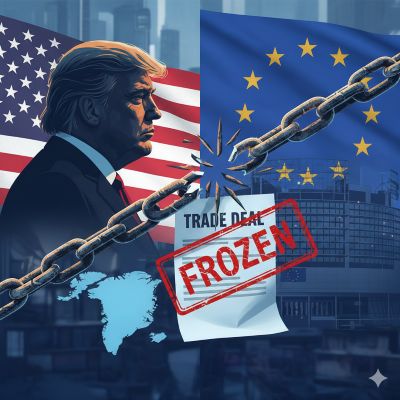
On tariffs, Reeves pushed for calm: “We don’t want to see an escalation; it’s in no one’s interests, not in the UK’s interests, not in America’s interests as well.” She expressed confidence in the 2025 US-UK economic deal holding firm, which cut tariffs on cars and improvedagriculturale access. US Commerce Secretary Howard Lutnick echoed this, saying there’s “no need for existing trade deals to unravel.”
Reeves also confronted the idea of the US going solo: “Even a country as big and strong as America also relies on its allies.” This came during a panel where she challenged Lutnick directly, showing the UK’s resolve.
For the UK finance policy 2026, this means focusing on de-escalation while boosting domestic growth. Reeves has hailed 2026 as a “turning point” for the UK economy, with growth projected ahead of many G7 peers, only behind the US and Canada.
Suggest internal link: Check our article on “UK Finance Policy Updates for 2026” for more on budget plans.
Impact of the US-UK Rift on Markets and Global Economic Impact
Markets took notice. European equities sold off following Greenland-related headlines, although the FTSE 100 held up better than peers thanks to defence and gold miners. According to Capital Economics, a move to 25% tariffs could deal a £22 billion blow to the UK economy, trimming GDP by up to 0.75%.
Table: Key Economic Indicators Affected by Trade Tensions
| Indicator | 2025 Value | Projected 2026 Impact (If Escalation) | Source |
|---|---|---|---|
| US-UK Trade totals | £331.2 billion | Potential 5–10% export decline | GOV.UK |
| UK inflation hit | 3.4% (Dec 2025) | Could rise 0.5-1% due to higher import costs | ONS |
| Global Growth | 2.8% | Steady at 3.3%, but risks downward | IMF |
| US Growth | 2.1% (2025 est.) | Up to 2.4% with AI offset | IMF |
Practical tips: Investors, diversify portfolios to include non-US assets. Businesses, explore EU markets to buffer US risks.
Suggest external source: Read the full IMF World Economic Outlook for deeper trends (imf.org).
Mini Case Study: John Deere’s Struggle with US Tariffs
Take John Deere, the iconic US tractor maker with big UK ties. In 2025, tariffs cost them $600 million pre-tax. For 2026, they forecast a $1.2 billion hit – double! This led to a 5% stock drop after their profit warning, as weak farm demand and higher costs bite.
Why? Tariffs raise steel and part prices, forcing price hikes or layoffs (200 jobs cut). For UK farmers importing Deere gear, this means pricier equipment amid already tough times. It’s a real-world example of how the US-UK rift affects transatlantic trade: global supply chains suffer, markets wobble.
Lessons: Companies should hedge against tariffs via local sourcing or futures contracts.
UK Finance Policy 2026: Navigating the Special Relationship
Looking to 2026, Reeves’ policies aim to steady the ship. With growth forecasted to be stronger than most G7 countries, the focus is on reducing trade barriers. “Britain wants to de-escalate,” she said, avoiding retaliation even as the EU plans tariffs on $93 billion of US imports.
- Policy Priorities: Boost private investment (Reeves secured $2 billion at Davos), diversify trade, and strengthen alliances.
- Risks: If the rift deepens, the UK trade deficit could widen further (already £4.82 billion in Oct 2025).
Suggest internal link: Our guide to “Global Economic Impact of Trade Wars” for similar scenarios.
Conclusion
To wrap up, Rachel Reeves’ assurance that the US is still the UK’s closest ally shines a light amid the shadows of the US-UK alliance rift. From Greenland tensions to tariff threats, the special relationship faces tests, but mutual benefits in transatlantic trade and security should prevail. We’ve seen the potential global economic impact – from market dips to growth risks – but with de-escalation, 2026 could be a rebound year for UK finance policy.
What’s next? Stay informed and adaptable. If you’re in business or investing, consider diversifying to weather any storms. Subscribe to our blog for updates on US-UK trade relations and more – don’t miss out!
FAQs
Q1: What is Rachel Reeves’ statement on US trade?
She emphasised no escalation on tariffs and confidence in deals holding, as trending on X, where users debate if this softens Trump’s stance.
Q2: What is the impact ofthe US-UK rift on markets?
Such risks could spark equity sell-offs and depress trade, echoing the 10.4% decline in UK–U.S. exports. Trending questions focus on recession risks, with economists warning of a £22 billion GDP hit.
Q3: How does this affect global economic impact?
IMF warns of slowed growth if tensions rise, but AI could offset. Users are asking about supply chain disruptions, especially in energy and minerals.
Q4: What about the UK finance policy 2026?
Prioritises de-escalation and growth, with stronger projections than peers. Trending: Will tariffs force budget changes? Likely yes, towards more EU ties.
Disclaimer: All content on Marqzy is for educational purposes only and is not financial advice. We are not SEBI-registered advisors. Investments carry risks; please consult a professional and perform your own due diligence before investing. Marqzy is not liable for any financial losses.