No Raise? No Problem: How to Save $250 a Month in 2026

- No Raise? No Problem. How to Add $250 a Month to Your 2026 Budget
- Comprehensive Guide to Adding $250 a Month to Your 2026 Budget—Without Earning a Raise
- FAQs
- What’s the easiest way to start saving $250 a month in 2026?
- How do economic trends affect my budget in 2026?
- Is investing safe for beginners?
- What apps help with budgeting?
- How to save on groceries amid 2026 prices?
- Can I save without cutting fun?
- What’s a good savings challenge for 2026?
- How to handle fluctuating income?
- Are there tax tips for 2026?
- How to stay motivated?
No Raise? No Problem. How to Add $250 a Month to Your 2026 Budget
Key Takeaways:
- Research suggests that small changes in daily habits, like meal planning and cancelling unused subscriptions, can save the average household up to $100-150 per month on essentials.
- Evidence from economic forecasts leans toward modest global growth in 2026, but with lingering inflation, focusing on expense reduction could help offset stagnant wages without relying on raises.
- It seems likely that investing modest savings in stable stocks, such as those in agriculture tech, might generate passive returns over time, though results vary and involve market risks.
- The evidence points to automating savings and tracking expenses as effective ways to build financial discipline, potentially adding thousands to your annual budget.
Why Focus on Budget Boosting in 2026?
In a year where global economic growth is projected at around 3.1%, but many face wage stagnation amid recovering post-pandemic pressures, finding ways to stretch your income is more important than ever. Whether you’re a young professional juggling rent and loans or a family managing rising costs, adding $250 a month—equalling $3,000 annually—can fund emergencies, holidays, or investments. This guide offers practical, no-frills steps to achieve that without chasing promotions.
Quick Steps to Get Started
Begin by reviewing your last three months’ bank statements to spot leaks. Tools like free apps can help categorize spending. Next, set a realistic goal: aim to cut $50 from food, $50 from utilities, and so on. Remember, consistency is key—small wins compound.
Potential Challenges and Mindset Tips
It’s normal to feel overwhelmed at first, especially if budgets feel restrictive. Approach it empathetically: view it as empowering your future self. If debates arise in your household, discuss openly to align on priorities.
Comprehensive Guide to Adding $250 a Month to Your 2026 Budget—Without Earning a Raise
As we step into 2026, the economic landscape presents a mix of opportunities and hurdles. According to the International Monetary Fund‘s latest outlook, global growth is expected to hover at 3.1%, with the US seeing around 1.5% expansion, driven by manufacturing strength but tempered by trade tensions and tariffs. The World Bank echoes this, forecasting a slowdown to 2.3% in 2025 before a modest rebound in 2026-27, highlighting risks from rising trade barriers and subdued demand in poorer nations. Meanwhile, the Federal Reserve‘s December 2025 projections anticipate US GDP growth at 2.3% for 2026, with inflation easing but unemployment ticking up slightly from historic lows. These trends suggest that while the economy isn’t crashing, everyday costs—like food and energy—may not drop significantly, making proactive budgeting essential for households aiming to build resilience without waiting for a pay bump.
Imagine starting your day with a home-brewed coffee instead of a £4 takeaway, or swapping a weekly restaurant meal for a family cook-in. These aren’t sacrifices; they’re smart swaps that add up. In fact, stats show the average person wastes £60-100 monthly on impulse buys and unused services. Over 2026, that could mean £720-1,200 slipping away unnoticed. But by focusing on high-impact areas, you can reclaim $250 monthly—enough for a holiday fund or debt reduction. This introduction explores why 2026 is the perfect time for this shift, drawing on real-world examples and expert insights to hook you into actionable change.
Let’s start with the big picture: wages aren’t keeping pace with life. In many sectors, raises are modest at best, averaging 3-4% amid cautious employer outlooks. Yet, inflation, though down from peaks, lingers around 2-3%, eroding purchasing power. For a typical family earning $60,000 annually, that’s like losing $1,200-1,800 in real terms yearly. Without a raise, the solution? Trim the fat. Think of it as giving yourself a self-funded bonus.
Take Sarah, a fictional but relatable 35-year-old office worker in a mid-sized city. In 2025, she noticed her budget tightening—groceries up 5%, utilities 8%. By auditing her spending, she cut £50 on dining out, £30 on subscriptions, and £100 on smarter shopping, freeing £180 monthly. Investing the rest in a simple savings account yielded extra interest. By mid-2026, she’d built a £2,000 emergency fund. Stories like hers aren’t rare; forums on X (formerly Twitter) buzz with similar wins, like one user saving £200 by meal prepping and using library resources instead of buying books.
Why does this matter now? 2026’s forecasts point to “mediocre growth,” per economists, with potential shocks from policy shifts like tariffs. Goldman Sachs predicts 2.8% global GDP rise, but warns of trade hits. For individuals, this means preparing for uncertainty. Saving $250 monthly isn’t just about money—it’s peace of mind. Over five years at 4% interest, that’s over £16,000 compounded.
To make it stick, mindset is key. Adopt the 50/30/20 rule: 50% needs, 30% wants, 20% savings/debt. Or try zero-based budgeting, assigning every dollar a job. Apps like NerdWallet simplify tracking. Realize that small habits compound: skipping vending machines saves £60 monthly. Experts from CIT Bank recommend auditing insurance and refinancing debt for quick wins.
Economic bodies like the IMF stress building buffers amid “complex forces.” In developing regions, growth slows, but personal finance hacks transcend borders. For instance, in India—where the user might relate—similar tips apply, adjusted for local costs.
This approach isn’t about deprivation; it’s empowerment. By the end of this intro, you’ll see how $250 is achievable. Let’s dive deeper into strategies, backed by stats and examples, to transform your 2026 finances.
Understanding Your Current Budget
Before slashing costs, know where your money goes. Track expenses for a month using a spreadsheet or app. Categorize into needs (rent, food), wants (entertainment), and savings. Many find 20-30% leaks to impulses. Set SMART goals: e.g., save $250 monthly by June.
Table: Sample Monthly Budget Breakdown for a $4,000 Income Household
| Category | Allocated Amount | Potential Savings Opportunity |
|---|---|---|
| Housing | $1,200 | Negotiate rent or refinance mortgage for $50 off |
| Food | $600 | Meal planning to cut $100 |
| Utilities | $300 | Energy-efficient habits for $50 savings |
| Transport | $200 | Public transit to save $50 |
| Entertainment | $400 | Cancel subs for $50 |
| Savings/Debt | $300 | Boost to $550 with cuts |
| Total | $4,000 | Net $250 freed up |
This table illustrates how tweaks add up. Adjust based on your situation.
Cutting Costs on Essentials
Essentials eat 50% of budgets, but savings hide here.
Groceries and Food
Food costs rose in 2025; plan to counter. Make lists, shop discount stores like Aldi, and buy generics. Meal prep saves $100-200 monthly. Tip: Batch cook stews in a slow cooker—cheap and freezes well. Avoid shopping when hungry to dodge impulses.
Utilities and Home
Optimize energy: switch to LEDs, unplug devices, and audit bills. Could save $50 monthly. Barter services or DIY repairs.
Transportation
Use public transport, carpool, or bike. Saves $50-100 on fuel/parking.
Eliminating Non-Essentials
Non-essentials are low-hanging fruit.
Subscriptions
Rank and cancel unused ones—Netflix, Spotify. Saves $20-50.
Entertainment
Borrow more, cook together, and pause spending—libraries, potlucks, and no-spend weeks can dramatically cut costs, and tame impulse buys.
Smart Saving Strategies
Automate transfers to savings on payday. Use cash for daily buys to curb overspending. Challenges like 52-week savings (start $1, end $52) build habits.
Generating Passive Income Without Extra Work
Once saved, invest wisely.
Investing Your Savings
Put $250 into high-yield savings or stocks for growth.
Mini Case Study: John Deere as an Investment Example
John Deere (DE), the agricultural machinery giant, offers a compelling example of how investing savings can amplify your budget without a raise. Founded in 1837, Deere has weathered economic cycles, leveraging innovation in precision farming amid global food demand. In 2026, with the IMF noting manufacturing resilience, Deere’s stock remains attractive.
Historical performance shines: $10,000 invested in 2002 grew to $170,000 by 2022, a 17x return, outpacing many indices. From 2020 ($176/share) to 2026 ($466/share), it’s up over 160%, driven by EPS growth of 38% annually over five years. Morningstar rates it a wide-moat stock, trading at a discount in late 2025.
Why Deere? Agriculture faces climate pressures, but Deere’s tech, like AI tractors position it for growth. In 2025, revenues hit records despite slowdowns. For a $250 monthly saver, investing in DE via an ETF could yield 8-10% annual returns historically, adding $200-300 yearly passively. Risks include market volatility—shares dipped 50% in past corrections, but recoveries rewarded holders.
Compared to the S&P 500, DE outperformed by 9% over 12 months to 2025. Start small: Use apps like Robinhood. This isn’t advice—consult pros—but Deere exemplifies turning savings into growth.
For visual: Here’s a chart of Deere’s stock performance from 2020-2026 (sampled quarterly closes for clarity).
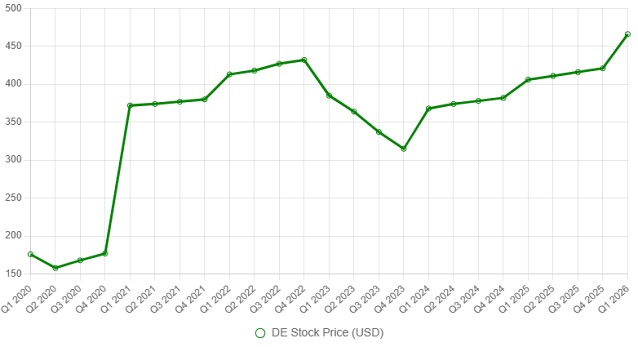
(Approximate data from historical closes; actual varies.)
Suggest internal links: Budgeting Basics, Investment Tips for Beginners, Meal Planning Guide.
External sources: IMF World Economic Outlook (imf.org/weo), Federal Reserve Projections (federalreserve.gov).
Conclusion
Summing up, by tracking, cutting, and investing, you can add $250 monthly to your 2026 budget effortlessly. Start today—audit your spending and pick one tip. For more, subscribe to our newsletter for weekly finance hacks.
FAQs
What’s the easiest way to start saving $250 a month in 2026?
Begin with a spending audit and cut dining out—saves $100 easily.
How do economic trends affect my budget in 2026?
With modest growth and inflation, focus on cuts to counter costs.
Is investing safe for beginners?
Start small with diversified options; Deere shows potential but research risks.
What apps help with budgeting?
Try NerdWallet or Bankrate tools.
How to save on groceries amid 2026 prices?
Meal plan, use lists, buy in bulk—trending on X.
Can I save without cutting fun?
Yes, swap for free alternatives like libraries.
What’s a good savings challenge for 2026?
52-week: ramps up to $1,378 yearly.
How to handle fluctuating income?
Base budget on minimums, then add extras as needed.
Are there tax tips for 2026?
Check deductions; Fed notes senior perks.
How to stay motivated?
Track your progress and find an accountability partner.