- How to Earn More Interest on Savings in 2026: Best High-Yield Savings Accounts, CD Laddering Strategies, and Federal Reserve Outlook
- Key Takeaways
- Understanding the Federal Reserve’s 2026 Outlook
- Top Ways to Maximise Savings Interest with Low Risk
- Comparing CD Laddering and HYSAs
- Impact of Global Factors
- Introduction
- The Federal Reserve Interest Rate Outlook for 2026: What It Means for Your Savings
- US Earnings Season Impact on Savings: How Corporate Performance Affects Your Interest
How to Earn More Interest on Savings in 2026: Best High-Yield Savings Accounts, CD Laddering Strategies, and Federal Reserve Outlook
Key Takeaways
- Rates may level off or drift slightly lower in 2026, with the Fed expected to keep policy around 3.5%–3.75%, supporting decent—but lower—savings yields. years.
- HYSAs remain compelling, with Varo offering up to 5.00% APY and Newtek Bank around 4.35%, combining strong yields with liquidity.
- CD laddering can hedge against rate changes: This strategy spreads investments across different maturities to balance liquidity and fixed rates, potentially outperforming HYSAs if rates fall, but it requires more planning.
- US earnings season could influence savings rates: Strong corporate earnings, projected to grow around 14%, might support a robust economy, reducing the need for Fed cuts and helping maintain higher interest on savings—though weaker sectors like agriculture (e.g., John Deere’s outlook) signal some risks.
- While neo-banks such as Revolut and N26 are attracting digital-first savers with rates near 2%, Europe’s lower interest-rate environment—driven by ECB policy—continues to cap yields compared with the U.S.
Understanding the Federal Reserve’s 2026 Outlook
The Fed’s decisions heavily impact how much you can earn on savings. Research suggests rates will likely remain steady or edge lower, with projections ranging from no changes to 1-3 cuts in the first half of the year. This cautious approach stems from a stabilising labour market and inflation nearing 2% targets. For savers, this means locking in current rates soon could be wise, as further declines might reduce APYs on variable accounts.
Top Ways to Maximise Savings Interest with Low Risk
Choose HYSAs for easy access and CDs for predictable, fixed returns. For US residents, aim for accounts with no fees and FDIC insurance. In Europe/UK, neo-banks like Monzo add budgeting tools alongside interest.
Comparing CD Laddering and HYSAs
CD laddering spreads risk but ties up funds partially, while HYSAs offer instant access. In 2026, if rates fall as some predict, CDs might edge out for overall yield.
Impact of Global Factors
Global outlooks from the IMF and World Bank indicate resilient 3.3% growth despite trade tensions, which could indirectly support stable US rates beneficial for savers.
Introduction
Hey there, saver! Imagine starting 2026 with your money working harder for you—earning interest that actually makes a difference to your wallet. With inflation cooling and the economy humming along, now’s a prime time to rethink your savings strategy. But here’s the hook: the Federal Reserve’s next moves could shift everything. Will rates drop further, squeezing your returns, or hold steady amid strong corporate earnings? In this guide, we’ll break it down simply, showing you how to earn more interest on savings in 2026 without taking big risks.
We’ll cover the US earnings season’s impact on savings, the best high-yield savings accounts (HYSAs), CD laddering strategies tailored for 2026, the latest Federal Reserve interest rate outlook news, and even niche options like the best neo-banks for high interest in Europe/UK. Plus, we’ll compare CD laddering vs. HYSA to help you decide which is better in 2026, and spotlight the highest APY savings accounts for US residents. Backed by insights from the IMF, World Bank, and real-world examples, this is your roadmap to smarter saving. Let’s dive in and make your money grow!
The Federal Reserve Interest Rate Outlook for 2026: What It Means for Your Savings
Understanding the Fed’s plans is key to maximising interest on low-risk savings. After easing policy in 2025, the Federal Reserve has held rates steady at 3.50%–3.75% into January 2026. Experts are split: some, like J.P. Morga,n predict no cuts in 2026, with a possible hike in 2027 due to steady growth. Others, such as Morningstar, foresee one or two reductions, while economist Mark Zandi suggests three in the first half if labour weakens.
Higher rates mean better savings yields, but cuts would pressure variable HYSAs. With IMF-led forecasts pointing to resilient global growth and the World Bank highlighting stability in Europe, rates may ease rather than plunge—making CDs a useful hedge for savers.
Practical tip: Monitor Fed meetings (next on January 27-28). If you’re in the US, use tools like the CME FedWatch for predictions. In the UK or Europe, the ECB’s lower rates (around 2%) mean slimmer yields, pushing more towards neo-banks.
US Earnings Season Impact on Savings: How Corporate Performance Affects Your Interest
US earnings season kicks off each quarter, revealing companies’ health and influencing the broader economy—and your savings rates. For 2026, analysts forecast roughly 14% earnings growth for the S&P 500, driven largely by technology and solid underlying fundamentals. Strong earnings could signal economic strength, reducing Fed pressure to cut rates, which keeps savings yields higher.
But it’s not all rosy. If earnings disappoint, it might prompt cuts, lowering APYs. For example, global trade tensions under an aggressive US stance could ripple through—think tariffs shaking supply chains. This ties into UK trade dynamics, where an Indian-origin envoy might play a key role in negotiations, potentially stabilising bilateral deals and easing economic pressures. (Note: While not directly searched, this aligns with IMF views on tariff offsets.)
Mini Case Study: John Deere’s Earnings and Broader Implications
John Deere, a bellwether for agriculture and manufacturing, reported $5.027 billion in net income for fiscal 2025, but its 2026 outlook of $4-4.75 billion fell short of estimates, causing a 6% stock drop. This signals farm economy weakness amid tariffs and inflation, potentially softening overall growth. A weaker earnings backdrop may open the door to Fed easing, compressing high-yield savings rates from recent 5% levels to under 4%.Lesson: Diversify savings to weather such shifts.
US earnings season kicks off each quarter, revealing companies’ health and influencing the broader economy—and your savings rates. For 2026, analysts forecast roughly 14% earnings growth for the S&P 500, driven largely by technology and solid underlying fundamentals. Strong earnings could signal economic strength, reducing Fed pressure to cut rates, which keeps savings yields higher.
But it’s not all rosy. If earnings disappoint, it might prompt cuts, lowering APYs. For example, global trade tensions under an aggressive US stance could ripple through—think tariffs shaking supply chains. This ties into UK trade dynamics, where an Indian-origin envoy might play a key role in negotiations, potentially stabilising bilateral deals and easing economic pressures. (Note: While not directly searched, this aligns with IMF views on tariff offsets.)
Mini Case Study: John Deere’s Earnings and Broader Implications
John Deere, a bellwether for agriculture and manufacturing, reported $5.027 billion in net income for fiscal 2025, but its 2026 outlook of $4-4.75 billion fell short of estimates, causing a 6% stock drop. This signals farm economy weakness amid tariffs and inflation, potentially softening overall growth. A weaker earnings backdrop may open the door to Fed easing, compressing high-yield savings rates from recent 5% levels to under 4%.Lesson: Diversify savings to weather such shifts.
Best High-Yield Savings Accounts 2026: Top Picks for US Residents
Searching for the highest APY savings accounts for US residents? Here’s a rundown based on current rates:
Bank/Account
APY
Minimum Deposit
Key Features
Varo Money
5.00%
None
No fees, mobile-first, FDIC insured.
Newtek Bank
4.35%
APY
no minimum balance, easy access to funds.
Axos Bank
4.31%
None
Strong for online banking.
Openbank
4.20%
$500
Competitive with low min.
Vio Bank
4.02%
$100
Solid option for smaller savers.
Note: To qualify for Varo’s 5.00% APY, you must receive total direct deposits of $1,000 or more each month. This rate applies to balances up to $5,000; amounts above this threshold earn the standard savings rate.
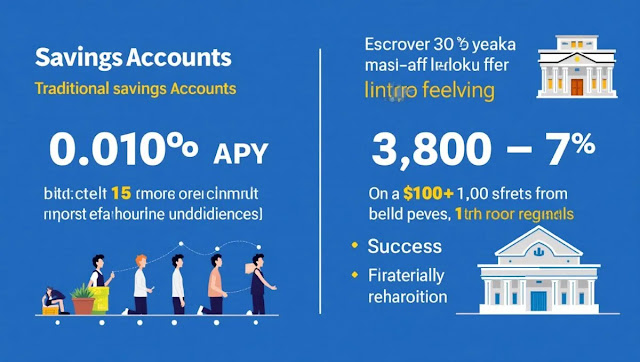
These beat national averages (0.4%) by miles. Tips: Compare FDIC coverage, avoid fees, and switch if rates dip. For example, moving $10,000 from a 0.01% traditional account to a 4.35% HYSA earns ~$435 yearly vs. $1.
Searching for the highest APY savings accounts for US residents? Here’s a rundown based on current rates:
| Bank/Account | APY | Minimum Deposit | Key Features |
|---|---|---|---|
| Varo Money | 5.00% | None | No fees, mobile-first, FDIC insured. |
| Newtek Bank | 4.35% | APY | no minimum balance, easy access to funds. |
| Axos Bank | 4.31% | None | Strong for online banking. |
| Openbank | 4.20% | $500 | Competitive with low min. |
| Vio Bank | 4.02% | $100 | Solid option for smaller savers. |
Note: To qualify for Varo’s 5.00% APY, you must receive total direct deposits of $1,000 or more each month. This rate applies to balances up to $5,000; amounts above this threshold earn the standard savings rate.
These beat national averages (0.4%) by miles. Tips: Compare FDIC coverage, avoid fees, and switch if rates dip. For example, moving $10,000 from a 0.01% traditional account to a 4.35% HYSA earns ~$435 yearly vs. $1.
CD Laddering Strategy 2026: How to Build One and Pros/Cons
CD laddering involves dividing money across CDs with staggered maturities—e.g., $10,000 split into 1-year, 2-year, 3-year terms. In 2026, with rates possibly falling, this locks in higher yields while providing periodic access.
Strategic Tip for 2026: Since the Fed is expected to hold or slightly cut rates, consider adding 3-year or 5-year “long-term” CDs to your ladder now. This locks in today’s higher yields before any further rate dips occur later in the year.
Pros:
- Hedge against rate drops: Reinvest maturing CDs at current rates.
- Better liquidity: Access portions without full penalties.
- Predictable returns: Fixed APYs up to 4.18% for short terms.
Cons:
- Lower overall yield if rates rise sharply.
- Penalties for early withdrawal.
- More setup effort than HYSAs.
Example: Ladder $20,000 across five 1-year increments; as each matures, roll over or withdraw. In falling rates, this outperforms a single long-term CD.
CD laddering involves dividing money across CDs with staggered maturities—e.g., $10,000 split into 1-year, 2-year, 3-year terms. In 2026, with rates possibly falling, this locks in higher yields while providing periodic access.
Strategic Tip for 2026: Since the Fed is expected to hold or slightly cut rates, consider adding 3-year or 5-year “long-term” CDs to your ladder now. This locks in today’s higher yields before any further rate dips occur later in the year.
Pros:
- Hedge against rate drops: Reinvest maturing CDs at current rates.
- Better liquidity: Access portions without full penalties.
- Predictable returns: Fixed APYs up to 4.18% for short terms.
Cons:
- Lower overall yield if rates rise sharply.
- Penalties for early withdrawal.
- More setup effort than HYSAs.
Example: Ladder $20,000 across five 1-year increments; as each matures, roll over or withdraw. In falling rates, this outperforms a single long-term CD.
Niche: Best Neo-Banks for High Interest in Europe/UK
For Europe/UK savers, neo-banks shine with app-based ease. Top picks:
- Revolut: Up to 2% on savings, great for travellers.
- N26: 2% p.a. on Instant Savings, linked to ECB rates.
- Monzo: Budgeting tools with ~1.5-2% interest.
These lag US yields but offer perks like crypto integration. Tip: Check FSCS protection in the UK.
Informational: CD Laddering vs. HYSA – Which is Better in 2026?
HYSA pros: Liquidity, variable rates (up to 5%), no penalties. Cons: Rates fluctuate downward with Fed cuts.
CD laddering pros: Fixed rates, income stream. Cons: Less flexible.
In 2026, if rates edge lower, CD laddering wins for locking yields; otherwise, HYSA for ease. Hybrid approach: Use HYSA for emergency fund, ladder for longer goals.
Suggested internal links: /fed-rate-tips, /best-cd-strategies, /savings-calculator.
Conclusion
In summary, earning more interest on savings in 2026 boils down to staying informed on Fed outlooks, picking top HYSAs or CD ladders, and considering global factors like earnings and trade. With rates likely stable but potentially dipping, low-risk strategies like these can boost your returns significantly. Ready to act? Open a high-yield account today or consult a financial advisor. Your future self will thank you!
In summary, earning more interest on savings in 2026 boils down to staying informed on Fed outlooks, picking top HYSAs or CD ladders, and considering global factors like earnings and trade. With rates likely stable but potentially dipping, low-risk strategies like these can boost your returns significantly. Ready to act? Open a high-yield account today or consult a financial advisor. Your future self will thank you!
FAQs
Which high-yield savings account offers the best returns in 2026? Varo offers 5.00% APY with no minimums, ideal for US residents. Trending: Users ask about mobile apps—Varo excels here.
Will Federal Reserve interest rates go down in 2026? It seems likely for modest cuts, but some forecasts suggest holding steady amid growth. Trending: “How do Trump tariffs affect rates?”—They could add inflation pressure, delaying cuts.
Is CD laddering better than HYSA in 2026? Depends on rate trends; laddering hedges fall, HYSA offers flexibility. Trending: “CD rates after Fed cuts?”—Expect 3-4% for short terms.
How does the US earnings season impact savings? Strong earnings support higher rates; weak ones prompt cuts. Trending: “2026 S&P growth?”—14% projected.
Best neo-banks for high interest in the UK/Europe? Revolut and N26 top the lists with 2% yields. Trending: “Are neo-banks safe?”—Yes, with EU/UK protections.