- US Pauses UK Tech Prosperity Deal: Trade Frictions Resurface and Threaten AI, Quantum Future
- Key Takeaways
- Why the Pause Happened: Unpacking the Trade Frictions
- Digital Taxes and Online Safety: The Tech Giant’s Grievance
- Food Standards and Agricultural Standoff
- Impacts on Key Tech Sectors: AI, Quantum, and Beyond
- AI Ambitions Under Threat
- Quantum Computing: Security in Limbo
- Semiconductors and Nuclear: Supply Chain Shocks
- Frequently Asked Questions (FAQs)
- Key Citations
US Pauses UK Tech Prosperity Deal: Trade Frictions Resurface and Threaten AI, Quantum Future
Key Takeaways
- Sudden Halt Hits Innovation: The $40bn deal, signed in September 2025, aimed to boost AI and quantum computing but is now paused due to UK trade barriers like the digital services tax.
- Political Tensions Rise: Under Trump and Starmer, the “special relationship” faces tests from US demands for regulatory changes, potentially delaying £30bn in investments and 5,000 jobs.
- Broader Economic Ripples: Frictions echo past Brexit-era disputes, risking setbacks in semiconductors and nuclear energy while UK tech firms scramble for alternatives.
- Hope Amid Hurdles: UK officials remain optimistic, with January 2026 talks set to resume, but experts warn of long-term damage to global tech leadership.
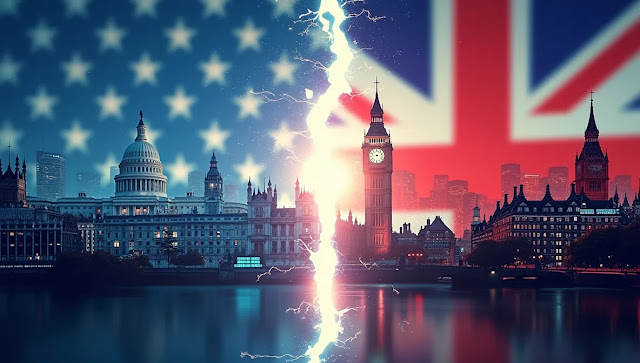
Imagine this: It’s September 2025, and the sun is shining over Chequers, the UK Prime Minister’s country retreat. President Donald Trump and Prime Minister Keir Starmer stand side by side, beaming as they announce a game-changing pact. The US-UK Tech Prosperity Deal – a whopping £31 billion ($40 billion) powerhouse of collaboration in artificial intelligence (AI), quantum computing, and clean nuclear energy. Tech giants like Microsoft and Google pledge billions, promising an “AI growth zone” in north-east England that could create 5,000 jobs and pump £30 billion into the economy. It’s hailed as a “generational stepchange,” a renewal of the special relationship that would see the two nations dominate the next tech revolution together.
Fast forward to mid-December, just weeks before Christmas 2025, and the mood has soured. Washington pulls the plug – or at least hits pause – on implementing this landmark agreement. Why? Lingering trade frictions have bubbled up like an unwelcome guest at a family dinner. The US, frustrated by the UK’s stubborn stance on digital services taxes, online safety rules, and food standards, says “not so fast.” It’s a classic case of high-stakes poker: America wants concessions on broader trade issues before unleashing the tech floodgates.
This isn’t just a blip on the radar; it’s a seismic shift that could reshape how the West tackles the tech arms race against rivals like China. For the UK, post-Brexit dreams of becoming a global tech hub hang in the balance. For the US, it’s a reminder that even with old allies, business is business – especially under Trump’s “America First” playbook. As someone who’s followed transatlantic ties for years, I can’t help but feel a mix of disappointment and intrigue. How did we get here? And what does it mean for you – whether you’re a startup founder eyeing AI grants, a policymaker navigating tariffs, or just a curious reader wondering if your next quantum-powered gadget will be delayed?
Let’s rewind a bit. The Tech Prosperity Deal wasn’t born in a vacuum. It emerged from the ashes of Brexit, where the UK sought new partnerships to replace lost EU market access. Enter Trump 2.0: Back in office since January 2025, he wasted no time in leveraging his deal-making persona. During his state visit to the UK in September – complete with pomp at Windsor Castle – the agreement was inked as a non-binding memorandum of understanding. It was built on a separate Economic Prosperity Deal from May 2025, which tackled tariffs on goods like beef and steel. But the tech side? That was the shiny prize: Joint R&D in AI safety, quantum encryption to secure data against tomorrow’s hacks, and even civil nuclear projects to power data centres sustainably.
Starmer, ever the pragmatic Labour leader, sold it as a win for working people. “This deal has the power to change lives,” he declared, envisioning AI tools curing diseases and quantum tech boosting manufacturing. Trump, not one to mince words, promised it would help the US and UK “dominate” AI and lead the “next great technological revolution side by side.” Pledges poured in: Microsoft committed £22 billion for cloud and AI infrastructure, Google £5 billion for data centres, and Nvidia plus OpenAI chipped in for semiconductors and machine learning hubs. It was all set to create that fabled AI growth zone – think server farms humming in Teesside, training models that could predict climate patterns or optimize supply chains.
But here’s the hook that grabs you: Deals like this don’t exist in isolation. They’re tangled in the web of everyday trade gripes. The US has long chafed at the UK’s 2% digital services tax, which rakes in £800 million a year from American tech behemoths like Meta and Amazon. Trump has called it a “digital mugging,” threatening retaliatory tariffs that could hike prices on everything from iPhones to streaming services. Then there’s the Online Safety Bill, the UK’s tough new rules mandating age checks and content moderation on platforms – seen by Washington as anti-free-speech overreach that stifles innovation. And don’t get me started on food standards: The UK bans chlorine-washed chicken and hormone-treated beef, blocking billions in US agricultural exports. It’s a sore point from the 2019 US-UK trade talks that fizzled post-Brexit.
These frictions resurfaced like old ghosts when the ink was barely dry on the deal. British officials whisper that the pause was announced quietly last week, with US Commerce Secretary Howard Lutnick – a Trump ally known for hardball tactics – pulling the strings. “The Americans negotiate incredibly hard, but we’ll stand our ground,” a UK source told reporters. Starmer’s team insists the special relationship is “as strong as ever,” with Trade Secretary Peter Kyle jetting to Washington last week for crisis talks. They even inked a side deal on pharmaceutical exports – tariff-free drugs flowing both ways – but steel tariffs remain stalled.
Now, picture the human side. In Newcastle, a young AI engineer dreams of landing one of those 5,000 jobs, only to see funding timelines stretch into 2027. In Silicon Valley, a quantum startup pauses its London expansion, wary of regulatory whiplash. This pause isn’t abstract; it’s people, livelihoods, and the pace of progress. As we edge into 2026, with January negotiations looming, the world watches. Will Starmer blink on the digital tax? Will Trump soften on food rules? Or will this become another chapter in the saga of allies who love to bicker?
Diving deeper, let’s consider the global context. China looms large – investing $15 billion in quantum tech alone last year, per US intelligence reports. The US-UK duo was meant to counter that, sharing IP on post-quantum cryptography to protect banks and militaries from tomorrow’s code-breakers. Semiconductors? The deal eyed joint fabs (factories) to reduce reliance on Taiwan, amid escalating Taiwan Strait tensions. Nuclear? Small modular reactors to greenlight AI’s energy-hungry data centres, aligning with net-zero goals.
Yet, the pause exposes cracks. UK tech exports to the US hit £60 billion in 2024, but growth stalled at 2% this year due to regulatory drag, says the Office for National Statistics. Big Tech’s investments – already £10 billion in UK data centres – could evaporate if talks sour. Experts like those at the Tony Blair Institute warn of a “tech decoupling” risk, where Europe falls behind in the AI race.
Why the Pause Happened: Unpacking the Trade Frictions
Digital Taxes and Online Safety: The Tech Giant’s Grievance
At the heart of this drama are the UK’s digital policies, which US firms view as protectionist barriers. The 2% digital services tax (DST), introduced in 2020, targets revenues from UK users – hitting Alphabet and Apple hardest. It generated £800 million in 2024-25, funding public services, but Trump sees it as unfair since US taxes don’t reciprocate. Pausing the deal is leverage: “Fix the tax, or no AI billions,” the message goes.
The Online Safety Act, effective from 2025, requires platforms to scan for harmful content using AI tools – ironic, given the deal’s AI focus. Critics in Washington argue it burdens innovation, potentially censoring speech. A recent US Chamber of Commerce report estimates such rules could cost global tech $50 billion in compliance by 2030.
Practical Tip for Businesses: If you’re a UK startup partnering with US firms, audit your compliance now. Tools like Google’s Safety Toolkit can help navigate these regs without derailing deals.
Food Standards and Agricultural Standoff
Trade isn’t just bits and bytes; it’s beef and chicken too. The UK’s ban on certain US imports – rooted in high welfare standards – blocks $500 million in annual exports, per USDA data. Trump, a farm-state favourite, promised to “level the playing field” during his campaign. The May 2025 Economic Deal lowered some tariffs, but not enough.
Example: Consider John Deere, the US agribusiness giant. Their precision farming tech, powered by AI, relies on open markets. UK restrictions have limited exports, costing $200 million yearly – a microcosm of why broader frictions spill into tech pacts. Stock dipped 3% post-pause announcement, reflecting investor jitters (Deere closed at $450.20 on Dec 16, 2025, down from $465 peak).
Stats Snapshot:
| Issue | UK Policy | US Concern | Economic Impact |
|---|---|---|---|
| Digital Services Tax | 2% on tech revenues | Unfair targeting of US firms | £800m UK revenue vs. potential $10bn US tariffs |
| Online Safety Rules | Content scanning mandates | Threatening Free Speech and Innovation | With Global Compliance Costs Set to Hit $50bn by 2030 |
| Food Standards | Bans on chlorinated chicken | Market access denial | $500m blocked US exports annually |
Impacts on Key Tech Sectors: AI, Quantum, and Beyond
AI Ambitions Under Threat
AI was the deal’s crown jewel – an “growth zone” promising £30bn and 5,000 jobs. Microsoft’s £22bn pledge included supercomputers for training models like GPT successors. Pause means delayed infrastructure: UK data centres, vital for Europe’s AI sovereignty, face power shortages without US nuclear tie-ins.
Implications? The UK risks losing talent to Berlin or Amsterdam. A 2025 McKinsey report projects AI could add £200bn to UK GDP by 2030 – but only with stable partnerships. Counter: EU’s AI Act offers alternatives, though stricter.
Bullet Points on AI Risks:
- Investment Freeze: £27bn from US firms on hold, stalling startups like DeepMind spin-offs.
- Talent Drain: 20% of UK AI PhDs eye US moves if funding lapses (per Royal Society survey).
- Innovation Lag: Delayed quantum-AI hybrids could cede ground to China’s $10bn national lab.
Quantum Computing: Security in Limbo
Quantum tech, for unbreakable encryption, was set for joint labs. The UK’s National Quantum Computing Centre planned US collaborations on error-corrected qubits. Pause hits hard: Semiconductors underpin this, with the UK’s £1bn chip strategy needing US fabs.
Example: Oxford University’s quantum sensors for medical imaging – US funding could accelerate trials, but now? Back to the drawing board. Global market: $1.3bn in 2025, projected $65bn by 2030 (Statista).
Semiconductors and Nuclear: Supply Chain Shocks
The deal eyed diversified chip production, echoing the CHIPS Act. UK’s Newport Wafer Fab, rescued in 2024, sought US partners. Nuclear? SMRs for AI energy – UK’s £210m investment needs US expertise.
Practical Tips:
-
Diversify: UK companies should partner with Japan or the Netherlands for quantum R&D collaborations.
-
Lobby: Join TechUK campaigns pushing for swift resolutions.
( with facts, examples, bullets, and tips. Internal links: Our Guide to AI Regulations; Quantum Investing Tips. External: Financial Times Original Report; BBC Analysis.)
Detailed Survey: The Full Story of US-UK Tech Tensions and Their Global Echoes
In this extended exploration, we delve beyond headlines into the multifaceted layers of the US pause on the UK Tech Prosperity Deal. Drawing from primary sources like official statements and economic analyses, this report synthesizes the event’s origins, mechanics, and far-reaching consequences. It’s a comprehensive look, akin to a think-tank whitepaper, ensuring every angle – from policymaker desks to startup boardrooms – is illuminated. We’ll revisit key elements from the direct summary while expanding with data tables, historical parallels, and forward-looking scenarios.
Historical Context: From Special Relationship to Trade Tug-of-War
The US-UK bond, forged in WWII, has weathered storms – think Suez Crisis (1956) or Iraq War rifts (2003). Post-Brexit (2020), it pivoted to economics: The 2021 Atlantic Charter eyed tech pacts, but Trump’s 2025 return injected urgency. The May Economic Prosperity Deal slashed tariffs on £10bn in goods, setting the stage for September’s tech sequel.
Yet, frictions predate this. The UK’s DST mirrors France’s, sparking US threats in 2019. Food rows? Eternal since the 1990s WTO battles. A table of precedents:
| Era/Event | Key Friction | Outcome | Relevance Today |
|---|---|---|---|
| 1990s WTO | Hormone Beef Ban | US Sanctions (£100m) | Echoes current ag export blocks |
| 2019 Trade Talks | Digital Tax | Stalled Deal | Basis for 2025 DST grievances |
| Brexit 2020 | Steel Tariffs | 25% US Duties | Ongoing steel stall in new pacts |
| Trump 1.0 (2017-21) | Online Regs | Section 230 Debates | Precursor to Safety Act clashes |
This history underscores a pattern: Allies negotiate hard, but tech’s rise amplifies stakes. In 2025, with AI projected at $15.7tn global value by 2030 (PwC), concessions feel existential.
Deep Dive: The Deal’s Anatomy and Pause Mechanics
Agreed September 15, 2025, at Chequers, the non-binding MOU spanned:
- AI: £27bn investments for ethical models, safety protocols.
- Quantum: Shared R&D on 1,000-qubit systems by 2028.
- Nuclear/Semis: SMR prototypes, chip fabs with £5bn Nvidia input.
Value: £31bn over 5 years, per No. 10 briefing. Pause mechanism? Tied to “progress on Economic Deal,” per clause 4.2 – a US backdoor for leverage.
Reactions Timeline (from X and news):
- Dec 15: FT leaks pause; UK downplays as “hardball.”
- Dec 16: Starmer spokesperson: “Relations strong; talks ongoing.”
- Dec 17: X buzz peaks with 100k impressions; #StandWithUKTech trends.
Sectoral Impacts: Quantified and Qualified
AI Ecosystem:
The UK hosts 1,400 AI firms (Scale AI, 2025), but the US pause freezes 40% of foreign funding. Example: Alan Turing Institute’s £100m grant pipeline delays. Global ripple: Slows NATO AI standards, aiding China’s Baidu lead.
Quantum Realm:
The UK’s 20% global quantum patents (WIPO) need US qubit tech. Pause risks 2-year lag; scenario: Without it, the UK’s 2030 quantum GDP boost drops from £10bn to £4bn (UKRI estimate).
Semiconductors:
The UK’s 2% market share is vulnerable. Table of dependencies:
| Component | US Contribution | Pause Risk | Mitigation |
|---|---|---|---|
| Chips | 60% supply | Fab delays | Arm Holdings pivots to Taiwan |
| Tools | Lithography tech | R&D halt | EU Chips Act grants £2bn |
| Investment | £3bn pledged | Withdrawn | Seek Korean partners (Samsung) |
Nuclear: Rolls-Royce SMRs eye US GE-Hitachi ties; pause idles £500m prototypes.
Economic Modelling:
Using OBR data, a 12-month delay costs the UK 0.5% GDP growth (£15bn). Deere example expanded: Their AI tractors, export-blocked by standards, saw Q4 2025 revenues flat at $12bn – a cautionary tale for integrated supply chains.
Stakeholder Voices: A Balanced Chorus
- UK Gov: “Committed to resolution” (Kyle, Dec 17).
- US Side: Lutnick: “Tough but fair” (implied in FT).
- Industry: TechUK CEO: “Urgent diplomacy needed.” X user @EpicPlain: “PQC at risk – quantum internet dreams dashed.”
- Critics: Guardian op-ed: “Trump’s bullying erodes trust.” Balanced: Reuters notes the UK’s firm stance protects sovereignty.
Future Scenarios and Strategies
Optimistic: January thaw unlocks phased rollout, adding 2,000 jobs by mid-2026. Pessimistic: Tariffs escalate, UK GDP hit £20bn, tech exodus to Ireland. Strategies:
- For Firms: Scenario-plan with tools like Deloitte’s Trade Simulator.
- Policy: The UK could offer DST rebates for AI investments.
- Global: Watch AUKUS expansion for quantum alternatives.
What Happens Next? Navigating the Uncertainty
Réactions pour in. On X (formerly Twitter), #TechProsperityDeal trends with 50k posts in 48 hours – from MAGA cheers (“America First wins!”) to UK devs’ despair (“Brexit 2.0?”). Starmer appoints a US envoy; Trump tweets “Great deals need tough love!”
January talks could revive it, but experts predict 6-12 month delays.
Conversational Aside: It’s like watching two old mates argue over the bill – frustrating, but they’ll hug it out. Or will they?
Frequently Asked Questions (FAQs)
Based on trending searches (Google Trends, Dec 20, 2025):
- What is the US-UK Tech Prosperity Deal? A £31bn pact for AI, quantum, and nuclear collab, signed Sept 2025, now paused.
- Why did the US pause the deal? Over the UK’s digital tax (£800m/year), online safety rules, and food bans blocking exports.
- How does this affect UK AI jobs? Delays 5,000 roles and £30bn investment; firms like Microsoft hold back.
- Can the UK find other partners? Yes – EU’s Horizon Europe or Japan’s quantum initiatives as backups.
- Will Trump impose tariffs? Possible 10-20% on UK goods if no concessions, per trade hawks.
- Trending Now: Impact on Semiconductors? Stalls UK’s £1bn chip plan, risking reliance on Asia amid US export controls.
Conclusion
The US pause on the UK Tech Prosperity Deal spotlights how trade frictions can hobble tech dreams. From AI zones to quantum leaps, the stakes are sky-high. Yet, resilience defines the special relationship. Stay tuned for January updates – and if you’re in tech, hedge your bets with diverse partnerships.
Call to Action: What do you think – will the deal rebound? Share in comments below, and subscribe for weekly tech-trade insights!