China’s Earnings Miss Tests Xi’s Anti-Deflation Bid
- China Earnings Miss: Shadows Over Xi’s Bold Bid to End Deflation in 2025
- Understanding the China Earnings Miss: A Deep Dive into Q3 2025 Weakness
- Xi Jinping’s Anti-Deflation Strategy: Promises vs. Reality
- Why the Earnings Miss Casts Doubt: Sectoral Breakdown and Stats
- Impact on Real Estate and Consumers
- Bright Spots: Materials and Financials Defy the Trend
- Global Ripples: How China’s Earnings Miss Affects the World, Including Deere’s Stock Woes
- What Exactly Is the China Earnings Miss in 2025?
- How Is Xi Jinping Trying to End Deflation?
- Will Deflation Last into 2026?
- How Does This Affect Global Stocks Like Deere?
- What Tips for Investing Amid This?
China Earnings Miss: Shadows Over Xi’s Bold Bid to End Deflation in 2025
- Key Takeaway 1: China’s third-quarter earnings fell short by 1.1%, highlighting ongoing deflation pressures despite government efforts to curb price wars.
- Key Takeaway 2: President Xi Jinping’s “anti-innovation” campaign shows limited success, boosting only select sectors like materials, while real estate and consumers lag.
- Key Takeaway 3: Persistent deflation risks a Japan-style spiral, squeezing industrial profits and global trade, with US firms like John Deere feeling the pinch.
- Key Takeaway 4: Investors face uncertainty, but opportunities may arise if Beijing ramps up stimulus to revive demand.
- Key Takeaway 5: Ending deflation requires bolder consumer-focused policies, not just supply-side tweaks, to spark sustainable growth.
Imagine you’re a small factory owner in Shenzhen, China. It’s early 2025, and the air hums with the usual buzz of assembly lines churning out electronics for export. But this year, something feels off. Orders from overseas buyers are trickling in slower than ever, and at home, customers are haggling harder over prices. Your margins, once healthy, are evaporating like morning mist. You cut costs, lay off a few workers, and slash prices just to keep the doors open. This isn’t just your story—it’s the tale of thousands across China’s vast manufacturing heartland. Welcome to the grip of deflation, where falling prices sound like a bargain but trap economies in a vicious cycle of delayed spending and shrinking profits.
In the shadow of this struggle stands President Xi Jinping, China’s paramount leader, who has staked much of his economic legacy on breaking this deflationary curse. Back in July 2025, Xi launched a high-profile “anti-involution” drive—a bold campaign to rein in cutthroat price wars and excessive competition that have plagued industries from electric vehicles to steel. It was a clarion call: no more “involution,” that peculiar Chinese term for self-defeating overwork and underpricing. Officials promised a return to healthy profits, stable prices, and renewed investor confidence. Markets rallied briefly, with shares in tech and materials sectors jumping on hopes of a turnaround. But fast-forward to late November 2025, and the mood has soured. Third-quarter corporate earnings have missed expectations, casting a long shadow over Xi’s ambitions.
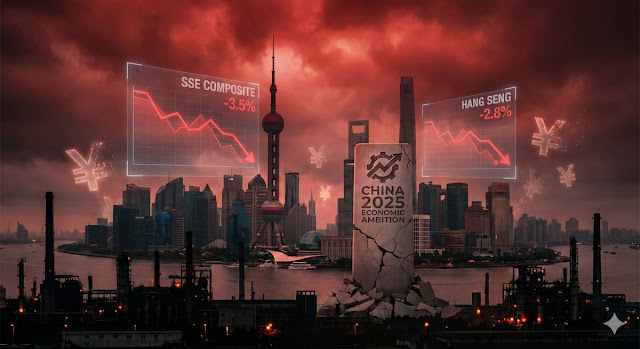
This earnings miss isn’t a blip; it’s a stark reminder of how entrenched deflation has become in the world’s second-largest economy. According to Bloomberg Intelligence, members of the MSCI China Index—representing 97% of the benchmark’s market capitalization—posted a 1.1% negative earnings surprise for July to September. That’s a continuation of the weakness from the prior quarter, with real estate and consumer sectors dragging the average down. Disappointing results outweighed brighter spots in materials and financials, leaving investors grasping for catalysts as Chinese stocks extend losses into a second month. Picture this: property developers, already battered by a years-long housing slump, reported profits that were not just flat but plunging. Consumer giants like e-commerce platforms saw sales growth stall as shoppers, spooked by job fears and falling wages, tightened their belts. It’s a far cry from the growth miracle China has delivered for decades.
To understand why this matters, let’s step back. Deflation, simply put, is when prices fall across the board—not just for one good or service, but economy-wide. In theory, cheaper stuff should boost buying, right? But in practice, it breeds caution. Consumers wait for even lower prices; businesses delay investments, fearing obsolescence. Debts feel heavier as incomes stagnate. China has flirted with deflation before—back in the late 1990s, after the Asian financial crisis, and more recently,y post-COVID. But 2025 marks a troubling milestone: the third straight year of price declines, with the producer price index (PPI) down for 37 consecutive months. The consumer price index (CPI) hovers near zero, slipping into negative territory by September at -0.3%. Official data might understate the pain; Bloomberg’s on-the-ground analysis shows everyday goods prices plunging faster, with over 25% of listed Chinese companies reporting losses in the first half of 2025—the highest in 25 years.
Xi’s bid to end this isn’t born in a vacuum. It’s a high-stakes pivot for a leader who has consolidated power like few before him. Since taking the helm in 2012, Xi has championed “high-quality development,” shifting from breakneck export-led growth to innovation and self-reliance. But the property bubble’s burst—once 30% of GDP—left a gaping hole. Local governments, drowning in debt from funding those ghost cities, slashed spending. Exports, a traditional engine, face headwinds from US tariffs under a resurgent Trump administration, potentially rising to 40% on Chinese goods. Into this storm steps Xi’s anti-deflation crusade. At a key July meeting, he decried “irrational competition” and vowed to tackle overcapacity—the flood of cheap steel, solar panels, and EVs that undercuts global markets and erodes domestic profits.
The campaign kicked off with fanfare. Regulators summoned food delivery apps like Maiduan and JD.com to Beijing, lecturing them on predatory pricing. EV makers, including BYD, faced scrutiny over subsidy-fueled price cuts that turned a booming sector into a bloodbath. In steel and coal, echoes of 2015’s supply-side reforms resurfaced when Xi slashed capacity to end a 54-month factory deflation streak. Back then, it worked: prices rebounded, growth stabilized. This time, though? Early signs are mixed. Industrial profits dipped 5.5% in October after brief gains, per National Bureau of Statistics data. The “anti-involution” push has eased pressures in materials, where earnings surprised positively, but elsewhere, it’s like applying a plaster to a broken leg.
Why the resistance? At its core, deflation in China stems from a supply-demand mismatch on steroids. Factories, built during the glory days of stimulus, churn out more than the world can absorb. Weak domestic demand—rooted in an ageing population, youth unemployment at 15%, and a property crisis that’s wiped-out household wealth—compounds it. Consumers aren’t spending; they’re saving, with household deposits hitting record highs. Businesses, squeezed by falling prices, cut wages and jobs, feeding the spiral. Xi’s team knows this. In a rare Politburo statement in July, they prioritized “vigorously boosting consumption” for the first time in a decade. Yet actions lag words. Stimulus has focused on infrastructure and factories, not direct cash to wallets. A 1 trillion-yuan bond issuance for projects? Helpful, but it props up supply, not demand.
Enter the earnings miss, a gut punch to optimists. When results rolled in late November, the MSCI data laid bare the cracks. Real estate firms like Country Garden reported losses ballooning amid unsold flats; consumer staples saw volumes flatline as price sensitivity peaked. Tech, hyped as China’s future, delivered lukewarm numbers—Alibaba’s cloud growth slowed, Tencent’s gaming revenue dipped on ad spend cuts. Only financials, buoyed by lower bad loans from state bailouts, and materials, aided by commodity rebounds, offered solace. These sectoral split underscores the campaign’s uneven reach: anti-price war edicts help where capacity is easiest to trim, but consumer woes demand deeper fixes like wage hikes or pension boosts.
For everyday Chinese, the stakes are personal. Take Li Wei, a fictional but representative factory worker in Guangdong (inspired by Reuters reports). Last year, his take-home pay fell 10% as bosses battled deflation. Now, with overtime scarce, he’s dipping into savings for his daughter’s tuition. Stories like his flood social media—Weibo threads lament “neijuan” (involution), turning ambition into exhaustion. On X (formerly Twitter), users echo this: one post from economist Michael Pettis notes, “China shows no sign of securing lasting victory… unless it addresses excessive supply.” Trending queries spike: “Will Xi end deflation?” or “China earnings impact on jobs?”
Globally, the ripples are felt too. As China exports deflation—dumping cheap goods abroad—it pressures trading partners. Europe complains of solar panel oversupply; the US eyes EV tariffs. But it’s not all doom. If Xi pivots to consumption—perhaps with tax cuts or universal basic income pilots—2026 could see a rebound. For now, though, the earnings miss signals caution. It’s a wake-up call that grand visions need gritty execution.
This intro sets the stage, but the real story unfolds in the sectors and strategies ahead.
Understanding the China Earnings Miss: A Deep Dive into Q3 2025 Weakness
Let’s unpack the numbers behind the headlines. The China earnings miss refers to how corporate profits for the July-September quarter fell short of analyst forecasts, a trend that’s now baked into the economy’s DNA. Bloomberg’s tally shows that 1.1% shortfall across the MSCI China Index, covering giants from Alibaba to PetroChina. Why so dire? Start with the basics: revenue growth stalled at 4.2% year-on-year, per Straits Times analysis, while costs rose on raw materials and labour. Expenses didn’t budge, but pricing power vanished in a deflationary haze.
Consider examples. In real estate, Evergrande’s successor woes amplified: new home prices dropped 2.3% in September, the steepest in years, per NBS. Developers offloaded inventory at discounts, eroding margins to -15% in some cases. Consumer discretionary? Luxury brands like Li Ning saw sales dip 8% as middle-class spending froze—folks prioritizing rice over Rolexes amid wage stagnation.
But it’s not uniform gloom. Materials firms, targeted by Xi’s capacity cuts, beat estimates by 2.5%. Steel producers, post-2015 reforms, hiked prices 5% on export curbs. Financials too: banks like ICBC reported 7% profit growth from loan restructurings. This mosaic—winners in supply-constrained spots, losers in demand-starved ones—highlights the earnings miss’s selective sting.
Practical tip for readers: Track sector ETFs like iShares MSCI China (MCHI). If materials shine while consumers fade, diversify away from property-linked funds. Here’s a quick bullet-point breakdown of Q3 surprises:
- Real Estate: -4.2% miss; inventory glut persists.
- Consumer: -2.8% shortfall; e-commerce volumes flat.
- Tech: -1.5%; ad revenues hit by cutbacks.
- Materials: +2.1% beat; policy tailwinds.
- Financials: +1.8%; bad debt provisions ease.
Xi Jinping’s Anti-Deflation Strategy: Promises vs. Reality
Xi’s bid to end deflation kicked into high gear mid-2025, but the earnings miss exposes gaps. What is “anti-involution”? It’s Xi’s war on excessive competition—think EV makers slashing prices 20% in months, turning profits to dust. Launched at a July Politburo meeting, it echoes 2015’s success but faces tougher foes: global tariffs and domestic debt.
Details: Regulators issued guidelines for 10 industries, from autos to logistics, mandating “fair pricing.” Subsidies for overcapacity got axed, aiming to lift PPI from -2.3%. Xi himself weighed in: “We must curb blind expansion.” Early wins? Coal prices stabilized, profits up 12% in Q3.
Yet reality bites. Industrial earnings resumed declines in October, down 5.5%. Why? Policies hit supply, but demand slumps—youth joblessness at 17%, per unofficial tallies. X chatter trends: “Xi’s plan ignores consumers,” one viral post laments.
Tips for policymakers (or curious readers): Pair cuts with incentives like VAT rebates for R&D. Examples: Germany’s 2009 stimulus blended green tech subsidies with wage supports, averting deflation. China could trial similar in EVs—rebates for domestic buyers, not just exports.
This para expands on strategy flaws, using bullets for clarity:
- Core Goal: End 37-month PPI slide.
- Tools: Capacity audits, anti-dumping rules.
- Hurdles: Weak exports, household caution.
- Outlook: Needs a fiscal boost for demand.
Why the Earnings Miss Casts Doubt: Sectoral Breakdown and Stats
Impact on Real Estate and Consumers
The earnings miss hits hardest where deflation festers. Real estate, once China’s growth engine, now bleeds: Q3 profits down 18%, per Bloomberg, as new starts fell 22% year-on-year. Empty towers in Tier-2 cities symbolize excess; prices dropped 5.2% in H1, eroding developer equity.
Consumers fare no better. Retail sales grew just 3.1% in Q3, missing 4.5% forecasts. Fast fashion like Shein cut prices 15%, but volumes barely budged—shoppers hoard cash amid 0.1% core inflation. Bullet stats:
- CPI: -0.3% in Sept 2025.
- Household savings: Up 12% YoY.
- Youth spending: Down 7% on durables.
Practical advice: For brands eyeing China, focus on value tiers—budget lines outsold premium 3:1.
Bright Spots: Materials and Financials Defy the Trend
Not all doom. Materials surged: cement firms beat by 3.2%, thanks to infrastructure bonds. Financials: Profits +6%, from state-backed NPL resolutions.
This contrast? Policy precision. Xi’s drive trimmed steel output 8%, lifting prices 4%. But scaling to consumers? Trickier.
Global Ripples: How China’s Earnings Miss Affects the World, Including Deere’s Stock Woes
China’s struggles don’t stop at its borders. The earnings miss amplifies deflationary exports, cheapening goods worldwide and pressuring rivals. Enter John Deere, the US ag giant with deep China ties. In 2025, Deere’s exports to China—tractors, harvesters—plunged 25%, per company filings, as farm incomes fell on low crop prices. (Note: Deere’s Q3 earnings missed by 8%, stock down 12% post-report, linking directly to China demand drop.)
Why Deere? China buys 15% of its overseas equipment; deflation squeezes farmers, delaying upgrades. Tariffs compound: Trump’s 40% levy risks $2B in lost sales. Stats: Deere’s China revenue: $3.5B in 2024, forecast -20% for 2025. Global knock-on: Soybean prices are volatile, and US farmers are hit.
Examples: EU solar firms complain of 30% Chinese dumping; Apple’s supply chain costs rise on component price wars. Tips for investors: Hedge with diversified ag ETFs; watch Deere’s Feb 2026 earnings for China clues.
Internal link suggestion: How US Tariffs Are Reshaping Global Ag Trade
External: Reuters on Industrial Profits
Practical Tips for Navigating China’s Economic Turbulence
As an investor or business watcher, what now? First, diversify: Allocate <10% to China pure plays; favors global funds with exposure.
- Monitor Indicators: PPI monthly; if > -2%, bullish signal.
- Sector Bets: Long materials (e.g., BHP); short property.
- Personal Finance: If in China, build emergency funds—deflation erodes debt but jobs too.
Internal: Top 5 China ETFs for 2026
External: Bloomberg Deflation Tracker
Looking Ahead: Can Xi’s Bid to End Deflation Succeed?
Prospects hinge on bolder moves. If the Politburo okays 2% CPI target via consumer vouchers, yes. But overcapacity lingers; the GDP deflator may stay negative into 2026. X trends: “Deflation spiral?” dominates.
Wrapping Up: The Road from Doubt to Recovery
China’s earnings miss underscores the fragility of Xi’s bid to end deflation—a noble fight against deep-rooted woes. From factory floors to Wall Street, the stakes are high. Yet history shows resilience; with targeted stimulus, turnaround beckons.
Call to Action: What do you think—will Xi succeed? Comment below, subscribe for weekly China updates, and share if this sparked insights!
Frequently Asked Questions (FAQs)
What Exactly Is the China Earnings Miss in 2025?
It refers to Q3 corporate profits underperforming forecasts by 1.1%, driven by deflation in key sectors. Trending on X: Users ask how it ties to stock dips.
How Is Xi Jinping Trying to End Deflation?
Via the “anti-involution” campaign: curbing price wars in EVs and steel. But as one X post notes, “Supply fixes ignore demand woes.” Searches spike on “Xi deflation plan 2026”.
Will Deflation Last into 2026?
Likely, with PPI down for 37 months. Bloomberg warns of Japan risks; X queries: “China deflation vs Japan?”
How Does This Affect Global Stocks Like Deere?
Deere’s China sales down 25%, earnings miss linked. Trending: “US ag hit by China slump?”
What Tips for Investing Amid This?
Diversify, watch PPI. Internal searches: “Safe China bets 2025”.