Table of Contents
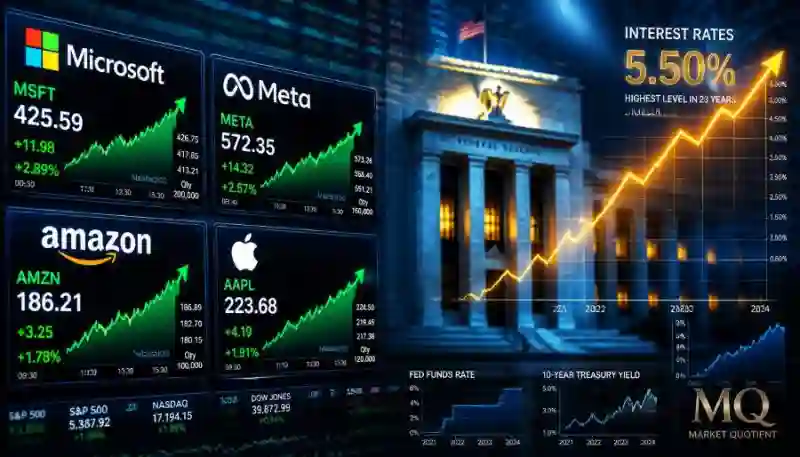
- Wall Street’s Main Indexes Opened Higher: How Technology Stocks and Fed Rate Cut Hopes Are Boosting Markets
- Key Takeaways
- Introduction: The Perfect Storm Boosting Markets
- Why Wall Street’s Main Indexes Are Surging Today
- The Technology Stock Revival
- Decoding Fed Rate Cut Expectations
- The Deere Stock Case Study: When Old Meets New
- How Deere Became a Tech Stock in Disguise
- Rebalancing Your Holdings
- Getting Started with Technology Stock Investment
- Understanding Market Timing
- Internal Links You Should Explore
- Authoritative External Sources
Wall Street’s Main Indexes Opened Higher: How Technology Stocks and Fed Rate Cut Hopes Are Boosting Markets
Key Takeaways
-
Wall Street’s main indexes opened higher today, with the Nasdaq leading gains thanks to strong technology stock performance.
-
Growing expectations of a Federal Reserve interest rate cut in December are fueling investor confidence.
-
Technology stocks are particularly sensitive to interest rate changes, making them key beneficiaries of dovish Fed policy.
-
The S&P 500 and Dow Jones have both shown positive momentum, breaking recent trading patterns.s
-
Investors should consider portfolio adjustments to capitalise on potential rate cut opportunities while managing risk.
Introduction: The Perfect Storm Boosting Markets
Let me paint you a picture of what’s happening in the financial world right now. Imagine walking onto the trading floor of the New York Stock Exchange this morning. The air buzzes with excitement. Traders are staring at their screens, watching numbers flash green across the board. Phones ring constantly as fund managers scramble to adjust their positions. What’s got everyone so worked up? It’s a combination of two powerful forces: technology stocks finding their mojo again, and whispers growing louder that the Federal Reserve might finally ease up on interest rates this December.
Now, if you’re new to investing, you might wonder why this matters to you. Perhaps you’ve got a small savings account, or you’re thinking about starting an investment portfolio. Maybe you simply want to understand what the financial news headlines actually mean. Whatever your situation, stick with me. We’re going to break down exactly why Wall Street’s main indexes opened higher today, what technology stocks have to do with it, and how potential interest rate cuts could affect your money.
The financial markets can seem like a mysterious beast, full of complicated terms and confusing numbers. But at their heart, they’re driven by simple human emotions: fear and greed, hope and worry. Right now, hope is winning out. Investors are feeling optimistic that the era of aggressive interest rate hikes might be ending. And when investors feel hopeful, they tend to buy more stocks—especially the kind of growth stocks you find in the technology sector.
Think of it like this: when the Fed raises interest rates, it’s like applying the brakes to the economy. Everything becomes more expensive—borrowing money for a house, a car, or to expand a business. Companies that were planning to invest in new projects put those plans on hold. Consumers think twice before making big purchases. This slowdown affects company profits, and when profits suffer, stock prices typically fall.
But when the Fed signals it might cut rates, it’s like taking the brakes off. Money becomes cheaper to borrow. Companies can invest in growth again. Suddenly, those technology firms that need to spend heavily on research and development can access capital more affordably. Their future profits start to look rosier, and investors rush to buy their shares before prices climb even higher.
This is precisely the dynamic we’re seeing play out on Wall Street right now. The main indexes—comprising heavyweights like the Dow Jones Industrial Average, the S&P 500, and the Nasdaq Composite—have all opened higher in recent trading sessions. The Nasdaq, heavily weighted with technology stocks, has been the star performer. It’s like watching a race where the sprinters have suddenly found a second wind after a tough uphill climb.
But here’s where it gets interesting. This rally isn’t just about hope—it’s built on real data. Inflation, while still above the Fed’s target, has been cooling. The jobs market, though strong enough to avoid recession fears, isn’t so hot that it will force the Fed to keep rates elevated. It’s a careful balancing act—often described as a “Goldilocks scenario,” where conditions are neither too hot nor too cold. And markets thrive on that sweet spot.
The technology sector, in particular, has been waiting for this moment. Over the past two years, as the Fed hiked rates at the fastest pace in decades, tech stocks took a beating. High-growth companies that promised profits far in the future suddenly looked less attractive when investors could earn decent returns from safe government bonds instead. The Nasdaq fell more than 30% from its peak in 2022. It was painful for investors who had loaded up on tech darlings.
Now, with rate cut expectations building, the script has flipped. Those same technology stocks that were left for dead are suddenly the belle of the ball again. Investors are remembering why they fell in love with tech in the first place: innovation, scalability, and the potential for explosive growth. Companies in artificial intelligence, cloud computing, and semiconductor manufacturing are leading the charge.
The S&P 500, which includes 500 of America’s largest companies across all sectors, has also benefited from this optimism. While not as tech-heavy as the Nasdaq, it still includes giants like Apple, Microsoft, and Amazon—companies that can move the entire index with their performance. When these technology stocks rise, they pull the S&P 500 up with them, like powerful tugboats dragging a larger ship.
Even the Dow Jones Industrial Average, often seen as the “old economy” index with its focus on established industrial companies, has opened higher. This is significant because it suggests the rally is broad-based, not confined to just a handful of tech stocks. It indicates that investors believe lower interest rates will help the entire economy, not just the technology sector.
What makes this current market movement particularly noteworthy is the timing. December is traditionally a strong month for stocks—the so-called “Santa Claus rally.” If the Fed does deliver a rate cut, it would be like Santa arriving early with a particularly generous gift for investors. The combination of seasonal strength and potential policy easing creates a powerful tailwind.
However, and this is crucial, nothing is guaranteed. The Fed has been crystal clear that its decisions will depend on the data. If inflation suddenly spikes again, or if the jobs market becomes too strong (which could fuel wage-driven inflation), the central bank could pause or even reverse course. Markets are pricing in a rate cut, but it’s not a done deal.
This uncertainty is what makes investing both exciting and nerve-wracking. Today’s gains could evaporate tomorrow if Fed officials give hawkish speeches or if economic data disappoints. It’s a reminder that while we can analyse and predict, we can never know for certain what will happen.
For individual investors, this environment presents both opportunities and challenges. On one hand, the potential for a rate cut makes stocks more attractive than bonds or savings accounts. On the other hand, many technology stocks have already risen significantly, meaning you might be buying at elevated prices. It’s a classic conundrum: fear of missing out versus fear of buying at the top.
Throughout this article, we’ll explore these themes in depth. We’ll look at which technology stocks are benefitting most, examine the Fed’s thinking in detail, and provide practical advice on how to position your portfolio. We’ll also dive deep into a case study of how companies like Deere & Company—yes, the tractor maker—are becoming technology plays in their own right and how they’ve responded to changing interest rate expectations.
So whether you’re a seasoned investor or someone who’s just trying to make sense of the financial news over breakfast, this guide will give you the insights you need to understand why Wall Street’s main indexes opened higher and what it means for your financial future.
Why Wall Street’s Main Indexes Are Surging Today
The Technology Stock Revival
Let’s get into the meat of what’s happening. When we say technology stocks are lifting the market, what exactly do we mean? The Nasdaq Composite Index, which opened higher by nearly 1.5% in recent sessions, is home to the who’s who of American tech innovation. We’re talking about companies that have fundamentally changed how we live and work.
The real heavyweights—Apple, Microsoft, Amazon, Alphabet (Google’s parent), Meta (Facebook), Tesla, and Nvidia—make up such a large portion of the index that when they sneeze, the whole market catches a cold. Or in this case, when they smile, the whole market celebrates. These seven stocks alone account for roughly 30% of the S&P 500’s entire value, despite being just seven out of 500 companies. That’s how dominant they’ve become.
Why do technology stocks love lower interest rates so much? It comes down to how investors value companies. Tech firms, especially those in growth phases, are expected to generate most of their profits years down the line. When interest rates are high, those future profits are worth less in today’s money—a concept called “discounted cash flow.” When rates fall, those future profits become more valuable, and the stock price rises.
Here’s a simple analogy. Imagine someone promises you £1,000 in five years. If you could earn 5% interest on your money today, that £1,000 is worth about £784 now. But if interest rates drop to 2%, that same £1,000 promise is worth about £906 today. The lower the interest rate, the more valuable future money becomes. This is exactly what’s happening with technology stock valuations.
Right now, specific sub-sectors within technology are leading the charge:
-
Semiconductor stocks like Nvidia, AMD, and Intel are rallying on AI optimism. These companies make the chips that power artificial intelligence, and AI is the hottest theme in tech right now.
-
Cloud computing giants such as Amazon Web Services, Microsoft Azure, and Google Cloud are benefiting from enterprise spending that had been paused during the rate-hiking cycle.
-
Software-as-a-Service (SaaS) companies like Salesforce, Adobe, and Zoom are seeing renewed interest as their subscription models become more attractive in a lower-rate environment.
The rally isn’t just limited to American firms. Technology stocks globally are getting a boost, but US markets are at the centre because that’s where the Fed operates, and because American tech firms are the world’s leaders.
Decoding Fed Rate Cut Expectations
Now, let’s talk about why everyone’s so confident the Federal Reserve will cut rates in December. The Fed meets eight times a year to set monetary policy, and its decisions are based on two primary mandates: keeping prices stable (controlling inflation) and maintaining maximum employment.
For most of 2022 and 2023, inflation was the bogeyman. Prices were rising at 40-year highs, hitting 9.1% in June 2022. The Fed responded aggressively, raising its benchmark interest rate from near zero to over 5% in the fastest hiking cycle since the 1980s. This worked— inflation has cooled to around 3-4%, depending on which measure you use.
But here’s the key: the Fed doesn’t want to crash the economy. It’s trying to achieve a “soft landing”—bringing inflation down without causing a recession. This is incredibly difficult, like trying to park a speeding car in a tight space without hitting the kerb.
Recent economic data suggests the landing might be successful:
-
Inflation is trending downward, with core PCE (the Fed’s preferred measure) showing year-over-year gains of just 3.4%
-
The unemployment rate has risen modestly to 3.9%, still historically low but ticking up enough to ease wage pressures
-
GDP growth remains positive at 2.1% annualised, showing the economy isn’t stalling
Fed officials have started hinting that rates may be restrictive enough. Fed Chair Jerome Powell, in his recent speeches, has used the phrase “the full effects of our tightening have yet to be felt.” This is central banker speak for “we might be done raising rates.”
Market pricing tells the story. Fed funds futures, which are financial contracts that bet on future interest rate levels, currently show a 70% probability of a 0.25% rate cut in December. That’s up from just 30% a month ago. This shift in expectations is what’s driving the rally.
The Deere Stock Case Study: When Old Meets New
You might be thinking, “What does a tractor company have to do with technology stocks and interest rate cuts?” It’s a brilliant question, and the answer reveals how the modern economy really works.
Deere & Company, famous for its green and yellow farm equipment, has transformed itself into a technology powerhouse. Over the past decade, Deere has invested billions in precision agriculture technology. Their modern tractors are essentially computers on wheels, equipped with GPS guidance, artificial intelligence, and autonomous driving capabilities.
How Deere Became a Tech Stock in Disguise
Deere’s transformation started around 2012 when it acquired NavCom Technology, a GPS firm. Since then, it’s built a suite of digital tools that help farmers optimise every aspect of their operations. Their biggest innovation is the Operations Centre, a cloud-based platform that collects data from tractors, combines, and planters to help farmers make better decisions.
This matters for our story because Deere’s stock behaves like a technology stock in many ways:
-
It has high research and development costs
-
It benefits from software subscription revenue (Deere now sells digital services repeatedly)
-
Its valuation is sensitive to interest rates because farmers often finance equipment purchases
Deere’s Performance During Rate Hikes
When the Fed began raising rates aggressively in 2022, Deere’s stock got hammered. It fell from over $400 per share to below $300. Why? Two reasons:
-
Financing costs: Farmers found it much more expensive to borrow money for a $500,000 combine harvester. Many delayed purchases.
-
Valuation compression: As a company increasingly valued for its technology growth potential, Deere’s stock faced the same headwinds as pure tech stocks.
The Rate Cut Rally
Now, with expectations of a Fed interest rate cut growing, Deere’s stock has opened higher in recent sessions, climbing back towards £350. The logic is simple:
-
Lower rates mean cheaper financing for farmers
-
Cheaper financing means more equipment sales
-
More sales mean higher profits
-
Higher profits mean a higher stock price
But there’s a tech twist: Deere’s margin on digital services is much higher than on hardware. As more farmers adopt its precision agriculture platform, Deere’s profitability improves disproportionately. This is exactly the kind of scalable, high-margin business model that technology investors love.
This case study perfectly illustrates why the current market environment is so powerful. It’s not just about pure-play tech stocks. It’s about how technology has infiltrated every sector, creating new investment opportunities while making traditional companies more sensitive to the same forces that drive the Nasdaq.
What This Means for Your Investment Portfolio
Rebalancing Your Holdings
If you’ve been sitting on the sidelines, or if your portfolio is heavy in cash or bonds, the fact that Wall Street’s main indexes opened higher might be a wake-up call. But before you rush to buy technology stocks, let’s think strategically.
Action Steps:
-
Assess your current allocation: How much of your portfolio is in technology stocks? If it’s less than 20-25%, you might be underweight, especially for long-term growth.
-
Consider dollar-cost averaging: Rather than investing a lump sum, spread purchases over several weeks to smooth out price volatility.
-
Don’t forget valuations: Some technology stocks have already risen 30-50% from their lows. While they may go higher, the easy gains might be behind us.
Risk Management in a Rate Cut Environment
Even with positive momentum, investing always carries risk. Here are key considerations:
-
Policy reversal risk: If inflation resurges, the Fed could pause or even raise rates again. This would hurt technology stocks.
-
Concentration risk: Don’t put all your eggs in one basket, even if it’s a basket of brilliant tech companies.
-
Sector rotation: Money flows between sectors. If rate cut expectations fade, funds could flow out of tech just as quickly as they flowed in.
Practical Tips for Everyday Investors
Getting Started with Technology Stock Investment
You don’t need to be a Wall Street expert to benefit from this trend. Here’s how to begin:
-
Use index funds: The simplest way to gain exposure is through a Nasdaq-tracking ETF like the Invesco QQQ Trust or a broad technology sector ETF. This gives you instant diversification.
-
Start small: Many platforms now allow fractional share investing. You could own a piece of Apple or Microsoft with as little as £10.
-
Focus on quality: Look for technology stocks with strong balance sheets, consistent revenue growth, and actual profits.
Understanding Market Timing
Trying to time the market perfectly is nearly impossible. Instead:
-
Set up automatic monthly investments
-
Increase contributions when markets dip
-
Decrease when you feel markets are overheated
-
Never invest money you might need in the next 3-5 years
Essential Resources for Further Research
Internal Links You Should Explore
-
Our Beginner’s Guide to Understanding Federal Reserve Policy – Learn how central bank decisions affect your savings and investments.
-
Top 10 Technology ETFs for UK Investors – Compare costs, holdings, and performance of leading tech funds.
-
Building a Balanced Portfolio: From Stocks to Bonds – Discover how to construct a resilient investment strategy.
Authoritative External Sources
-
Federal Reserve Official Website (federalreserve.gov): Read speeches and minutes directly from Fed officials.
-
Bloomberg Markets: Get real-time data and professional analysis on market movements.
Frequently Asked Questions
Q1: Will the Federal Reserve definitely cut interest rates in December?
A: Nothing is certain. While markets price in a 70% probability, the Fed will decide based on inflation data, employment figures, and economic growth. If inflation ticks up or jobs data is too strong, they may pause. Always prepare for multiple scenarios.
A: Nothing is certain. While markets price in a 70% probability, the Fed will decide based on inflation data, employment figures, and economic growth. If inflation ticks up or jobs data is too strong, they may pause. Always prepare for multiple scenarios.
Q2: Which technology stocks benefit most from rate cuts?
A: Growth-oriented tech stocks with high future earnings potential benefit most. This includes:
A: Growth-oriented tech stocks with high future earnings potential benefit most. This includes:
-
Semiconductor companies (Nvidia, AMD)
-
Cloud computing providers (Amazon, Microsoft)
-
Emerging tech like AI and robotics firms
-
SaaS companies with subscription models
Established tech giants with large cash piles (Apple, Alphabet) also benefit as they can borrow cheaply for share buybacks.
Q3: Is now a good time to invest in technology stocks?
A: It depends on your timeline and risk tolerance. If you’re investing for 5+ years, current rate cut expectations create a favourable backdrop. However, many tech stocks have already risen significantly. Consider dollar-cost averaging rather than lump-sum investing.
A: It depends on your timeline and risk tolerance. If you’re investing for 5+ years, current rate cut expectations create a favourable backdrop. However, many tech stocks have already risen significantly. Consider dollar-cost averaging rather than lump-sum investing.
Q4: How do interest rate cuts affect my mortgage and savings?
A: Rate cuts typically lead to lower mortgage rates, making it cheaper to buy or refinance property. However, savings account interest rates will also fall. This prompts investors to seek stocks in search of higher returns.
A: Rate cuts typically lead to lower mortgage rates, making it cheaper to buy or refinance property. However, savings account interest rates will also fall. This prompts investors to seek stocks in search of higher returns.
Q5: What’s the difference between the Nasdaq, S&P 500, and Dow Jones?
A: The Nasdaq is tech-heavy with over 3,000 stocks. The S&P 500 includes 500 large US companies across all sectors. The Dow Jones has just 30 industrial giants. When all three opened higher, it signals broad market strength.
A: The Nasdaq is tech-heavy with over 3,000 stocks. The S&P 500 includes 500 large US companies across all sectors. The Dow Jones has just 30 industrial giants. When all three opened higher, it signals broad market strength.
Q6: Could technology stocks fall again?
A: Absolutely. If rate cut expectations reverse, geopolitical tensions escalate, or a major tech company disappoints with its earnings, stocks could decline. Always diversify your portfolio and invest only what you can comfortably afford to lose.
A: Absolutely. If rate cut expectations reverse, geopolitical tensions escalate, or a major tech company disappoints with its earnings, stocks could decline. Always diversify your portfolio and invest only what you can comfortably afford to lose.
Q7: How does Nike fit into this technology story?
A: While Nike is primarily a consumer goods company, it’s also a technology innovator in retail. Their apps, digital direct-to-consumer platforms, and manufacturing tech make them part of the digital economy. Investors can explore Nike’s digital transformation on the Nike Official Website.
A: While Nike is primarily a consumer goods company, it’s also a technology innovator in retail. Their apps, digital direct-to-consumer platforms, and manufacturing tech make them part of the digital economy. Investors can explore Nike’s digital transformation on the Nike Official Website.
Conclusion: Your Action Plan for This Market Moment
Let’s bring this all together. Wall Street’s main indexes opened higher because investors are increasingly confident that the Federal Reserve will cut interest rates in December. This confidence is supercharging technology stocks, which are sensitive to interest rate changes. The rally is broad-based, affecting everything from pure-play tech firms to traditional companies like Deere that have embraced digital transformation.
Here’s what you should do next:
-
Review your portfolio: Check your exposure to technology stocks and US market indexes. If you’re underweight, consider gradually adding.
-
Stay informed: Follow economic data releases, especially inflation and employment reports. These drive Fed decisions.
-
Keep it simple: Use low-cost index funds if you’re unsure about picking individual stocks.
-
Think long-term: Don’t get caught up in daily market movements. Focus on building wealth over the years, not weeks.
The financial markets are giving us a clear signal: investors are optimistic about the future. While optimism doesn’t guarantee success, understanding what’s driving market sentiment helps you make smarter decisions with your money.
Remember, investing is a journey, not a sprint. The fact that Wall Street’s main indexes opened higher today is interesting, but it’s just one data point in a much larger story. Keep learning, stay diversified, and never stop asking questions.
Ready to take the next step? Subscribe to our newsletter for weekly market insights, or explore our recommended technology ETFs to start building your portfolio today.