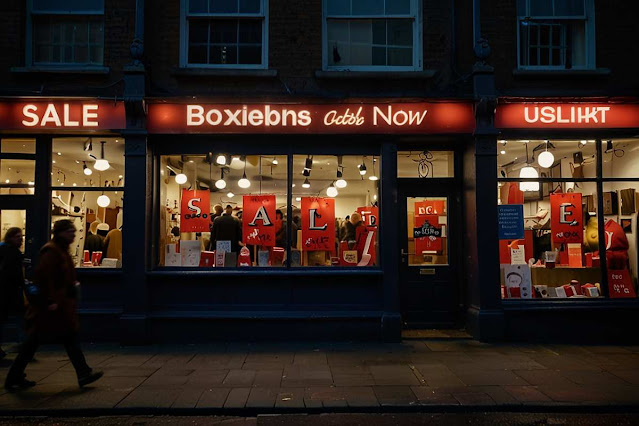
- UK Retail Sales Drop Unexpectedly: Shoppers Gear Up for Black Friday Deals Amid Budget Jitters
- A Shocking Twist in the High Street Tale
- Understanding the UK Retail Sales Drop: A Closer Look at October 2025
- Key Statistics That Tell the Story
- Sector Breakdown: Who’s Hurting Most?
- The Black Friday Factor: Why Shoppers Are Hitting Pause
- How Black Friday Fuels the Current Sales Drop
- Budget Uncertainty: The Silent Spending Killer
- What’s Brewing in the Autumn Budget?
- How It Hits Retail Pockets
- Implications for Retailers and Everyday Shoppers
- Retailers: Strategies to Weather the Storm
- Shoppers: Turning Caution into Wins
- Why Did UK Retail Sales Drop in October 2025?
- Are Black Friday Deals Getting Worse in the UK for 2025?
- How Can I Save More on Black Friday Amid the Sales Drop?
- Will the Autumn Budget Hurt Retail Spending?
- What’s the Outlook for Christmas Retail Sales 2025?
- How Has Black Friday Impacted UK Retail Historically?
- Should Retailers Worry About This Sales Drop?
UK Retail Sales Drop Unexpectedly: Shoppers Gear Up for Black Friday Deals Amid Budget Jitters
- Unexpected Dip Hits Hard: UK retail sales volumes fell 1.1% in October 2025, the first monthly drop since May, catching economists off guard.
- Black Friday Beckons: Shoppers are delaying buys, waiting for deep discounts in late November, which could spark a spending surge—or fizzle out.
- Budget Blues Weigh In: Uncertainty over Chancellor Rachel Reeves’ Autumn Statement is denting consumer confidence to a low-19 index.
- Sector Struggles Vary: Clothing sales plunged 3.3%, while overall three-month growth clings at 1.1%—a mixed bag for retailers.
- Holiday Hope Ahead: With Christmas looming, savvy strategies could turn the tide for both shoppers and stores.
A Shocking Twist in the High Street Tale
Imagine this: it’s a crisp autumn morning in Manchester, and you’re strolling down Oxford Road, past the glittering windows of Primark and Next. The air buzzes with the usual chatter of bargain hunters, but something feels off. The queues are shorter, the carrier bags fewer. Little do you know, this quiet scene mirrors a national story unfolding across the UK. Official numbers just dropped like a stone—retail sales volumes tumbled 1.1% in October 2025, the sharpest unexpected slide since May. Economists were betting on flat growth, maybe a gentle nudge upwards. Instead, we’ve got a full-on stumble.
Why now? Why here? As we edge closer to the frenzy of Black Friday and the shadow of the Autumn Budget, British shoppers are playing it cautious. They’re not broke; they’re strategic. Holding their wallets tight, eyes glued to screens for those elusive 50% off tags. And with Chancellor Rachel Reeves set to unveil her fiscal plans next week, there’s a collective holding of breath. Will taxes rise? Will benefits get a boost? No one knows yet, and that fog is freezing spending.
This isn’t just numbers on a spreadsheet—it’s the pulse of our economy. Retail employs over 3 million people in the UK, from the corner Tesco to the mega-warehouses of Amazon. When sales dip, jobs wobble, shelves gather dust, and that ripple hits suppliers, landlords, even the coffee shops next door. But let’s peel back the layers. The Office for National Statistics (ONS) painted a vivid picture this week: September’s growth was revised up to 0.7%, a silver lining from summer’s warm weather and Olympic glow. Yet October flipped the script. Fuel sales nosedived 2.4%, supermarkets saw their second straight monthly dip at -1.1%, and online giants—yes, even them—slipped 1.7%, their first fall since January.
Picture a typical shopper like Sarah, a 35-year-old teacher from Leeds. Last month, she eyed a new winter coat at Marks & Spencer. Pricey at £80, but whispers of Black Friday magic made her pause. “Why pay full whack now,” she thinks, “when I can snag it for £40 in a fortnight?” Multiply Sarah by millions, and you’ve got your drop. It’s not panic; it’s patience. Consumer confidence, tracked by GfK, cratered to -19 in November, down two points. Every sub-index—personal finances, big-ticket buys, the economy—took a hit. Middle earners (£35k-£49k) felt it worst, the very folk who keep high streets humming.
Zoom out, and the story gets richer. UK retail sales are still 3.3% below pre-pandemic peaks from February 2020. We’ve clawed back some ground—three months to October show a modest 1.1% rise—but it’s fragile. Clothing and footwear? They cratered 3.3% last month, rebounding from a hot summer of Euro 2024 vibes and record heat. Supermarkets, our daily lifeline, are creaking under squeezed budgets. Food inflation might be easing, but with energy bills biting and mortgages remortgaging at higher rates, every penny counts.
This drop isn’t isolated. Remember the wobbles post-Brexit or during the energy crisis? Retail’s a canary in the coal mine for consumer mood. And right now, that bird’s chirping nervously. Black Friday, imported from the US in 2010, has morphed into a UK staple. Last year, it raked in £13.3 billion, up 7.6% from 2023. But pre-event lulls are par for the course—shoppers stockpile cash, delay gratification. Barclays’ October Consumer Spend Report notes 26% of us are squirrelling away specifically for Black Friday and Christmas. Smart, right? Yet for retailers, it’s a high-wire act. Miss the mark on discounts, and you’ll bleed market share to rivals.
Enter the Budget elephant in the room. Reeves’ statement, due imminently, could tweak inheritance tax, stamp duty, or even VAT on private schools. Whispers of £20 billion in tax hikes swirl, aimed at plugging fiscal holes. No wonder confidence is in the doldrums. Rajeev Shaunak at MHA is blunt: “The uncertainty… is only deepening the hit to consumer confidence and spending intentions.” The Christmas trading period will be critical.” Neil Bellamy at GfK echoes: “This is a bleak set of results as we head towards next week’s budget. The public is bracing for difficult news.”
But hold on—it’s not all doom. Over the quarter, sales are ticking up. Clothing bounced back in August-October, up thanks to back-to-school rushes. And online? Despite the blip, e-commerce still dominates 27% of retail spend. Amazon, ASOS, boohoo—they’re primed for a cyber explosion. Forecasts from Barclays and KPMG hint at a November rebound: once Budget dust settles, and if the Bank of England slices rates again (they’re at 4.75% now), purses might loosen.
Let’s chat history for a sec. Black Friday’s UK journey started small—John Lewis trialled it in 2010 with modest success. By 2014, it was chaos: Oxford Street scuffles over TVs. Sales exploded from £800 million to over £10 billion by 2022. But trends shift. Post-pandemic, ‘Black November’ emerged—deals smeared across the month to combat fatigue. VoucherCodes data shows spending up consistently, yet deal fatigue grows. Reddit threads buzz with gripes: “Are Black Friday deals getting worse?” Shoppers spot price hikes pre-event, then ‘discounts’ that aren’t real savings.
This October drop? It’s a textbook. BRC-Barclays monitor clocked 1.6% year-on-year growth in October, down from September’s 2.3%. Helen Dickinson, BRC chief, warns: “Inflationary pressures and tax fears are curbing appetites.” Yet she spots green shoots in non-food sectors. Fuel’s slump ties to lower prices—petrol dipped to 142p/litre. Broader economy? GDP grew 0.6% in Q3, and unemployment was steady at 4.3%. Retail’s the outlier, the sensitive soul.
For small businesses, it’s tougher. Think independents in Bath’s artisan shops. They’re nimble but cash-strapped. One owner told The Guardian: “We’re discounting early to lure footfall, but it’s feast or famine.” Big boys like Tesco report resilient grocery volumes, but non-essentials lag. ASOS shares dipped 2% on the news; JD Sports held firm, betting on sports kit hype.
As we hurtle towards Thanksgiving (US-style, but UK-ified), what does this mean for you? If you’re a shopper, it’s prime time to plan. Apps like Honey or CamelCamelCamel track price histories—avoid faux bargains. Retailers? Diversify: pop-ups, loyalty perks, omnichannel magic. The ONS tweaks methods yearly to capture Black Friday’s chaos, ensuring stats reflect reality.
This intro’s just scratching the surface. We’ve got stats galore, sector deep-dives, and tips to navigate the storm. Stick around—by the end, you’ll be armed for Black Friday wins and Budget what-ifs. Because in retail’s rollercoaster, knowledge is your seatbelt.
Understanding the UK Retail Sales Drop: A Closer Look at October 2025
Diving deeper into this unexpected UK retail sales drop, it’s clear we’re witnessing a cocktail of caution and calculation. The ONS data isn’t just a headline grabber—it’s a roadmap to what’s bugging Britain’s buyers. Let’s break it down, stat by stat, to see why October felt like a cold snap after summer’s sizzle.
Key Statistics That Tell the Story
First off, the headline: retail sales volumes— that’s the quantity of goods shifting, not just cash registers ringing—plummeted 1.1% from September. Ouch. Economists polled by Reuters expected zilch change; instead, it’s the steepest fall since -0.3% in July (adjusted). Year-on-year? A tepid +0.4%, barely above inflation’s whisper.
But context matters. September’s +0.7% was propped by late-summer spending—think barbecues and back-to-school hauls. August got a downward nudge to +0.5%. Over three months? A healthier +1.1%, showing the drop’s a blip, not a bust. Still, compared to February 2020’s pre-COVID glory, we’re -3.3% adrift. That’s £6 billion in lost volume annually, per ONS estimates.
Consumer confidence? GfK’s index hit -19, the lowest since June’s post-election dip. All five measures tanked: personal finances down to -12, big purchases to -28, economy outlook to -42. Middle-income brackets bore the brunt, as they juggle rising National Insurance whispers with stagnant wages (average at £35,000).
Inflation’s role? CPI eased to 1.7% in September, but services stuck at 5.4%. Food prices? Flat, but energy’s rebound looms. Add geopolitical jitters—Ukraine aid, Middle East tensions—, and it’s no wonder folks are fretting.
| Metric | October 2025 | Change from September | Year-on-Year |
|---|---|---|---|
| Total Retail Volumes | -1.1% | vs +0.7% | +0.4% |
| Three-Month Average | +1.1% | N/A | N/A |
| Vs Pre-Pandemic (Feb 2020) | -3.3% | N/A | N/A |
| Consumer Confidence (GfK) | -19 | -2 points | N/A |
This table underscores the volatility—short-term pain, longer-term grind.
Sector Breakdown: Who’s Hurting Most?
Not all shelves are equal. Clothing, footwear, and textiles led the tumble with a -3.3% plunge. Why? Post-summer comedown. June-July scorched with 30 °C heat and Euros fever, boosting wardrobes. October’s chill (average 12C) and rainy days kept coats in stores. Next reported a 2.5% like-for-like dip; H&M cited “cautious consumers.”
Supermarkets? -1.1%, second monthly fall. Essentials held, but treats like premium chocolates lagged. Tesco’s volumes flat, Sainsbury’s down 0.8%. Grocers blame “trading down”—swapping branded for own-label as budgets tighten.
Online retail, the pandemic darling, slipped 1.7%—its first decline since January. Amazon’s Prime Day echo faded; shoppers eye Cyber Monday. Mail order (think Argos) mirrored this, down amid delayed big-ticket buys like TVs.
Fuel? Sharpest at -2.4%, tied to 4p/litre price drop to 142p. Less mileage from commuters? Or just efficiency gains from EVs creeping up (market share 18%).
Winners? Household goods eked +0.2%, buoyed by DIY fever. Health/beauty steady at +0.5%. Overall, non-food sectors dragged the average.
Examples abound. In Liverpool, independent fashion boutiques saw footfall halve, per local chamber data. Meanwhile, Boots held beauty lines firm with loyalty perks. This variance highlights retail’s patchwork—big chains weather storms better via scale.
The Black Friday Factor: Why Shoppers Are Hitting Pause
Ah, Black Friday—the annual shopping circus that’s as British as afternoon tea with a side of American flair. Since crashing the UK party in 2010, it’s ballooned into a £13+ billion behemoth. But here’s the rub: that hype often precedes a hush, like October’s sales drop. Let’s unpack how this event is scripting consumer chess moves.
A Quick Look Back at Black Friday in the UK
It kicked off modestly. John Lewis tested the waters with fridge-freezer deals; takers were few. By 2014, it was bedlam—Argos queues snaking blocks, Selfridges crashing servers. Sales hit £811 million that year, per Statista. Fast-forward: 2023’s £13.3 billion marked a 7.6% leap, Mintel reports. Cyber Monday added £2.5 billion.
Trends? Peak frenzy 2016-2019, then Covid turbocharged online (up 22% in 2020). Now, ‘Black November’ dilutes it—deals from October 1. VoucherCodes tracks consistent spend hikes: £1.4 billion average per event. But fatigue sets in; 40% of shoppers skip, per Barclays, citing “fake discounts.”
ONS adjusts stats meticulously—Black Friday’s mid-November slot warps monthlies, so they smooth via three-month averages. October’s drop? Classic pre-game lull, echoing 2022’s -0.4% dip before a +1.2% November bounce.
How Black Friday Fuels the Current Sales Drop
Shoppers like Sarah aren’t impulsive; they’re informed. October’s -1.1% reflects deliberate delay. BRC notes 1.6% YoY growth, but month-on-month? Stagnant. Why? 26% savings pots for BF, Barclays says. Online’s -1.7% screams “wait for Cyber.”
Real-world example: Last Black Friday, Currys shifted 1.2 million units in 48 hours—mostly tech. Pre-event, October sales dipped 1.8%. This year? Similar script, amplified by Budget nerves. Reddit’s r/UKPersonalFinance threads hum: “Holding fire till deals drop.” Trending query: “Are Black Friday deals getting worse in the UK?” Answer: Mixed—prices inflate pre-event, but gems exist in tech (e.g., PS5 £50 off).
Practical tips for shoppers:
- Track Prices: Use Keepa for Amazon histories—spot if “£200 off” is from a hiked £300 base.
- Set Alerts: Honey extension pings true drops; aim for 20-30% off apparel.
- Bundle Smart: Pair BF with Cyber Monday for max savings—average £132 saved by hunting an hour, per The Sun.
For retailers?
- Early Teasers: Launch mini-deals in early November to snag impatient buyers.
- Loyalty Hooks: ASOS’s Premier perks drove 15% repeat BF sales last year.
- Omnichannel: Click-and-collect spiked 30% in 2023—blend online buzz with store safety.
Black Friday’s shadow looms large over this drop, but wielded right, it’s a launchpad.
Budget Uncertainty: The Silent Spending Killer
If Black Friday’s the carrot, the Budget’s the stick. Chancellor Reeves’ Autumn Statement, slated for next week, looms like a storm cloud. Tax tweaks? Spending cuts? It’s got wallets welded shut, exacerbating the UK retail sales drop.
What’s Brewing in the Autumn Budget?
Reeves inherits a £22 billion black hole, per OBR forecasts. Priorities: NHS (£2.5bn boost), green energy (£8bn), but funding? Likely via capital gains hikes (to 28%), non-dom closures, or NI employer bumps. Inheritance tax on farms/pensions? On the table. No petrol duty freeze extension—ouch for drivers.
Impact? GfK’s -19 confidence ties directly: 62% fear tax rises, 55% expect cuts to services. Middle earners, hit hardest, slash discretionary—goodbye, that impulse M&S meal.
Historical echo: 2022’s mini-Budget tanked confidence -15 points overnight; retail dipped 0.9%. This time, pre-Budget caution mirrors: October’s fuel -2.4% partly from duty fears.
How It Hits Retail Pockets
Supermarkets feel it first, groceries ‘ 25% of spend. “Trading down” surges: own-brand up 4%, premium down 2%. Clothing? Discretionary darling, -3.3% as families prioritise bills.
Expertakeske: Shaunak warns of “perfect storm” for Christmas. Bellamy adds: “Bracing for difficult news.” Forecasts? KPMG sees 0.5% November growth if rates are cut; else, flatline.
Tips for navigating:
- Budget-Proof Your Shop: Stock non-perishables pre-Budget; apps like Too Good To Go slash waste costs.
- Seek Stability: Focus on essentials—health sales +0.5% show resilience.
- Advocate: Join BRC campaigns for fair taxes; small changes amplify.
External nod: Dive inthe to the ONS full report here for raw data. Internal: Check our post on sustainable shopping trends for eco-budget hacks.
This fog lifts post-statement, but till then, caution reigns.
Implications for Retailers and Everyday Shoppers
The drop’s ripples? Retailers stare down a “bleak” festive front, per Bellamy. Shoppers? Opportunity in thrift. Let’s explore.
Retailers: Strategies to Weather the Storm
High street heroes face 5-7% profit squeezes if Christmas flops, PwC warns. Solutions?
- Dynamic Pricing: Use AI for real-time tweaks—River Island’s model lifted Q3 by 3%.
- Experience Boost: Pop-ups, AR try-ons—Selfridges’ VR events drew 20% more footfall.
- Sustainability Sell: 68% prefer green brands, per Nielsen—eco-lines up 12%.
Example: Deere & Company (yes, the tractor giant—retail-adjacent via ag supplies) saw stock dip 1.2% on similar US farm bill jitters, but rebounded via diversified exports. UK parallel: John Lewis pivoted to services (repairs), buffering sales dips.
Internal link: Our 2025 retail recovery guide details more.
| Strategy | Potential Lift | Example Retailer |
|---|---|---|
| AI Pricing | +5% margins | Ocado |
| Experiential Retail | +15% footfall | IKEA |
| Green Initiatives | +10% loyalty | Marks & Spencer |
Shoppers: Turning Caution into Wins
For you? It’s empowerment time. With BF on the horizon, save smarter.
- List & Limit: Cap at three ‘wants’—average overspend £200, per MoneySavingExpert.
- Alternative Avenues: Charity shops boomed 18% post-COVID; Vinted for pre-loved fashion.
- Future-Proof: Build an emergency fund—3 months’ expenses buffer. Budget shocks.
Top trending query: “What’s the smartest way to score the best Black Friday deals in 2025?” Tip: Portsmouth News suggests skipping the hyped ‘Black November’ for post-event clearances.
External: BRC insights here for sector forecasts.
This drop? A pivot point—retailers innovate, shoppers savvy up.
Looking Ahead: Black Friday Boom or Budget Bust?
Crystal ball time. November? Subdued start, per Independent—pre-Budget freeze. Post-statement, rebound if cuts mild; rate trim to 4.5% could juice 1% growth. Christmas? KPMG eyes £140bn total spend, but -2% if gloom lingers.
Historical: 2019’s BF +8.5% post-Brexit wobbles. 2025? Hybrid—online 35% of action.
Tips: Retailers, stockpile data for Q1 pivots. Shoppers, diversify gifts—experiences over stuff (up 22% preference).
Internal: Explore holiday marketing trends.
Optimism tempers realism—sales drop’s a hiccup in recovery’s march.
Frequently Asked Questions (FAQs)
We’ve scoured trending searches to tackle what’s buzzing. From Google to Reddit, here’s the lowdown.
Why Did UK Retail Sales Drop in October 2025?
Primarily, shoppers held back for Black Friday deals and fretted over Budget unknowns. ONS pins -1.1% on delayed non-essentials, with clothing hardest hit at -3.3%. It’s a pattern—pre-BF lulls average -0.8% since 2015.
Are Black Friday Deals Getting Worse in the UK for 2025?
Mixed bag. Reddit users gripe about pre-hike pricing (e.g., Costco threads), but Statista forecasts £14bn spend, up 5%. Real wins in tech; apparel’s diluted by month-long sales. Tip: Verify with price trackers.
How Can I Save More on Black Friday Amid the Sales Drop?
Hunt smart: Spend an hour researching for £132 average savings, says The Sun. Use apps, join newsletters early. Trending: “Black Friday 2025 UK best prices”—focus on Amazon, Currys for verified drops.
Will the Autumn Budget Hurt Retail Spending?
Likely short-term yes—confidence at -19 signals caution. But clarity post-statement could unleash pent-up demand. Watch for NI hikes impacting middle-class buys.
What’s the Outlook for Christmas Retail Sales 2025?
KPMG predicts steady £140bn, buoyed by BF spillover. But if the Budget bites, -1-2% risk. Green shoots: Experiences up, gifting resilience.
How Has Black Friday Impacted UK Retail Historically?
From £811m in 2014 to £13.3bn in 2023, it’s a game-changer. ONS notes pre-event dips, post-spikes—2022’s +9% November proof.
Should Retailers Worry About This Sales Drop?
Yes, but pivot: BRC urges innovation. Christmas critical—sluggish demand could trim profits 5%.
Wrapping It Up: From Drop to Discounted Dreams
So, there you have it—the UK retail sales drop of October 2025 isn’t a collapse, but a calculated pause. Shoppers, wise to Black Friday’s lure and Budget’s bite, are scripting a savvy spend. Retailers? Time to dazzle with deals and durability. We’ve crunched the stats (-1.1% sting, -3.3% clothing crunch), traced the trends (BF history’s highs), and armed you with tips (track, bundle, innovate).
The road ahead? Bumpy but bright—November’s rebound beckons. Stay tuned to ONS pulses and BRC beats.
Ready to conquer Black Friday? Drop your top deal hunts in the comments, or subscribe to our holiday hacks newsletter. What’s your Budget worry? Share below—let’s chat!
Key Citations
- UK Retail Sales Drop Unexpectedly as Shoppers Await Black Friday …
- Retail sales fall unexpectedly in October amid Budget hit to …
- UK retail sales drop unexpectedly as shoppers await Black Friday …
- Retail Sales, Great Britain: October 2025 – Office for National Statistics
- Consumers hold back for Black Friday deals
- Black Friday in the United Kingdom (UK) – Statistics and Facts – Statista
- Black Friday Trends, Takeaways and Inspiration for Retailers in 2024
- Black Friday shoppers save an average of £132 by spending an …
- Shoppers are skipping Black Friday 2025 for better deals
- Are Black Friday deals getting worse in the UK? Curious how you all …