- Grab Raises Outlook: Why “Budget” is the New Cool in 2026
- The Numbers That Don’t Lie
- Why the “Saver” Strategy is a Genius Move
- More Than Just a Taxi: The Rise of GrabFin
- The Human Side: Drivers and Riders
- Grab vs. GoTo: Who’s Winning the Southeast Asia Tech Race?
- Now, you can’t talk about Grab without mentioning its rival, GoTo (Gojek). For years, these two have been fighting like cats and dogs. But right now, Grab is pulling ahead. While GoTo saw about 15% growth, Grab is cruising at 22%.
- The Future: Robotaxis and Beyond
-
- The Investor’s Perspective: Is the Hype Real?
- What’s Next for Grab?
-
-
Grab Raises Outlook: Why “Budget” is the New Cool in 2026
Honestly, look, if you told me a few years ago that everyone would be obsessed with “budget” rides, I’d have probably laughed. Back then, it was all about luxury and speed. But fast forward to late 2025 and early 2026, and the world has changed. Everything is expensive, right? From your morning coffee to your rent, prices are soaring. And that is exactly where Grab found its goldmine.
Straight up, Grab just dropped their latest results, and they are smashing it. They’ve raised their full-year outlook, and it’s not because they’re charging more—it’s because they’ve figured out how to make “cheap” work for them. They call it the “affordability strategy,” and honestly, it’s a proper masterclass in business.
The Numbers That Don’t Lie
To be fair, we have to look at the data to see why everyone is talking about this. In their Q3 report, Grab’s revenue hit a massive $873 million. That is a 22% jump compared to last year. If you’re wondering how they did it, just look at the streets of Singapore, Jakarta, or Bangkok. People aren’t just taking any ride; they are specifically hunting for the “Saver” options.
Note: This is for educational purposes only. Not financial advice. We are not SEBI-registered.
|
Metric |
Q3 2025 Performance |
Why You Should Care |
|---|---|---|
|
Total Revenue |
$873 Million |
Shows that the “Superapp” model is actually working. |
|
Adjusted EBITDA |
$490M – $500M (Forecast) |
They are finally making a proper profit after years of burning cash. |
|
Mobility Growth |
23% Volume Increase |
More people are riding than ever before, even with inflation. |
|
Fintech Loans |
$821 Million Portfolio |
They are slowly becoming the biggest bank in Southeast Asia. |
Why the “Saver” Strategy is a Genius Move
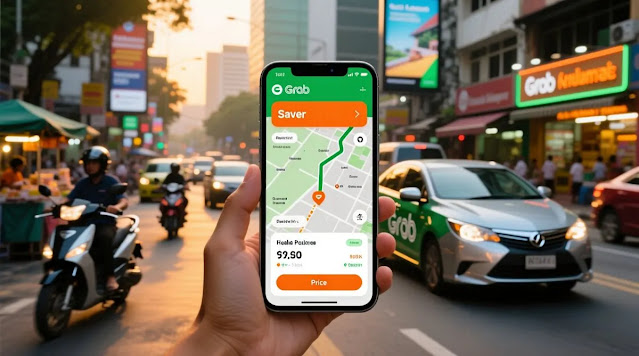
Look, we’ve all been there. You open the app, see a ride for $15, and think, “Maybe I’ll just take the bus.” Grab realized this was happening way too often. So, they leaned into their “Saver” products. These are rides and deliveries that might take a few minutes longer or involve sharing a car, but they cost about 20-30% less.
Properly speaking, these budget options now make up 27% of all their mobility bookings. But here is the clever part: Grab isn’t just losing money on cheap rides. About 40% of the people who start using the app because of a cheap “Saver” ride eventually end up booking a premium car or ordering a big dinner when they’re feeling flush. It’s like a “hook” that keeps you in the ecosystem.
More Than Just a Taxi: The Rise of GrabFin
Honestly, the most underrated part of Grab’s growth isn’t the cars—it’s the money. Their fintech arm, GrabFin, is absolutely exploding. In the last quarter alone, their loan portfolio grew by 65%. They’ve lent out over $821 million to people who usually can’t get help from big traditional banks.
Think about a small food stall owner in Manila. They need a quick loan to buy a new fridge. A big bank will ask for fifty documents and take three weeks. Grab already knows how much money the stall owner makes because they use GrabFood for deliveries. So, Grab can offer them a loan in minutes. It’s a win-win. They are on track to hit a $1 billion loan portfolio by the end of the year, which is a massive milestone.
The Human Side: Drivers and Riders
To be fair, a business is nothing without the people. I remember reading about a driver in Jakarta named Rico. He was worried that “Saver” rides would mean he earns less. But actually, it’s the opposite. Because the rides are cheaper, more people are booking them. Instead of waiting an hour for one big fare, he’s doing four small ones in that same hour. His car is never empty, and his earnings have actually gone up by 20%.
For the riders, it’s a lifesaver. Families are using “Group Orders” for food to save on delivery fees. Instead of three friends ordering separately and paying three fees, they bundle it into one. It’s small hacks like these that make Grab feel less like a faceless corporation and more like a tool for daily survival.
Grab vs. GoTo: Who’s Winning the Southeast Asia Tech Race?
Now, you can’t talk about Grab without mentioning its rival, GoTo (Gojek). For years, these two have been fighting like cats and dogs. But right now, Grab is pulling ahead. While GoTo saw about 15% growth, Grab is cruising at 22%.
Why? It’s because Grab has a bigger “war chest.” They have about $6.9 billion in cash sitting in the bank. That’s a lot of firepower. They can afford to invest in crazy new tech, while GoTo has to be a bit more careful with its spending.
The Future: Robotaxis and Beyond
Straight up, the future sounds like a sci-fi movie. Grab is betting big on Autonomous Vehicles (AVs). They’ve partnered with companies like May Mobility and WeRide. The plan? To have driverless “robotaxis” running around Singapore by 2026.
They’re calling the service AI.R. Imagine calling a car, and nobody is behind the wheel. It sounds scary, but it’s actually a move to cut costs even further. If they don’t have to pay a driver (though that’s a controversial topic for another day), the cost of a ride could drop by another 30%. It’s a risky gamble, especially with all the regulations and safety concerns, but Grab has never been afraid of a fight.
The Investor’s Perspective: Is the Hype Real?
If you’re someone who watches the stock market, you’ve probably noticed the “Stock Buzz.” Shares have been jumping lately because investors finally see a path to consistent profit. Analysts at BofA (Bank of America) have even hiked their price targets to $6.50.
People are excited because Grab isn’t just growing; they are becoming more efficient. Their “incentives” (those discounts they give us) used to be huge, but now they’ve trimmed them down to just about 10% of their total value. They are learning how to keep us using the app without having to “buy” our loyalty with constant coupons.
What’s Next for Grab?
Honestly, they aren’t stopping at Southeast Asia. They are already taking their mapping technology (GrabMaps) to places like Mongolia through partnerships. There are even whispers of them talking to partners in the Middle East. They want to be the “OS” (Operating System) for the daily lives of millions of people.
Tips for Every Grab User
If you want to make the most of this “Raised Outlook” and their new products, here are a few things you should be doing:
- Stack Your Savings: Don’t just book a ride. Use GrabUnlimited. It usually pays for itself in just two or three rides.
- Use the “Saver” Window: If you aren’t in a massive rush, the “Saver” option is almost always the way to go.
- Check Your GrabRewards: Most people forget these. You can actually use them to pay for your next meal or get a massive discount on your ride home.
- Group Order Everything: If you’re at the office, get everyone on one order. You’ll save a fortune on delivery fees over a month.
A Quick Wrap Up
Look, Grab raising their outlook isn’t just boring corporate news. It’s a sign that they’ve cracked the code of how to survive in a tough economy. By focusing on what people actually need—affordability and convenience—they’ve turned a struggling business into a profitable powerhouse.
Whether you’re a rider, a driver, or an investor, Grab’s momentum is something you can’t ignore. They are moving fast, breaking things, and making our lives a little bit cheaper in the process.
Common Questions People are Asking (FAQs):
- Is Grab actually profitable? Yes! They hit a net income of $17M in Q3, which is a massive deal considering they used to lose millions every month.
- Will my rides get even cheaper? With the rollout of more “Saver” tiers and the potential for robotaxis in 2026, there’s a good chance prices will stay competitive.
- Is Grab safe for my data? They’ve invested heavily in AI to keep transactions safe, especially now that they are handling so many loans and digital payments.
- Can I use Grab outside of Southeast Asia? Not for rides yet, but their technology (like maps) is starting to be used in other countries.