Disney FY25: Profit Era Begins
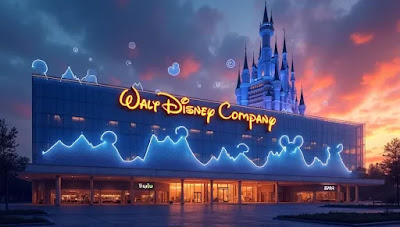
- Mickey’s Big Payday: How Disney Finally Turned the Streaming Ship Around
- Streaming: From a Money Pit to a Profit Engine
- The “John Deere” Parallel: Strategic De-Risking
- Parks and Experiences: The Bedrock of Magic
- The Content Synergy Loop: The Stitch Effect
- Entertainment and Sports: Navigating the Headwinds
- Practical Tips for Disney Investors
-
Mickey’s Big Payday: How Disney Finally Turned the Streaming Ship Around
I was scrolling through my feed the other day and saw a picture of Disneyland packed to the rafters. Honestly, it hit me right then—Disney isn’t just a theme park company anymore. No. It’s a massive tech and media machine that’s finally figured out how to make real money in the digital age. On November 16, 2025, Disney dropped its Fiscal 2025 earnings, and it was a proper mic-drop moment for CEO Bob Iger. After years of bleeding cash in the streaming wars, the House of Mouse is finally printing money again. Proper relief, that.
Total revenue for the year hit a massive $94.4 billion. That’s a 3% jump, which might sound small to some, but the real story is in the profits. Net income shot up by 36% to $12.4 billion. If you’re an investor, seeing your Earnings Per Share (EPS) more than double to $6.85 is like finding a golden ticket in a Wonka bar. But as always with Disney, the “magic” is hidden in the messy details of their different wings. Fact.
I was scrolling through my feed the other day and saw a picture of Disneyland packed to the rafters. Honestly, it hit me right then—Disney isn’t just a theme park company anymore. No. It’s a massive tech and media machine that’s finally figured out how to make real money in the digital age. On November 16, 2025, Disney dropped its Fiscal 2025 earnings, and it was a proper mic-drop moment for CEO Bob Iger. After years of bleeding cash in the streaming wars, the House of Mouse is finally printing money again. Proper relief, that.
Total revenue for the year hit a massive $94.4 billion. That’s a 3% jump, which might sound small to some, but the real story is in the profits. Net income shot up by 36% to $12.4 billion. If you’re an investor, seeing your Earnings Per Share (EPS) more than double to $6.85 is like finding a golden ticket in a Wonka bar. But as always with Disney, the “magic” is hidden in the messy details of their different wings. Fact.
Streaming: From a Money Pit to a Profit Engine
Look, let’s be real about where Disney was just a few years ago. Their streaming segment—Disney+ and Hulu—was losing $4 billion a year. It was a massive hole in their pocket. Fast forward to late 2025, and they’ve pulled off one of the biggest turnarounds in media history. Streaming is now a profit engine, bringing in $1.3 billion in operating income for the full year. Straight up.
They added 12.4 million new subscribers in just the last quarter! Now, to be fair, about half of those came from a massive deal with Charter Spectrum (where cable users basically get it as a perk), but the other 6.4 million were “retail” sign-ups. That means people are actually choosing to open their wallets for Disney content. They’ve hit a combined total of 196 million subscribers. That is a staggering number, properly closing the gap with Netflix.
Metric
Fiscal 2025 Result
Why It Matters
Total Revenue
$94.4 Billion
Slow but steady 3% growth.
Streaming Profit
$1.3 Billion
Huge flip from last year’s losses.
Parks Income
$9.9 Billion
The “Unshakeable Foundation” of the company.
Free Cash Flow
$10.0 Billion
Plenty of cash to pay back shareholders.
Look, let’s be real about where Disney was just a few years ago. Their streaming segment—Disney+ and Hulu—was losing $4 billion a year. It was a massive hole in their pocket. Fast forward to late 2025, and they’ve pulled off one of the biggest turnarounds in media history. Streaming is now a profit engine, bringing in $1.3 billion in operating income for the full year. Straight up.
They added 12.4 million new subscribers in just the last quarter! Now, to be fair, about half of those came from a massive deal with Charter Spectrum (where cable users basically get it as a perk), but the other 6.4 million were “retail” sign-ups. That means people are actually choosing to open their wallets for Disney content. They’ve hit a combined total of 196 million subscribers. That is a staggering number, properly closing the gap with Netflix.
|
Metric |
Fiscal 2025 Result |
Why It Matters |
|---|---|---|
|
Total Revenue |
$94.4 Billion |
Slow but steady 3% growth. |
|
Streaming Profit |
$1.3 Billion |
Huge flip from last year’s losses. |
|
Parks Income |
$9.9 Billion |
The “Unshakeable Foundation” of the company. |
|
Free Cash Flow |
$10.0 Billion |
Plenty of cash to pay back shareholders. |
The “John Deere” Parallel: Strategic De-Risking
I keep bringing up John Deere (DE) in my posts. Why? Because they understand when it’s time to exit. Just like Deere pivoted away from low-margin stuff to focus on high-tech “precision ag,” Disney is doing the same. They recently exited the Indian market by forming a joint venture with Reliance Industries.
By de-risking in tough markets like Star India, Disney is focusing its fire on its core global strengths. They’re not trying to be everything to everyone anymore. No. They’re trying to be the most profitable version of themselves. Simple as.
I keep bringing up John Deere (DE) in my posts. Why? Because they understand when it’s time to exit. Just like Deere pivoted away from low-margin stuff to focus on high-tech “precision ag,” Disney is doing the same. They recently exited the Indian market by forming a joint venture with Reliance Industries.
By de-risking in tough markets like Star India, Disney is focusing its fire on its core global strengths. They’re not trying to be everything to everyone anymore. No. They’re trying to be the most profitable version of themselves. Simple as.
Parks and Experiences: The Bedrock of Magic
While streaming gets all the headlines, the Parks and Experiences segment is the real reason Disney stays afloat. In 2025, this wing brought in a record $9.99 billion in operating income. That’s a 12% jump! Even with new competition like Comcast’s Epic Universe opening up, Disney’s parks are still the king of the mountain. Fact.
They’re investing heavily here too—spending over $8 billion on new attractions and cruise ships. The Disney Treasure ship launched recently, and they’ve got more coming. People are booking these ships at 110% capacity! It shows that no matter how much people love watching movies on their couch, they still want that “in-person” magic. You can’t beat that feeling. Straight up.
While streaming gets all the headlines, the Parks and Experiences segment is the real reason Disney stays afloat. In 2025, this wing brought in a record $9.99 billion in operating income. That’s a 12% jump! Even with new competition like Comcast’s Epic Universe opening up, Disney’s parks are still the king of the mountain. Fact.
They’re investing heavily here too—spending over $8 billion on new attractions and cruise ships. The Disney Treasure ship launched recently, and they’ve got more coming. People are booking these ships at 110% capacity! It shows that no matter how much people love watching movies on their couch, they still want that “in-person” magic. You can’t beat that feeling. Straight up.
The Content Synergy Loop: The Stitch Effect
This is where Disney properly flexes its muscles. Take the live-action Lilo & Stitch remake as an example. It hit Disney+ in September 2025 and became the second-largest premiere ever on the platform with 14.3 million views in five days.
But it doesn’t stop there. Merchandise related to Stitch generated over $4 billion in retail sales this year! This is the “Synergy Loop” that every other studio is jealous of. A hit movie drives streaming views, which then fuels massive toy and clothing sales, which then makes people want to visit the Stitch attractions at the parks. It’s a perfect circle of money-making. Proper business, that.
This is where Disney properly flexes its muscles. Take the live-action Lilo & Stitch remake as an example. It hit Disney+ in September 2025 and became the second-largest premiere ever on the platform with 14.3 million views in five days.
But it doesn’t stop there. Merchandise related to Stitch generated over $4 billion in retail sales this year! This is the “Synergy Loop” that every other studio is jealous of. A hit movie drives streaming views, which then fuels massive toy and clothing sales, which then makes people want to visit the Stitch attractions at the parks. It’s a perfect circle of money-making. Proper business, that.
Entertainment and Sports: Navigating the Headwinds
To be fair, it’s far from perfect. The Entertainment segment (movies and cable TV) had a bit of a rough Q4. Their theatrical slate—with movies like The Fantastic Four—didn’t quite hit the heights of Deadpool & Wolverine from the year before. Operating income in this wing plummeted 35% in the final quarter.
And then there’s cable TV. Linear Networks are still facing the “Achilles heel” of cord-cutting. Revenue here dropped 16%. But Disney isn’t sitting still. They launched the standalone ESPN DTC app in August 2025, and 80% of the new subscribers are already opting for the bundle. It’s a bold move to capture the fans who have ditched cable but still want their sports. Simple as.
To be fair, it’s far from perfect. The Entertainment segment (movies and cable TV) had a bit of a rough Q4. Their theatrical slate—with movies like The Fantastic Four—didn’t quite hit the heights of Deadpool & Wolverine from the year before. Operating income in this wing plummeted 35% in the final quarter.
And then there’s cable TV. Linear Networks are still facing the “Achilles heel” of cord-cutting. Revenue here dropped 16%. But Disney isn’t sitting still. They launched the standalone ESPN DTC app in August 2025, and 80% of the new subscribers are already opting for the bundle. It’s a bold move to capture the fans who have ditched cable but still want their sports. Simple as.
Practical Tips for Disney Investors
If you’re looking at the house that Mickey built and wondering if it’s a good buy, here is my “friend-to-friend” advice:
- Focus on Cash Flow: Disney’s free cash flow hit $10 billion. This gives them the power to buy back shares, which is a great sign for long-term holders.
- Watch the “Super App”: By 2026, Disney plans to merge Disney+ and Hulu into one giant “Super App” powered by AI. This could massively increase engagement. Fact.
- Ignore the Subscriber Count: Starting in 2026, Disney will stop reporting subscriber numbers (just like Netflix). Focus on Operating Income instead.
- Cruise Line Growth: The expansion of the fleet is a huge growth driver. If they can maintain 100%+ capacity, the margins here will be incredible.
If you’re looking at the house that Mickey built and wondering if it’s a good buy, here is my “friend-to-friend” advice:
- Focus on Cash Flow: Disney’s free cash flow hit $10 billion. This gives them the power to buy back shares, which is a great sign for long-term holders.
- Watch the “Super App”: By 2026, Disney plans to merge Disney+ and Hulu into one giant “Super App” powered by AI. This could massively increase engagement. Fact.
- Ignore the Subscriber Count: Starting in 2026, Disney will stop reporting subscriber numbers (just like Netflix). Focus on Operating Income instead.
- Cruise Line Growth: The expansion of the fleet is a huge growth driver. If they can maintain 100%+ capacity, the margins here will be incredible.
Why 2025 is the Turning Point
In real terms, the “Streaming Wars” are entering a whole new stage. It’s not about who has the most users anymore; it’s about who can make the most profit per user. While Netflix has a massive lead with over 300 million subs, Disney has the “Interconnected Portfolio.” Netflix doesn’t have theme parks or $4 billion merchandise loops to fall back on. Disney is playing a different game—and they’re starting to win.
I’ve looked at the history, and usually, when a giant like Disney pivots this hard, it takes years to see the fruit. But in 2025, the fruit is already falling off the tree. They’ve cut costs, fixed the streaming engine, and the parks are printing money.
In real terms, the “Streaming Wars” are entering a whole new stage. It’s not about who has the most users anymore; it’s about who can make the most profit per user. While Netflix has a massive lead with over 300 million subs, Disney has the “Interconnected Portfolio.” Netflix doesn’t have theme parks or $4 billion merchandise loops to fall back on. Disney is playing a different game—and they’re starting to win.
I’ve looked at the history, and usually, when a giant like Disney pivots this hard, it takes years to see the fruit. But in 2025, the fruit is already falling off the tree. They’ve cut costs, fixed the streaming engine, and the parks are printing money.
Final Thoughts
Look, Disney’s Fiscal 2025 results show a company that has successfully navigated a massive transformation. They’ve turned their biggest weakness (streaming losses) into a strength and kept their foundation rock solid.
The road ahead won’t be easy—cable TV is still dying, and movie audiences can be fickle—but Bob Iger’s plan seems to be working. As we head into 2026 and 2027, Disney is projecting double-digit growth. Whether you’re a fan of the movies or a fan of the stock, the magic is definitely back.
Stay sharp. Keep an eye on that “Super App” launch. And I’ll see you at the parks!
Look, Disney’s Fiscal 2025 results show a company that has successfully navigated a massive transformation. They’ve turned their biggest weakness (streaming losses) into a strength and kept their foundation rock solid.
The road ahead won’t be easy—cable TV is still dying, and movie audiences can be fickle—but Bob Iger’s plan seems to be working. As we head into 2026 and 2027, Disney is projecting double-digit growth. Whether you’re a fan of the movies or a fan of the stock, the magic is definitely back.
Stay sharp. Keep an eye on that “Super App” launch. And I’ll see you at the parks!
FAQ
Did Disney’s streaming service actually make a profit in 2025?
Look, it’s one of the biggest turnarounds ever. Disney’s streaming segment (DTC) pulled in a full-year operating income of $1.327 billion. Just a few years ago, they were losing billions, so this is a massive win. Fact.
How many subscribers do Disney+ and Hulu have combined?
To be fair, they are properly catching up to Netflix. By the end of 2025, they hit a combined total of 196 million paid subscribers. They added 12.4 million in the last quarter alone, partly thanks to a big deal with Charter. Straight up.
Why is Disney stopping its report on subscriber numbers?
Confirmed. From 2026, they’re following Netflix’s lead and stopping those “vanity metrics.” They want investors to focus on actual revenue and operating income instead of just counting heads. It shows the business is maturing. Simple as.
What is the ‘Super App’ Disney is planning for 2026?
Properly speaking, it’s a plan to merge Disney+ and Hulu into one unified app. It’ll use AI-driven tech to suggest movies and even integrate parks and games. It’s all about keeping you in the “Disney Loop” for longer. Fact.
Did Disney’s streaming service actually make a profit in 2025?
Look, it’s one of the biggest turnarounds ever. Disney’s streaming segment (DTC) pulled in a full-year operating income of $1.327 billion. Just a few years ago, they were losing billions, so this is a massive win. Fact.
How many subscribers do Disney+ and Hulu have combined?
To be fair, they are properly catching up to Netflix. By the end of 2025, they hit a combined total of 196 million paid subscribers. They added 12.4 million in the last quarter alone, partly thanks to a big deal with Charter. Straight up.
Why is Disney stopping its report on subscriber numbers?
Confirmed. From 2026, they’re following Netflix’s lead and stopping those “vanity metrics.” They want investors to focus on actual revenue and operating income instead of just counting heads. It shows the business is maturing. Simple as.
What is the ‘Super App’ Disney is planning for 2026?
Properly speaking, it’s a plan to merge Disney+ and Hulu into one unified app. It’ll use AI-driven tech to suggest movies and even integrate parks and games. It’s all about keeping you in the “Disney Loop” for longer. Fact.
Note: This is for educational purposes only. Not financial advice. We are not SEBI-registered.