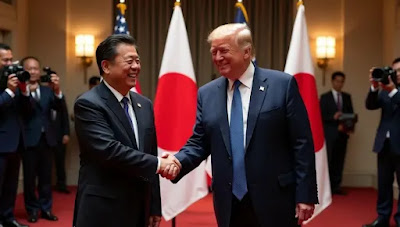
- Trump’s Charm Offensive in Asia: Propelling the Nikkei 225 to Unprecedented Record Heights
- Why This Matters for Your Wallet
- Breaking Down the $490 Billion Mega-Deal
- Hitting South Korea: Trade Talks and Kospi Cheers
- The “John Deere” Connection
- The Nikkei 225: A Trip Down Memory Lane
- What Should You Do? (Helpful Friend Advice)
-
Trump’s Charm Offensive in Asia: Propelling the Nikkei 225 to Unprecedented Record Heights
October morning in 2025, switching on your phone, and seeing headlines screaming about stock markets hitting the roof—not just any roof, but the highest they’ve ever touched in history. That’s exactly what happened this week when US President Donald Trump’s whirlwind tour through Asia turned into a proper masterclass in diplomatic deal-making. Picture this: golden gifts exchanged over lavish state dinners, handshakes that feel like they could move mountains (or at least stock tickers), and announcements of investments so massive they make your head spin. At the centre of it all? The Nikkei 225, Japan’s flagship index, blasted past 51,000 points for the first time ever. It’s not just boring numbers on a screen; it’s a story of charm, commerce, and a dash of geopolitical chess that’s got investors from Tokyo to London buzzing properly.
Let’s rewind a bit to see how we got here. Trump, back in the White House for his second term, kicked off this Asia trip with a massive bang. Arriving in Japan first, he didn’t just sip tea and chat about the weather—he rolled out the red carpet for big business. Over dinners with Japanese leaders and tycoons, he charmed them with talk of “fair deals” and “strong alliances.” The payoff? A whopping $490 billion in investment commitments is now flowing back to the US. Look, that’s not pocket change; it’s enough to build entire new industries from scratch. And the markets? Straight up, they loved it. The Nikkei jumped 2.4% in a single session, closing at 51,410.40. Traders were practically popping champagne as shares in tech giants and exporters soared.
Why This Matters for Your Wallet
But why does this matter to you, whether you’re a casual investor dipping your toes into global stocks or a pro watching every tick? Because in today’s interconnected world, a president’s smile in Tokyo can fatten your portfolio back in the UK or India. Trump’s approach—blunt, bold, and business-first—recalls his first term’s trade wars, but this time it feels more like a carrot than a stick. He’s framing the US as Asia’s best buddy, not its bully. And the results are showing properly: not just in Japan’s records, but across the entire region. South Korea’s Kospi hit its own peak too, up 1.8% after Trump met their president, hinting at a $350 billion trade breakthrough. Even Shanghai’s Composite edged up, with all eyes on a potential Trump-Xi huddle that could finally dial down the tariff drama.
This isn’t merely hype; it’s the making of market history. Back in 2017, Trump’s first Asia jaunt sparked a similar buzz, but fast-forward to 2025, and the stakes are much higher. With the world moving fast into the AI era, these moves could reshape global supply chains for decades. Think about semiconductors from Taiwan or high-tech cars from Japan—the stuff that powers your phone and drives your commute every day. Trump’s charm isn’t just a show; it’s a strategy, blending tough talk on China with honeyed words for allies.
.webp "Trump’s Asia Charm Push Sends Nikkei to Record Highs")
Breaking Down the $490 Billion Mega-Deal
Let’s get into the nitty-gritty of that eye-watering $490 billion figure. It’s not just pulled from thin air; it builds on previous pledges but adds some serious teeth. SoftBank has committed $100 billion specifically for AI and data centres in the US. Then you’ve got Westinghouse pledging billions for nuclear tech and Toshiba jumping in with manufacturing boosts. To be fair, this is a “Game-Changer.” Commerce Secretary Howard Lutnick even quipped during a Tokyo gala that these deals are so big, they’ll need their own zip code.
Why Japan? It’s simple economics. The US has always had a bit of a trade deficit with Japan, but Trump is flipping the script properly. He’s inviting investments that create American jobs while keeping supply lines tight. For Japanese firms, it’s a clever hedge against future US tariffs. The result? Confidence has soared. Exporters like Toyota and Sony saw their shares spike by 3-5%, dragging the entire Nikkei index higher with them.
Hitting South Korea: Trade Talks and Kospi Cheers
From the neon lights of Tokyo to the bustling streets of Seoul, Trump kept the momentum going without missing a beat. Meeting President Yoon Suk Yeol, he pushed for a revised trade pact that actually works for both sides. While no full deal is signed yet, the whispers of $350 billion in Korean investments to dodge tariffs had the markets cheering. Samsung and Hyundai are leading the charge here, eyeing new US chip plants and EV factories.
The Kospi responded with a 1.8% leap to 4,058.37—another all-time high. Why the excitement? Look, Trump’s charm has eased the fears of a repeat of the 2018 tariff spats that previously shaved 10% off Korean stocks. Now, with the US elections behind us and the Fed looking to cut rates, the sentiment is incredibly bullish.
The “John Deere” Connection
To keep things real, let’s look at our old friend John Deere (DE). Back in 2018, Trump’s steel tariffs hiked their costs and tanked their shares by 15%. But contrast that with what’s happening now. Agri-tech ties with Korean and Japanese firms could actually boost Deere by 20% if these new deals stick. It’s a reminder that when diplomacy works, even the traditional industrial giants get a massive lift.
The Nikkei 225: A Trip Down Memory Lane
The Nikkei 225 isn’t just an index; it’s Japan’s economic heartbeat. It’s been around since 1950, tracking 225 blue-chip companies. Historically, it hit a famous peak in 1989 during the “bubble” years, then spent decades trying to get back to those levels. But this recent surge is different. It’s driven by a weak yen, AI hype, and this “Trump Mojo.” Turnover hit a massive ¥5 trillion on the day of the surge—the highest we’ve seen in years.
.webp "Trump’s Asia Charm Push Sends Nikkei to Record Highs")
What Should You Do? (Helpful Friend Advice)
If you’re looking at your portfolio and wondering how to ride this wave, here’s my take:
- Monitor Currencies: A weak yen is a gift for Japanese exporters, so keep an eye on the USD/JPY pair.
- Focus on Tech and Autos: These sectors are getting the lion’s share of the investment deals.
- Stay Diversified: All-time highs are exciting, but they can be volatile. Don’t go “all-in” on one region. Mix your Nikkei exposure with some US tech to stay safe.
- Watch the Fed: If the US Federal Reserve cuts rates in November, this rally could easily extend into 2026.
Wrapping It Up: Ride the Wave Wisely
Trump’s charm offensive has properly lit a fire under Asia’s markets. From the $490 billion Japan deal to the record-breaking heights of the Nikkei, it’s a clear reminder that diplomacy drives dollars. We’ve looked at the history, the deals, and the data—now it’s your move.
Whether you’re looking at Toyota, Samsung, or even John Deere, the opportunities are there if you know where to look. Share your thoughts in the comments—are you betting on a long-term Asia rally, or do you think this is just a temporary “Trump bump”? Subscribe for more market magic, and let’s keep navigating these record highs together. Your future self will properly thank you for staying informed!
Frequently Asked Questions (FAQs)
What exactly is the Nikkei 225?
Look, it’s Japan’s main stock index, tracking 225 of its biggest companies. Think of it as the Japanese version of the Dow Jones. It just hit a record 51,410 because of massive new investment deals with the US.
Is the $490 billion Japan deal real or just hype?
To be fair, it’s a mix of both, but the commitments from giants like SoftBank ($100B) and Westinghouse are very real. These are long-term projects that will build data centres and nuclear tech over the next few years.
Should I invest in Japanese stocks right now?
Straight up, if you’re thinking long-term, it’s a great time. But remember, the market is at an all-time high, so use “dollar-cost averaging” (investing a little bit every month) to stay safe from any sudden dips.
How does this affect US companies like John Deere?
Properly! Better trade relations with Asia mean fewer tariffs on steel and parts, which helps companies like Deere keep their costs down. Plus, new tech partnerships in Asia are a huge win for them.
Note: This is for educational purposes only. Not financial advice. We are not SEBI-registered.