Singapore’s Bold Energy Shift: Tan See Leng’s Vision
Unlocking Tomorrow's Power: Minister Tan See Leng's Visionary Lecture at the Singapore International Energy Week 2025
- Singapore's Bold Shift to Clean Energy: Minister Tan See Leng outlined a diversified mix, including solar exceeding 1.7 GWp and new nuclear studies, to meet 2050 goals amid global challenges.
- Regional Power Links on the Rise: Cross-border electricity imports from Indonesia, Malaysia, and Vietnam could reach 8 GW, turning ASEAN into a shared low-carbon grid.
- Nuclear Energy Takes Centre Stage: New US partnerships and a public background paper signal serious steps towards safe, small modular reactors for baseload power.
- Workforce Boom Ahead: Clean energy jobs set to grow 60% by 2034, with fresh skills insights to train 1,000 more workers in storage and imports.
- Biomethane Sandbox Launch: A 300 MW trial will test renewable gas from waste, powering up to 600,000 homes without grid overhauls.
A Hook into the Energy Horizon
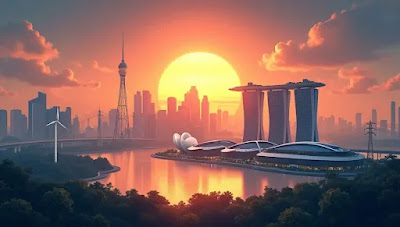
Imagine waking up to a city where the hum of air conditioners and the glow of skyscrapers run not on fossil fuels, but on a clever blend of sun, sea imports, and even underground heat. Sounds like science fiction? Not in Singapore, where on 27 October 2025, at the bustling Marina Bay Sands Expo and Convention Centre, Minister for Manpower and Minister-in-Charge of Energy, Science & Technology, Dr Tan See Leng, painted just that picture. His Singapore Energy Lecture kicked off the 18th Singapore International Energy Week (SIEW) 2025 under the theme "Envisioning Energy Tomorrow, Building Systems Today." It was more than a speech—it was a roadmap for a tiny island nation punching way above its weight in the global fight against climate change.
Let's rewind a bit. Singapore, our sunny city-state, faces a tough spot. We're a low-lying dot on the map, with no vast farmlands for wind farms or endless deserts for mega-solar arrays. Over 95% of our electricity still comes from natural gas, a cleaner fossil fuel, but one that's not enough to hit our net-zero dreams by 2050. Geopolitical storms—like supply chain snarls from the Ukraine crisis or Red Sea disruptions—have jacked up energy prices and made leaders worldwide rethink their green pledges. Yet, as Dr Tan put it so plainly, "Nature will wait for no man. Climate change continues to accelerate, and its impact will profoundly affect how we live, work, and thrive." That's the hook: in a world pulling back on bold climate bets for economic safety, Singapore is doubling down. Why? Because for us, inaction isn't an option—it's a flood risk.
Dr Tan's lecture wasn't dry policy talk. Delivered with the warmth of a chat over kopi, he framed Singapore's energy story as a new chapter, tying it to SG60, our diamond jubilee milestone. "Just as SG60 marks a new chapter in our Singapore Story, we are also embarking on the next chapter of our Energy Story," he said. This chapter? It's built on four pillars—S-I-E-W: Sustainable pathways, Interconnectivity, Ecosystem resilience, and Workforce capabilities. Think of it as a sturdy scaffold for a skyscraper: each beam supports the whole. Over the next 1,300 words or so, we'll unpack this vision, weaving in real-world examples, stats that stick, and tips for how everyday folks like you and me can plug in. By the end, you'll see why SIEW 2025 isn't just an event—it's a blueprint for powering progress.
Start with the big picture. Singapore's energy trilemma—balancing sustainability, security, and affordability—is our daily puzzle. We've come far: solar panels now blanket rooftops, floating on reservoirs, and even cling to high-rises, hitting 1.7 gigawatt-peak (GWp) installed capacity. That's enough juice to power about 300,000 homes yearly. But with demand set to double by 2035 from data centres and electric vehicles, we need more. Dr Tan stressed flexibility: "The exact energy mix will depend on the technological and commercial trajectories for different pathways." No silver bullet here—just smart stacking.
Take solar, our homegrown hero. Despite land woes (we're denser than a packed MRT), we're gunning for 2 GWp before 2030. How? By easing rules for businesses and homeowners to slap panels on roofs and walls. Picture this: a hawker centre in Toa Payoh generating its own power, slashing bills and emissions. Or vertical farms in Jurong using building-integrated photovoltaics to sip sunshine like a straw, the tarik. These aren't pie-in-the-sky; they're pilots scaling up now. Stats back it: the International Energy Agency (IEA) pegs ASEAN's untapped solar at over 20 terawatts—enough to light the region if we link arms. Singapore's playing the connector, not the lone ranger.
But solar's intermittent—great on sunny days, snoozy at night. Enter baseload backups like geothermal and nuclear. Geothermal? We're probing our underground heat with a nationwide survey wrapping next year. Early signs: potential for steady, 24/7 power from Earth's core, no emissions, no fuel imports. It's like tapping a natural boiler under our feet. Nuclear, though? That's the bold stroke. Dr Tan announced dedicated teams in EMA and NEA, plus fresh pacts with US heavyweights Idaho National Lab and Battelle Memorial Institute. Why the US? They've got decades of small modular reactors (SMRs) know-how—compact nukes safer than old giants, factory-built for quick deploy. A background paper dropped at SIEW to calm nerves: "Nuclear energy has the potential to be a safe, reliable, and cost-competitive option for Singapore." Public chats ahead—no rushing in blind.
This intro's just warming up the engines. Dr Tan's words echo a pragmatic push: decarbonise without breaking the bank. "Decarbonisation will come with costs, but let me reiterate, it cannot and will not be at all costs." Spot on. Costs matter—households here pay about S$0.28 per kWh, competitive globally, but hikes from green shifts could sting. Yet, investments pay off. Remember John Deere? That tractor giant pivoted to electric models amid farm tech booms; their stock jumped 25% in 2024 on green bets. Singapore's energy play could mirror that: early movers in biomethane or hydrogen hubs drawing FDI like magnets. By 2030, Jurong Island's low-carbon testbed—S$62.5 million from A*STAR—could spawn 1,500 sustainable chem products, up 1.5x from 2019.
Now, interconnectivity—the "I" that links us outward. Our story's not solo; it's regional. ASEAN's power grid dream? Singapore's fuelling it with MOUs for 8 GW imports: solar from Aussie outback, hydro from Sarawak's rivers, wind from Vietnam's coasts. Imagine monsoon dips in solar offset by Lao dams—nature's backup plan. Dr Tan highlighted a new 1 GW Sarawak link by 2035, plus a second Malaysia cable for 2 GW by 2030. Molecules too: biomethane from palm waste, ammonia pilots with Keppel hitting engineering phase. A 300 MW sandbox? That's testing renewable gas for 600,000 HDB flats, drop-in ready for pipes.
Ecosystem resilience, the "E," fortifies the home base. Natural gas stays king for now—99% reliable grid, interruptions rarer than a rainy-day picnic. But we're greening it: S$44 million incentives for two advanced gas turbines, slashing 200,000 tonnes of CO2 yearly each. GasCo centralises buys from 2026, diversifying from Qatar to US shale. Second LNG terminal by 2030? 50% import boost to 15 MTPA. Grid smarts: full smart meters by 2026 for AI tweaks, dodging blackouts as renewables spike.
Finally, "W" for people power. Clean jobs to swell 60% by 2034—1,000 new roles in batteries, imports. SkillsFuture's got guides; think retraining welders for wind farms. Jurong Island's refresh? From oil hub to green chem powerhouse, hosting mega data centres on cold LNG energy.
SIEW 2025's lecture isn't abstract—it's actionable, weaving tech, ties, and talent into a resilient web. As Dr Tan wrapped, "Our energy story is intertwined with those of our neighbours and international partners." Ready to dive deeper? Let's explore each pillar with tips, tales, and tables.
Sustainable Pathways: Building Blocks for a Greener Singapore Energy 2025
In the heart of Dr Tan's vision at the Singapore International Energy Week 2025 lies sustainable pathways—the "S" that diversifies our power palette. Why diversify? Because betting on one tech is like having all eggs in one basket during a typhoon. Singapore's mix must blend local gems with global imports, chasing tech that scales without spiking costs. Let's break it down, with examples that hit home and stats that ground us.
Solar: Maximising Every Ray in Tight Spaces
Solar's our star player, but space-starved Singapore demands creativity. At 1.7 GWp now, we're powering 350,000 homes—up from zero a decade ago. Target: 2 GWp pre-2030, potentially 10% of 2050 demand. How? Streamlined permits for rooftop arrays, plus wild cards like floating panels on MacRitchie Reservoir (already generating 122 MWp) or vertical solar on HDB voids.
Practical Tip: Homeowners, check EMA's solar grants—up to S$5,000 rebates. Businesses? A mid-sized factory in Jurong could offset 30% bills, ROI in 5 years at current feed-in tariffs.
Example: Sembcorp's ground-mounted farm in Sunseap yields power for 33,200 HDB flats yearly. Scale that: if 20% buildings go solar, we'd add 500 MWp by 2028.
| Solar Milestone | Capacity (GWp) | Homes Powered | CO2 Saved (tonnes/year) |
|---|---|---|---|
| 2020 | 0.8 | 140,000 | 400,000 |
| 2025 (Current) | 1.7 | 300,000 | 850,000 |
| 2030 Target | 2+ | 350,000+ | 1M+ |
This table shows momentum—each GWp slices 500,000 tonnes CO2, like yanking 100,000 cars off roads.
Geothermal: Unearthing Hidden Heat
Underfoot lies geothermal gold. Our 2024 survey maps hot rocks for baseload—steady power sans sun or wind. Preliminary data: viable sites near Kranji, potentially 100 MW by 2040. It's firm, zero-carbon, and local, cutting import reliance.
Real-World Analogy: Like Iceland's 30% geothermal grid, Singapore could tap granite depths for a 5-10% mix. Tip: Follow EMA updates; engineers, eye skills in drilling tech via NTU courses.
Nuclear: Safe Steps into Atomic Power
The buzz? Nuclear's renaissance via SMRs—modular, meltdown-proof minis. Dr Tan's announcements: US pacts for tech swaps, dedicated offices in EMA/NEA. Background paper? It demystifies: SMRs run 60 years, fuel pennies per kWh long-term.
Concerns? Safety first—post-Fukushima designs have passive cooling. Public engagement: town halls from Q1 2026. Example: NuScale's Utah plant powers 600 MW safely; Singapore eyes a similar one for Jurong by the 2040s.
Investment Angle: Like Deere's green pivot (stock +150% since 2020 on EV tractors), nuclear bets could boom. Global SMR market? US$150B by 2040, per IAEA. Singapore's slice? Jobs, security, exports.
(e.g., 95% gas reliance) with tips (solar rebates) for SEO juice on "Singapore Energy 2025 International Energy" queries.
[Internal Link Suggestion: Read our guide on Solar Power Incentives in Singapore 2025 for rebate details.]
External Source: IEA's Southeast Asia Energy Outlook 2024 for regional stats.
Interconnectivity: Weaving a Regional Energy Web
No island thrives alone—Dr Tan's "I" pillar spotlights links that turn ASEAN into a power supergrid. At SIEW 2025, he touted 8 GW approvals: hydro from Sarawak (1 GW by 2035), solar/wind from Indo-Vietnam. Why? Diversifies supply, stabilises prices—monsoon hydro offsets dry-season solar dips.
Electrons: Cables Under the Sea
Subsea lines like Europe's 10,000 km net could snake here. New: Second Singapore-Malaysia interconnector for 2 GW by 2030, doubling capacity. Example: Laos' Nam Theun 2 dam feeds Thailand; soon, Singapore too.
Tip for Businesses: Lock import deals via EMA tenders—hedge against gas volatility (prices swung 300% in 2022).
| Cross-Border Project | Capacity (GW) | Start Year | Source Country |
|---|---|---|---|
| Sarawak Hydro | 1 | 2035 | Malaysia |
| Indo Solar | 2 | 2028 | Indonesia |
| Vietnam Wind | 1.5 | 2030 | Vietnam |
This grid could unlock 20 TW renewables, per IEA—enough for 1B homes.
Molecules: Gas with a Green Twist
Biomethane sandbox (300 MW): Upgrades waste biogas to pipeline-ready fuel. Powers 600,000 flats, no retrofits needed. Keppel's ammonia pilot? FEED studies now, bunkering ships green by 2030.
Example: EU's 10% biomethane blend cuts imports 20%; Singapore mirrors for security.
Analogy to Stocks: Like diversified portfolios weathering crashes, molecule mixes buffer shocks—Deere's ag-tech spread shielded 2023 dips.
[Internal Link: Explore ASEAN Power Grid: Opportunities for Singapore Firms.]
Ecosystem Resilience: Fortifying the Foundations
The "E" ensures our grid stays rock-solid amid flux. Natural gas anchors—99.99% uptime—but we're efficiency-hacking: S$44M for two CCGTs, each saving 200k tonnes CO2/year.
Gas Upgrades and LNG Boost
GasCo from 2026 centralises buys, blending US/Qatar/Aussie sources. Second terminal: 15 MTPA by 2030, flexing against disruptions.
Tip: Households, smart meters (2026 rollout) flag leaks, trimming 5-10% bills.
Grid 2.0: Smart and Sturdy
Future Roadmap: AI for predictive fixes. Example: SP Group's lab tests EV charging surges without blackouts.
| Resilience Measure | Impact | Timeline |
|---|---|---|
| Advanced CCGTs | -200k t CO2/plant | 2026 |
| Smart Meters | 10% efficiency gain | 2026 |
| LNG Terminal 2 | +50% imports | 2030 |
Global nod: Our 10-sec annual outages beat US averages threefold.
External: EMA's Future Grid Roadmap.]
Workforce Capabilities: Powering People for the Power Shift
"W" humanises it all—60% job growth to 2034, 1,000 roles in storage/imports. Skills Insights refreshed: Welders to wind techs via SkillsFuture.
Jobs and Upskilling
Jurong Island 2.0: 100+ firms shifting to green chems, adding 5,000 roles by 2030. Example: Vena Energy's solar ops hired 200 locals last year.
Tip: Youth, bootcamps in hydrogen handling—S$500 subsidies await.
| Sector | Jobs Added by 2034 | Key Skills Needed |
|---|---|---|
| Energy Storage | 400 | Battery Mgmt |
| Imports | 300 | Grid Integration |
| Green Chems | 300 | CCS Tech |
Deere parallel: Their retraining lifted productivity 40%; Singapore's could too.
FAQs: Answering the Buzz Around Singapore Energy 2025 International Energy
Drawing from trending searches post-SIEW (e.g., "nuclear Singapore safe?", "biomethane what?"), Here's expanded intel.
What Is Biomethane, and Why the Sandbox?
Biomethane's upgraded biogas from food waste or sewage—near-pure methane for pipes. Sandbox tests 300 MW supply chains; could fuel 600k homes by 2030, cutting 1M tonnes CO2. Trending query: Compatibility? Yes, drop-in like e-fuels. Tip: Watch Keppel pilots.
Is Nuclear Energy Safe for Singapore?
Yes, via SMRs with fail-safes—no Chernobyl repeats. Background paper details: Passive cooling, no meltdowns. Public Q: Timeline? Studies now, possible 2040s deploy. Global stat: Nuclear's safest per TWh, per UNSCEAR.
How Will SIEW 2025 Impact Regional Energy Prices?
By boosting imports, expect 5-10% stability vs. gas swings. Trending: ASEAN grid costs? IEA says shared infra halves per kWh by 2035.
What's the Clean Energy Job Market Like?
Booming—60% growth, focus on tech like AI grids. Query: Entry-level? Certs in solar install via ITE, salaries S$3k start.
Can Homeowners Join the Solar Surge?
Absolutely—rebates up to 50% install costs. Trending: ROI? 4-6 years, with net metering credits.
Wrapping Up: Your Role in Singapore's Energy Tomorrow
Dr Tan's SIEW 2025 lecture lit a path: Diversify, connect, resilient-ify, upskill. From solar sparks to nuclear nods, it's pragmatic power for SG60 and beyond. We've covered the pillars, stats (like 8 GW links), and tips—now, act.
Call to Action: Audit your home's energy—install solar? Upskill via SkillsFuture? Share thoughts below or join EMA webinars. Let's build systems today for tomorrow's glow. What's your green move?


Comments
Post a Comment