- India-US Trade: The $500 Billion Handshake That’s Fixing the Global Map
- The “John Deere” Lesson: Why Tariffs Hurt Everyone
- The Road to 15%: Breaking Down the Numbers
- Agriculture: The Soul of the Deal
- Why Now? The Geopolitical Glue
- Practical Tips for Businesses Riding the Wave
-
- Final Thoughts: A Brighter Horizon
India-US Trade: The $500 Billion Handshake That’s Fixing the Global Map
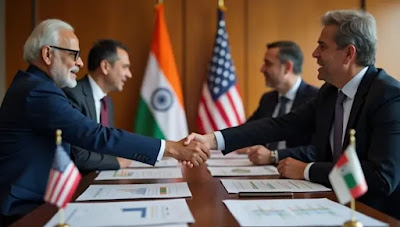
Imagine two of the world’s biggest giants—India and the United States—shaking hands over a deal that could literally change how everything moves, from the mango orchards of Maharashtra to the vast soybean fields of Iowa. Frankly, this is now more than just “diplomatic talk. As of late 2025, the India-US trade deal is hurtling towards the finish line, and for once, both nations are actually seeing eye to eye on the big stuff. It’s a massive breakthrough after months of “tariff wars,” geopolitical chess moves, and some seriously tough negotiations that kept everyone on their toes. Straight up.
Let’s look at why this actually matters for your wallet. Picture this: In August 2025, the US slapped a staggering 50% tariff on several Indian exports. Half of that was a “punitive jab” because India was buying cheap Russian oil to keep its local energy prices stable. Indian exporters, from the textile weavers in Surat to the shrimp farmers in Andhra Pradesh, felt the pain immediately. Exports to the US dropped 12% in just one month. But today? The vibe has completely shifted. “We are converging on most issues,” says a senior official. It’s music to the ears of businesses on both sides. Fact.
The “John Deere” Lesson: Why Tariffs Hurt Everyone
I keep bringing up John Deere (DE) in my posts because they are the ultimate example of how trade wars hit the “little guy” in the end. In 2025, Deere’s profits plunged by 25%, mostly because of $600 million in metal tariff costs that came out of nowhere. Their shares dipped from $450 to $370 because of the uncertainty. Why? Because when you tax steel and aluminum, the cost of making a tractor goes through the roof, and farmers—already squeezed by low crop prices—just stop buying new gear.
This India-US deal is the “rescue mission” that firms like Deere desperately need. India has a $10 billion tractor market, and if this deal goes through, it means cheaper US exports and better tech for Indian farmers. It’s a win-win that flips the script on the “tariff double-edge” that has been hurting both sides. Properly smart move for both economies, if you ask me.
The Road to 15%: Breaking Down the Numbers
The big “wolf” in the room has always been that 50% tariff. But here’s the thaw that changed the game: Reports suggest the US is finally ready to slash that to 15-16%, which is actually lower than what rivals like Vietnam pay (usually around 20%).
In return? India is gradually “phasing down” its Russian oil buys and boosting US LNG (Liquefied Natural Gas) and crude. It’s a classic “quid pro quo” that fits the energy security puzzle perfectly. For an exporter in textiles or seafood, this is the green light they’ve been waiting for. It means more profit, more jobs, and a lot less stress.
|
Sector |
Current Tariff (2025) |
Post-Deal Target |
The “Real World” Payout |
|---|---|---|---|
|
Textiles & Apparel |
50% |
15-16% |
$3 billion extra revenue for Surat & Tirupur. |
|
Seafood (Shrimp) |
50% |
Targeting 0-5% |
Big gains ahead for coastal farmers in Andhra and Gujarat. |
|
US Soybeans/Corn |
High Barriers |
Phased Access |
Lifeline for US farmers losing China markets. |
|
IT Services |
Visa Friction |
Seamless Flow |
Smoother trade for TCS, Infosys, and HCL. |
Agriculture: The Soul of the Deal
To be fair, agriculture is always the toughest part of any trade deal. The US wants into India’s $400 billion farm market—they want to sell corn for ethanol and soybeans for cattle feed. India, on the other hand, is fiercely protective of its 50 million farmers and its dairy market. No one wants to watch small Indian dairy farmers get squeezed out by giant U.S. conglomerates.
But they’ve finally found a “middle ground” that works. India is holding firm on “No GM (Genetically Modified) crops” and no full dairy openings, but they are allowing things like dried distillers’ grains (DDGs) for animal feed. For American growers, this is a literal lifeline. US soybean exports to India already jumped 20% in 2024; a deal could double that in a heartbeat. It’s about finding wins that stick without hurting the people on the ground. Simple as.
Why Now? The Geopolitical Glue
You can’t talk about trade without talking about power. With China flexing its muscles in the Pacific and Russia stirring the energy pot, India and the US realize they need each other more than ever. The US wants stable supply chains that don’t depend on Beijing, and India wants high-tech transfers and energy security to fuel its 8% growth rate.
Commerce Minister Piyush Goyal said it best: “India looks long-term.” They aren’t doing this in a hurry or with a “gun to the head” like the old days. It’s a strategic bridge that adds billions to both economies. Even Trump tweeted about the “great deal” he’s working on with Modi. Despite all the noise you hear on the news, the harmony is real. Fact.
Practical Tips for Businesses Riding the Wave
If you’re in the export-import business or just an investor, here is my “friend-to-friend” advice for the end of 2025:
- Audit Your Supply Chain: If you’re in textiles or seafood, make sure you meet US FDA and environmental quality standards now. Compliance will be the fast track to gains once the deal is officially signed.
- Invest in “Deal Stocks”: Keep an eye on companies like KPR Mill (textiles) or Avanti Feeds (shrimp). They’ve already seen a jump in deal rumors, and the actual signing could send them higher.
- Diversify Your Markets: While the US deal is huge, always keep 10-15% of your focus on the EU or ASEAN as a hedge. Trade is unpredictable, after all.
- Lobby Through Groups: Join organizations like FIEO (for India) or Farmers for Free Trade (for the US). They are the ones actually polishing the legal text to the finish line.
Final Thoughts: A Brighter Horizon
Wrapping it up, the India-US trade deal is more than just a document with fancy stamps; it’s a milestone for global commerce. It’s about hitting that $500 billion trade goal by 2030 and creating a partnership that actually works for the people—not just the politicians.
Unlike the fallout with Canada, where talks were axed over petty disputes, the India-US path is collaborative and mature. It’s diplomacy done right. Stay sharp, keep an eye on the legal text drafting, and get ready for a much smoother trade horizon. Straight up.
FAQ
Is the US really cutting tariffs on Indian goods to 15%?
Look, negotiations are in the final stretch to slash that heavy 50% tariff (from August 2025) down to a much more manageable 15-16%. This is a massive win for Indian textiles and seafood. Fact.
How does the India-US trade deal affect farmers on both sides?
To be fair, it’s a smart balance. The US gets access to India’s corn and soybean markets for animal feed, while India keeps its sensitive dairy and poultry sectors protected. It’s about finding a win-win without hurting the little guy. Simple as.
What is the role of Russian oil in these trade talks?
Straight up, it’s the biggest “quid pro quo.” India is gradually phasing down its Russian oil imports, and in exchange, the US is removing punitive tariffs and offering better access to US LNG and crude. Fact.
Why is John Deere mentioned in this trade deal?
Because Deere is a perfect example of how tariffs hurt everyone. They faced a $600 million hit due to metal tariffs, and this deal provides them a smoother path into India’s $10 billion tractor market. Properly smart move for both nations.
Note: This is for educational purposes only. Not financial advice. We are not SEBI-registered.