Table of Contents
Goldman Sachs Just Crushed It – What a $10.91 Profit Means for You.
When someone says “Goldman Sachs,” most people picture rich men in expensive suits using words that make no sense. But it is April 2026 now. The bank’s results from last year matter to everyone – even a school kid in Mumbai or London. Why? Because when the world’s biggest investment bank makes this much money, it tells you where the global economy is heading.
On July 16, 2025, Goldman released its report. They smashed every target. Experts thought the bank would earn about $9.53 per share. But Goldman delivered $10.91. That is not a small win. That is a loud message saying they are still the kings of the game.
The Numbers – Why People Are Talking
If Goldman Sachs were a student in your class, they just scored 99% on the hardest exam while everyone else struggled to pass. Let me give you the numbers without the boring bits.
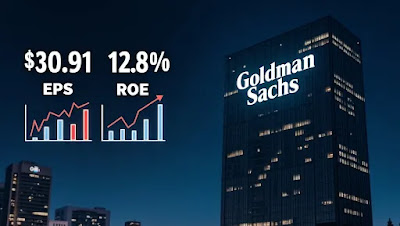
Earnings per share – or EPS – came in at $10.91. That is the profit for each share someone owns. Beating expert guesses by more than a dollar is a huge deal.
Net revenues hit $14.58 billion. That is a lot of zeros, even for a bank that started way back in 1869.
Return on equity was 12.8%. This shows how good they are at using their shareholders’ money to make even more money.
Dividends went up to $4.00 per share. That is a 33% raise. Imagine your boss giving you a big bonus just because they feel happy. That is what Goldman just did for its investors.
How Did They Make So Much Money?
You might ask, “The world feels messy with inflation and politics. How are these guys printing cash?” It is not magic. It is a smart strategy.
First, the trading team. Their stock traders made $4.3 billion. When the market is jumpy and everyone else panics, Goldman knows how to move and profit. They love the chaos. While others run away, they step in and make money.
Second, investment banking is back. They made over $2 billion just by advising other companies on mergers and takeovers. That means big businesses are starting to spend money again. They feel confident enough to buy each other and grow. Goldman takes a cut of every deal.
Third, they are using AI as a secret tool. They are not using old calculators anymore. They use smart AI to do boring work ten times faster. It is like giving every banker a superpower. The AI helps them write code, study data, and spot trends that humans might miss. It is not replacing the bankers yet. But it makes them much, much faster. And that speed saves money and increases profit.
What This Means for You – Especially in India
You might say, “Well, this is a US bank.” Why should I care in Mumbai or Bangalore?” That is a fair question. But Goldman is a big deal in India now. They advise our large tech and pharma companies when those companies want to go global or launch an IPO. So when Goldman does well, it means Indian companies are also doing big things.
Think of Priya. She is a young worker in Mumbai. She is not a millionaire. She puts a small part of her salary into a global fund using an app like Groww. That fund owns shares of companies like Goldman Sachs. Because Goldman does well, the value of her fund goes up. She does not need to be a Wall Street shark to benefit. She just needs to be in the game.
When a global giant grows, it pulls the whole financial world up with it. Your small savings can ride that wave. That is the power of global investing.
The Simple Verdict – Should You Invest?
I cannot give you official financial advice. Nobody should tell you exactly what to do with your money. But let us look at the facts.
A company that has raised its dividend by 400% since 2018 is clearly very confident. They would not give away more cash every year if they were worried about tomorrow. Its book value – what the company is worth on paper – is nearly $350 per share. That means even if the stock price drops, the company still owns a ton of real assets.
If you are an Indian investor using apps like Zerodha or Upstox, you can actually look into international funds. That is a smart way to spread your risk. Instead of betting only on local stocks, you own a piece of the world’s strongest money machine. It is about building a base that can survive any weather – whether it is a crash in India or a crisis in Europe.
What Comes Next – Will the Good Times Last?
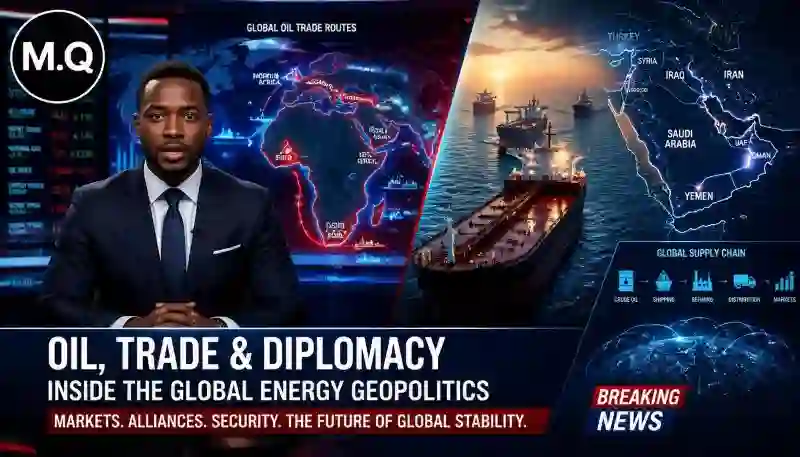
2026 is a weird year. Interest rates are still a problem. World politics can be a nightmare. One day it is a blockade in the Middle East. The next day, it is a trade fight between superpowers. But Goldman has shown that if you are smart, use the right tech, and stay strong, you can still win big.
The bank is aiming for $1 billion in extra fees every year by 2026-2027. They’ve set a plan and are seeing it through. Whether you are a student like Priya or just someone saving for a rainy day, the lesson is simple. Follow quality.
Goldman is not just a bank. It is a signal. If they are making money, there is still plenty of opportunity for the rest of us. The global economy is not dead. It is just changing. And the ones who adapt will come out ahead.
Why Quality Always Wins
In a world full of get-rich-quick schemes and meme stocks, watching a boring old investment bank might seem dull. But these banks are the engines of the global economy. When the engine runs smoothly, the whole car moves faster.
So do not ignore the big guys. They look sharp in suits and speak in polished, formal language. But at the end of the day, they are just very good at making money. And in 2026, that is exactly what you want in your savings.
Stay informed. Watch the numbers. Do not be scared to think big. You do not need to be rich to start. You just need to pay attention and put your money where the smart money already sits.
Goldman Sachs just proved that even in messy times, the strong survive and the smart win. The big question is—are you going to be one of them?
FAQ – Questions You Might Have
Q: What does EPS mean in plain English?
EPS stands for Earnings Per Share. Think of Goldman Sachs as a big cake. You cut it into equal slices for every person who owns a share. EPS is the amount of profit baked into your slice. $10.91 is a very thick, rich slice.
Q: Does this mean the 2026 recession is not happening?
Nobody knows for sure. But when the biggest banks in the world are healthy and making billions, it usually means the financial system is working fine. That is a good sign. But it is still wise to be careful.
Q: How can someone in India invest in Goldman Sachs?
You have two easy ways. First, use an app that lets you buy US stocks directly – like Vested or IndMoney. Second, and easier, buy a Nasdaq 100 or S&P 500 mutual fund or ETF in India. Goldman is a big part of those indexes. Apps like Groww or Zerodha can help.
Q: Why did Goldman raise its dividend so much?
It is a strong signal. They are saying, “We have so much extra cash that we do not even know what to do with it, so here, take some.” That is great for people who want a steady, reliable income from their investments.
Q: Is AI really helping them make more money?
Yes. They use AI to write code, do research, and spot trends that humans might miss. It is not replacing the bankers yet. But it makes them much faster. Faster work means lower costs and higher profits.
Q: Should I sell my other stocks and buy only Goldman?
No. That would be too risky. Even a great company can have bad days. The smarter move is to keep a mix of different investments – some in US banks, some in Indian stocks, some in gold or land. Spread your money around.
Q: What is the biggest risk for Goldman right now?
A big world crisis – like a war that blocks oil routes or a sudden crash in tech stocks. Goldman makes money when markets move, but if things freeze completely, even they can get hurt. That is why you should never put all your savings in one place.
Note: This is for educational purposes only. Not financial advice. We are not SEBI-registered.