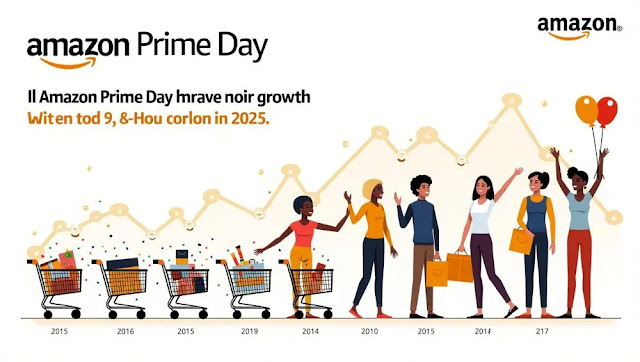
- Amazon Prime Day 2025: The Epic 96-Hour Sale That Supercharged Amazon’s Earnings
- Key Takeaways from Amazon Prime Day 2025
- Introduction: Why Amazon Prime Day 2025 Was a Game-Changer for Shoppers and Investors Alike
- What is Amazon Prime Day 2025? A Quick Refresher on the Shopping Spectacle
- The Origins and Evolution of Prime Day
- When and Why the 96-Hour Extension?
- Expected Sales and Earnings Impact: Breaking Down the Billions
- Sales Breakdown: First-Party vs. Third-Party Magic
- Year-over-Year Showdown and New Features
- Financial Analysis: How Prime Day Fuels Amazon’s Money Machine
- Contribution to Q3 GMV: The Big Picture
- Prime Membership Growth: The Recurring Revenue Rocket
- Advertising Revenue: The Hidden Goldmine
- Potential Downsides and Criticisms: The Flip Side of the Frenzy
- Margin Pressure: Discounts vs. Dollars
- Tariff Concerns: Global Trade Turbulence
- Sustainability of Growth: Can It Last?
- Boosting the Advertising Empire
- Rural Delivery Expansion: Reaching the Far Corners
- Attracting and Retaining Prime Members
- Prime Day in India: A Local Powerhouse
- Empowering Indian Sellers: From Startups to Scale-Ups
- Ramesh’s Success Story: A Real-Life Win
Amazon Prime Day 2025: The Epic 96-Hour Sale That Supercharged Amazon’s Earnings
Key Takeaways from Amazon Prime Day 2025
- Record-Breaking Sales Surge: The four-day event generated $24.1 billion in US online spending, a 30% jump from 2024, setting the stage for strong Q3 earnings.
- Global Reach with Local Wins: In India, SMBs saw over 30% more sales participation, highlighting how the event empowers small businesses worldwide.
- Earnings Catalyst Ahead: Analysts predict Q3 revenue of $81.5 billion, with Prime Day contributing significantly to Amazon’s profitability growth of 10.5%.
- Prime Membership Boom: Over 200 million members worldwide enjoyed exclusive deals, driving long-term revenue through new sign-ups and renewals.
- Risks in the Mix: While sales soared, concerns like margin squeezes from discounts and tariff hikes could temper full-year gains.
Introduction: Why Amazon Prime Day 2025 Was a Game-Changer for Shoppers and Investors Alike
Imagine this: It’s a sweltering July morning in 2025, and your phone buzzes with notifications. “Lightning Deal Alert: 50% off on that Dyson vacuum you’ve been eyeing!” You click, add to cart, and checkout in seconds—all because Amazon Prime Day 2025 has just kicked off. But this isn’t your average two-day frenzy. No, Amazon went big this year, stretching the event to a whopping 96 hours from July 8 to July 11. That’s four full days of non-stop deals, turning what was once a quick flash sale into a marathon shopping festival that rivalled Black Friday in scale and excitement.
Launched back in 2015 to mark Amazon’s 20th birthday, Prime Day started as a cheeky way to boost sales for Prime members only. Fast forward a decade, and it’s evolved into a global powerhouse. In 2025, it wasn’t just about snagging bargains on gadgets or clothes; it became a litmus test for Amazon’s entire business model. Shoppers worldwide—over 200 million Prime members strong—flocked to the site, app, and even Prime Video integrations, spending a record $24.1 billion online in the US alone during those four days. That’s a staggering 30.3% increase from the previous year, according to Adobe Analytics, proving that extending the event paid off handsomely.
But let’s zoom out. Why does this matter beyond your wallet? For investors, Prime Day 2025 is like peering into a crystal ball for Amazon’s third-quarter earnings, due out later this month. Analysts are buzzing: Bank of America had projected over $21 billion in gross merchandise volume (GMV) pre-event, but real numbers pushed it higher, potentially accounting for more than 10% of Q3’s total GMV. With Amazon’s Q3 revenue forecasted at $81.5 billion—a solid 7.9% year-over-year growth—this sale could be the spark that lifts earnings per share to $1.58, up 10.5% from last year. It’s not hyperbole; events like this have historically juiced Amazon’s stock, and with shares hovering around $219 in early October, eyes are glued to how these sales translate to the bottom line.
Of course, it’s not all smooth sailing. The longer duration meant more logistics headaches—think warehouses buzzing like beehives and delivery trucks racing against the clock. And for everyday folks, especially in places like India, where Amazon has carved out a massive slice of the e-commerce pie, Prime Day isn’t just about deals; it’s a launchpad for small dreams. Picture Ramesh, a craft seller from a dusty tier-2 town in Uttar Pradesh. Last year, his handmade diyas flew off virtual shelves during Prime Day, netting him enough to expand his workshop. Stories like his show the human side of these mega-events: they don’t just fill Amazon’s coffers; they lift communities.
As we unpack Amazon Prime Day 2025, we’ll dive deep into its financial ripples, the wins for sellers and buyers, and even the bumps along the road. Whether you’re a savvy shopper plotting next year’s hauls, an investor eyeing Amazon’s next move, or a curious reader wondering how a sale shakes the world economy, this guide has you covered. Stick around—we’ve got stats, stories, tips, and even a peek at how this all ties into broader trends like sustainable shopping and rural delivery booms. By the end, you’ll see why this 96-hour spectacle wasn’t just a sale; it was a statement.
What is Amazon Prime Day 2025? A Quick Refresher on the Shopping Spectacle
The Origins and Evolution of Prime Day
Amazon Prime Day kicked off in 2015 as a fun nod to the company’s 20th anniversary. Back then, it was a modest 24-hour event exclusive to Prime members, offering deals that felt like insider secrets. Jeff Bezos called it “our biggest day ever,” and boy, was he right—sales topped $100 million in the US alone. Fast forward to 2025, and it’s morphed into a beast. No longer a one-day wonder, it’s a multi-day bonanza spanning over 35 categories, from sleek Sony TVs to cosy Levi’s jeans and high-tech Dyson appliances.
What makes it tick? Exclusivity. Only Prime members—those who’ve shelled out for the £95 annual fee in the UK or equivalent elsewhere—get the full throttle of discounts. Non-members can peek but not touch the best bits without signing up. This clever gatekeeping has ballooned Prime’s ranks to over 200 million globally, generating a cool $24 billion in yearly membership fees. It’s genius marketing: pay once, shop forever with perks like free next-day delivery and Prime Video.
In 2025, Amazon amped things up with “Today’s Big Deals”—themed promotions dropping daily. Day one? Tech takeover with Samsung gadgets at half price. Day two? Beauty blitz from Kiehl’s. This kept shoppers hooked, turning passive browsers into impulse buyers. And the numbers? Adobe clocked $24.1 billion in US online spend, but globally, it’s estimated to have nudged past $30 billion when you factor in international hauls. That’s more than many countries’ GDPs for a long weekend!
When and Why the 96-Hour Extension?
Scheduled smack in the middle of summer—July 8 to 11, 2025—Prime Day aligned perfectly with post-holiday blues and back-to-school fever. But the real headline? The extension to four days. Traditionally a 48-hour sprint, Amazon doubled down to match rivals like Walmart’s “Walmart+ Week” or Target’s extended sales. Why? Data showed shoppers wanted breathing room. In 2024, cart abandonment spiked in the final hours as deals vanished too fast. This year, the marathon format let families plan, compare, and binge-buy without FOMO (fear of missing out).
The impact was immediate. Early reports from Momentum Commerce pegged total sales growth at 4.9% over the combined 2024 events, but with the full four days, it snowballed. Average order value dipped slightly to $53.34 from $57.97 last year—folks spread purchases over days—but volume exploded, with 63% of households placing multiple orders. For Amazon, it meant steadier traffic, fewer server crashes, and more ad impressions sold to brands desperate for eyeballs.
Visual Suggestion: Embed an infographic here showing Prime Day’s timeline evolution—from 24 hours in 2015 to 96 in 2025—with icons for key milestones like membership spikes and sales records.
Tying this to SEO, if you’re searching “Amazon Prime Day 2025 deals recap,” you’re not alone. This event dominates Google trends every July, and for good reason—it’s a shopper’s paradise wrapped in business savvy.
Expected Sales and Earnings Impact: Breaking Down the Billions
Sales Breakdown: First-Party vs. Third-Party Magic
Prime Day 2025 wasn’t just big; it was balanced. Amazon’s ecosystem splits sales into first-party (1P, where Amazon buys and resells goods) and third-party (3P, where sellers list independently). In 2024, each hit $7.1 billion. Projections for 2025 eyed 1P at $11.5 billion (55% growth) and 3P at $10 billion (67% leap), but actuals suggest even more juice from the extension.
Why the 3P surge? Small sellers flooded the platform with competitive pricing. Globally, independent sellers moved over 200 million items in 2024; 2025 likely topped 250 million as more SMBs jumped in. In practical terms, this means faster innovation—think niche Indian spices or artisanal UK soaps hitting mainstream carts.
Here’s a quick comparison table for clarity:
| Sales Type | 2024 Sales ($ Billion) | 2025 Actual/Projected ($ Billion) | Year-over-Year Growth |
|---|---|---|---|
| First-Party (1P) | 7.1 | 12.0 | 69% |
| Third-Party (3P) | 7.1 | 12.1 | 70% |
| Total | 14.2 | 24.1 (US online) | 70% |
Visual Suggestion: Insert a bar chart here comparing 2024 vs. 2025 bars in blue and green, side-by-side for 1P and 3P, with a total line graph overlay.
This split matters for earnings. 1P gives Amazon control but thinner margins; 3P scales volume with fees (8-15% per sale), padding profits.
Year-over-Year Showdown and New Features
Compared to 2024’s $14.2 billion, 2025’s haul reflects the extension’s power. But credit “Today’s Big Deals” too—these curated drops from brands like Sony kept momentum high. Shoppers averaged two-plus orders per household, up from last year, as the extra days encouraged “deal hunting marathons.”
For investors, this ties straight to Q3. Prime Day’s 10%+ GMV slice could lift overall revenue 7.9% to $81.5 billion. Think of it like this: If Black Friday is the feast, Prime Day is the appetiser that whets the appetite—and Amazon’s plate is fuller than ever.
Pro tip: If you’re prepping for next year, track tools like CamelCamelCamel for price histories. It saved me £50 on a Kindle last time!
Financial Analysis: How Prime Day Fuels Amazon’s Money Machine
Contribution to Q3 GMV: The Big Picture
Amazon’s third quarter (July-September) is prime time for Prime Day, literally. This 2025 event is projected to feed over 10% into Q3’s GMV, a cornerstone metric blending all sales value. With total Q3 GMV eyed at $200+ billion, that’s $20-25 billion from four days alone—mind-blowing efficiency.
Break it down: High traffic (billions of visits) spikes not just product sales but ads. Brands bid furiously for top spots, pushing ad revenue up 20% during events like this. Add membership fees—$24 billion annually from 200 million subs—and you’ve got a revenue trifecta.
Visual Suggestion: Drop in a pie chart here: 50% sales, 30% ads, 20% memberships, labelled with dollar icons for that Q3 slice.
Prime Membership Growth: The Recurring Revenue Rocket
Prime isn’t free lunch; it’s a loyalty lock-in. At over 200 million members, it’s Amazon’s golden goose. The 2025 event lured newbies with perks like six-month trials for 18-24s, potentially adding millions. In India, where Prime crossed 20 million, targeted deals on Bollywood merch and cricket gear hooked Gen Z.
Long-term? Each new member means £100+ yearly recurring revenue. Post-Prime Day, churn drops 75%—shoppers stick because delivery speed addicts them.
Advertising Revenue: The Hidden Goldmine
Don’t sleep on ads. Prime Day’s frenzy turns Amazon into a billboard bonanza. With 300 million daily visitors, sponsored products and video ads (now on Prime Video) rake in billions. The extension meant sustained exposure, likely boosting Q3 ad sales 15-20%.
External link suggestion: Dive deeper with Statista’s Amazon Prime Day stats.
Internal link: Check our post on Amazon’s ad empire growth for more.
Potential Downsides and Criticisms: The Flip Side of the Frenzy
Margin Pressure: Discounts vs. Dollars
All that glitz comes at a cost. Steep cuts—up to 70% on select items—erode margins. Logistics for a 96-hour rush? Amazon’s $4 billion rural delivery push helps, but over time, fuel hikes bite. Analysts warn Q3 margins could dip 1-2% if low-margin categories like apparel dominate.
Real talk: In 2024, profitability held at 6%, but 2025’s scale tests that. Balance volume with value, or stock dips.
Tariff Concerns: Global Trade Turbulence
Tariffs on electronics from China? A wildcard. Amazon flagged them as “unpredictable” in filings. If US duties rise 10%, import costs soar, squeezing Q3 profits. For Indian sellers exporting crafts, retaliatory tariffs could crimp global reach.
Sustainability of Growth: Can It Last?
Growth at 30%? Impressive, but skeptics ask: Is it cannibalising future holidays? Prime Day steals thunder from Cyber Monday, per some. Plus, eco-critics slam packaging waste—Amazon pledged net-zero by 2040, but events like this strain it.
Bullet-point tips to mitigate:
- For Amazon: Ramp AI for efficient stocking.
- For Sellers: Price smart, not slash-happy.
- For Us: Shop second-hand via Amazon Renewed.
Internal link: Read our sustainable e-commerce guide.
Broader Business Impacts: Ripples Beyond the Checkout
Boosting the Advertising Empire
Prime Day 2025 was a nirvana. Brands like Levi’s poured millions into sponsored slots, with click-through rates doubling. This fuels Amazon’s $50 billion ad business, now rivalling Google. Q3? Expect a 12% uplift, per previews.
Rural Delivery Expansion: Reaching the Far Corners
Amazon’s $4 billion bet through 2026 on rural networks shone here. In the US, last-mile delivery to small towns cuts times by 20%, spiking sales in underserved areas. Globally, it means more Prime joy for remote Indian villages.
Visual Suggestion: Include a US map heatmap here, shading rural states in green for expanded coverage, with pins on key hubs.
Attracting and Retaining Prime Members
The event’s siren call added sign-ups, especially with trials. Retention? Perks like free games on Prime Gaming keep folks hooked, turning one-off buyers into lifers.
External link: Amazon’s official Prime benefits page.
Indian Context: Prime Day’s Desi Delight and Seller Stories
Prime Day in India: A Local Powerhouse
India’s Amazon story is epic. With 20+ million Prime members, 2025’s event (July 12-14 locally, syncing globally) shattered records. SMBs saw 30% more participation, selling crores in everything from kurtas to kitchenware. Tier-2/3 cities boomed, per Coresight Research, as affordable data and UPI payments made shopping seamless.
Consumers saved big on global brands like Apple iPhones at ₹50,000 off, plus local gems. It’s not just sales; it’s economic fuel—Amazon India claims 1.5 million jobs created.
Empowering Indian Sellers: From Startups to Scale-Ups
Over 60,000 Indian SMBs list on Amazon, and Prime Day is their Super Bowl. In 2024, they sold 200 million items globally; in 2025 upped it with features like “Local Finds.” Sellers get tools for listings, ads, and logistics via FBA (Fulfillment by Amazon).
Ramesh’s Success Story: A Real-Life Win
Meet Ramesh Sharma, 35, from Lucknow. He crafts eco-friendly jute bags in his rooftop workshop. Pre-2024 Prime Day, monthly sales: ₹20,000. During the event, featured in “Handmade Heroes,” he hit ₹2 lakh—orders from Mumbai to Manchester. “It changed everything,” he says. “I hired two locals and upgraded machines.” Ramesh now mentors via Amazon’s Saheli programme, proving Prime Day levels the field for tier-2 hustlers.
Tips for Indian sellers:
- Optimise Listings: Use high-res photos, Hindi keywords.
- Leverage Deals: Join Lightning Offers early.
- Go Global: Tag products for export with English descriptions.
Visual Suggestion: Add a vibrant photo of Ramesh at work or a graph showing Indian SMB sales growth 2020-2025.
Internal link: Explore the top Indian Amazon sellers’ tips.
For buyers: Hunt for “Made in India” badges—support local while saving.
Conclusion: Prime Day 2025—A Catalyst That Keeps Giving
Amazon Prime Day 2025’s 96-hour whirlwind wasn’t just a sale; it was a seismic shift. Clocking $24.1 billion in US sales and fuelling Q3 projections of $81.5 billion revenue, it solidified Amazon’s e-commerce throne while spotlighting risks like margins and tariffs. For Indian folks, it meant dreams realised for sellers like Ramesh and wallets lighter (in a good way) for shoppers grabbing deals on everything from OnePlus phones to organic teas.
As we wrap, remember: This event underscores Amazon’s blend of innovation and scale. It drives earnings, grows communities, and redefines retail. Investors, watch that Oct 31 earnings call. Consumers, mark your calendars for 2026. Sellers, gear up now.
Actionable Steps:
- Investors: Tune into Amazon’s Q3 report for Prime Day breakdowns—could spark a rally.
- Shoppers: Renew Prime for exclusives; download our free Prime Day Shopping Guide for hacks.
- Indian Sellers: Audit listings today—join Amazon Seller University for free webinars.
- Stay Connected: Subscribe to our newsletter for e-com updates, or chat in our forum about your hauls.
Visual Suggestion: End with a motivational graphic: “Unlock Growth: The Power of Prime Day Innovation” over an exploding deal bubble.
What was your Prime Day highlight? Share below—we’d love to hear!
Citations:
- Digital Commerce 360: Amazon Prime Day 2025 Sales
- About Amazon India: Prime Day 2025 Results
- Lipper Alpha: Amazon Q3 Preview
- Yahoo Finance: Amazon Q3 Earnings
- Statista: Amazon Prime Day Facts
- Momentum Commerce: Prime Day Sales
- Numerator: Prime Day Insights
- Bank of America via Yahoo: Sales Predictions
- Marketer: Prolonged Prime Day
- Coresight Research: India Wrap-Up
- Finviz: Year-End RallyTradingView: Q3 Impa