Table of Contents
That moment Palo Alto crushed their earnings, and the stock still tanked
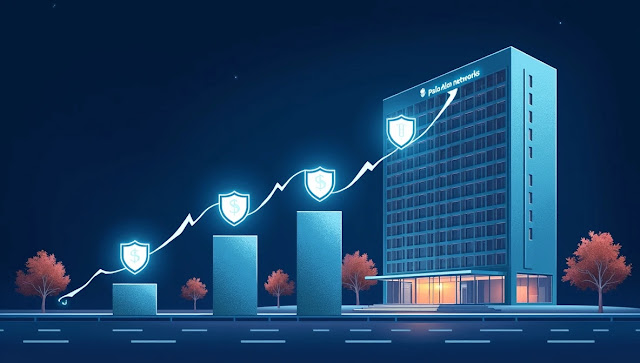
Man, the stock market is just weird sometimes. Have you ever had one of those days where you do everything right — like, everything — and people still look at you like you messed up? Yeah. That’s literally what happened to Palo Alto Networks on May 20, 2025.
They put out their Q3 numbers. And on paper? Absolute home run. But the stock? Nope. It dropped like a rock. A drop of over 6% before most people were done with their first coffee.
I know, it sounds crazy. You could be asking yourself, “If they’re making so much money, why isn’t the price moving up?” You’re not alone. Feels like some kind of glitch. But honestly? It might come across as strange, but it makes sense.
Okay, so the numbers — a win that kinda felt like a loss
Let me just get the dry stuff out of the way. Palo Alto made $2.3 billion in revenue. That’s 15% higher than last year. In a normal world, 15% is a big deal. And their adjusted profit? Also beat what those Wall Street big shots were expecting.
But here’s the sneaky thing hiding in the fine print. Those “adjusted” numbers look all shiny and great. But their actual GAAP profit — the real one, after you take away all the fluff — actually went down a little. From $0.39 to $0.37 per share.
Yeah, only two cents. Two stupid cents. But in high‑finance land, people lose their minds over two cents, as if the sky is falling.
The “what’s next?” trap
Here’s the thing about investors. They’re never really happy with what you just did. They’re like that annoying friend who’s already asking about next weekend’s plans while you’re still halfway through your Saturday night.
Palo Alto’s backlog — that’s basically the pile of work they’ve already sold but haven’t done yet — is sitting at a crazy $13.5 billion. That’s an insane amount of future cash. But then they gave their forecast for the next few months and basically said, “Hey, things might slow down just a tiny bit.”
And the market? Totally spoiled. It sees that huge backlog and expects the company to grow at some ridiculous, breakneck speed. So when Palo Alto says, “Actually, we’re gonna keep things steady around 14% or 15%,” the big investors throw a proper tantrum. It’s that weird disconnect — reality just can’t keep up with the hype they’ve built in their heads.
Why’s it so expensive to stay on top?
Running a giant cybersecurity firm ain’t cheap. But Palo Alto’s costs are starting to look a little scary. Operating costs jumped 20%. And admin spending — you know, boring stuff like HR and office overhead — shot up a massive 38%. (Someone earlier typed 8% by mistake, but no, it’s 38%.)
Think of it this way. Imagine you’ve got a side hustle that makes more money every month. Great, right? But then you realise your rent and your bills are doubling at the same time. You’re working twice as hard, but your actual bank balance isn’t really moving. That’s exactly what’s worrying the big players. If they keep burning cash this fast, how much of that $2.3 billion actually stays in the company’s pocket at the end of the day?
The “Cyber‑Flu” effect
Honestly, it wasn’t just Palo Alto having a rough day. The whole cybersecurity sector felt a bit under the weather that week. When a giant like Palo Alto stumbles, everyone starts eyeing companies like CrowdStrike or Fortinet, wondering if the entire industry is about to hit a brick wall.
It’s like when the smartest kid in class fails a test. Suddenly, everyone else panics, thinking the exam was rigged from the start.
What’s the lesson for us? (Especially in India)
I know a lot of you reading this — whether you’re a student in Delhi or a developer in Bangalore — are probably trying to build your own portfolios. The big takeaway? Don’t just believe the headlines.
A headline might scream “Palo Alto Beats Estimates,” but the stock price tells you the real story. Here in India, we’re seeing a huge surge in tech and digital security. Companies like Quick Heal are doing their thing. And it’s super tempting to jump in the moment you see some “good” news report.
But you’ve gotta look at how fast they’re burning through cash. Investing isn’t about what happened yesterday. It’s about having the stomach for when “good news” leads to a 6% crash — and knowing whether to sit tight or get out.
At the end of the day, cybersecurity is a massive, essential industry. We’re only getting more digital, and hackers aren’t going anywhere. But Palo Alto has to prove it can grow without spending every last penny they make. If they can get those costs under control, that $13.5 billion backlog might actually start looking like the goldmine it’s supposed to be.
FAQs – real quick
1. Why’d the stock drop if earnings were good?
Because stock prices are about the future. Palo Alto did great last quarter, but their “guidance” (their prediction for the future) was a bit slower than people wanted. Investors just hate anything that sounds like “slow.”
2. What’s GAAP vs. Non-GAAP?
GAAP is the strict, official way of counting money. Non-GAAP is the “lite” version where companies ignore certain costs. Palo Alto’s “lite” numbers looked awesome, but their “strict” numbers showed a tiny drop in profit — and that scared people off.
3. Is cybersecurity still worth investing in?
Definitely. The world’s more digital than ever. But it’s a crowded market — companies are spending billions just to stay one step ahead of each other. You’ve got to pick the ones that manage their cash well.
4. What should Indian investors watch out for?
Watch the expenses! A company can be making billions in revenue, but if its “burn rate” (how fast they spend money) is too high, it’ll struggle to deliver real profit to shareholders.
5. Was the 6.6% drop a total disaster?
Not a total disaster, but a big wake-up call. It wiped billions off the company’s value in a few hours. Basically, the market is telling Palo Alto: “We love the growth, but get your spending sorted out.”
Note: This is for educational purposes only. Not financial advice. We are not SEBI-registered.