- The Solana Speedrun: From a Quiet Start to 77 Million Daily Wins
- The Beginning: A Properly Quiet 2020
- 2021-2022: The Breakout Years
- 2025: The Hyper-Scale Reality
-
- Why People Are Actually Switching
-
- The Reality Check: It’s Not All Perfect
- Tips for the Everyday Investor
-
- Summary Table: Solana’s Growth Tracker
-
The Solana Speedrun: From a Quiet Start to 77 Million Daily Wins
Think back to 2020 for a second. Most of us were just stuck at home, bored out of our minds. While the world felt like it was basically standing still, this tiny project called Solana was just starting to warm up its engine. Fast forward to today, March 19, 2025, and man, that engine isn’t just humming—it’s roaring like a literal Formula 1 car on a wide-open track.
If you’ve been keeping even half an eye on the charts lately, you already know the vibe. Solana has gone from being that “weird new kid on the block” to an absolute giant. It’s making the older, clunkier networks look like they’re still trying to run on dial-up internet. But honestly, how did we actually get from a couple thousand transactions to over 77 million every single day? Let’s pull back the curtain and see what’s really going on under the hood.
The Beginning: A Properly Quiet 2020
When Solana first dropped in March 2020, it wasn’t exactly a headline-grabber. Daily transactions were sitting in the tens of thousands—properly modest, right? Back then, it was mostly just developers and hardcore tech geeks playing around with the code.
But the foundation? That was the clever bit. While Ethereum was struggling with “gas fees” that honestly cost more than a decent steak dinner, Solana’s team was building something they called Proof-of-History (PoH). Think of it like a giant, super-accurate synchronized clock. It lets the network process transactions in the literal blink of an eye without everyone having to wait around for a slow consensus.
2021-2022: The Breakout Years
By mid-2022, that “quiet cafe” vibe had completely turned into a packed stadium. We saw daily transactions jump from those humble thousands to over 40 million (and those are the real, non-vote actions). This was the peak era of the NFT boom and that wild DeFi summer. People were properly fed up with paying $50 just to send a bit of crypto, so they flocked to Solana, where fees were—and still are—way less than a penny.
Even the whole mess with FTX in late 2022 couldn’t kill the momentum. Sure, the price took a massive bruising, but the tech itself kept working. Developers didn’t just quit and go home; they stayed and kept building. That’s the real human story behind all the complicated code.
2025: The Hyper-Scale Reality
Now, let’s look at where we are today. As of March 2025, the numbers are properly mind-blowing.
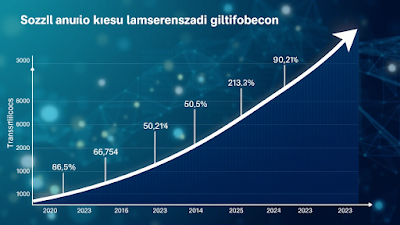
- Daily Transactions: We are seeing a steady average of 77 million non-vote transactions.
- Total Volume: The network has processed over 352 billion transactions in its lifetime. To be fair, that’s a number most big banks would dream of.
- User Adoption: Active addresses peaked at 22 million recently. That’s not just a bunch of bots; it’s real people using apps for trading, gaming, or mapping the world.
Why People Are Actually Switching
It’s not just about the hype or the memes anymore. There are three big reasons why Solana is winning the adoption race right now:
- Stablecoin Supremacy: PayPal’s PYUSD and other big stablecoins have seen their volumes shoot up by 200% year-to-date. Why? Because if you’re a business, you want to move money instantly and cheaply. Solana is the only place doing that at scale.
- The TVL Rebound: Total Value Locked (TVL) hit a record $13 billion in September 2025. It shows that people finally trust the network enough to park their serious cash there.
- Resilience: Remember the outages? They used to be a weekly joke on Twitter. But the network has had 100% uptime for over 18 months now. The upgrades actually worked.
The Reality Check: It’s Not All Perfect
Straight up, we have to talk about the “bot” problem. Critics love to say that up to 80% of the volume is just automated trading. And look, they aren’t entirely wrong. But even if you cut the numbers in half, Solana is still processing more “real” activity than almost any other chain out there.
There’s also the regulatory side. The SEC has been sniffing around for a while, but the community hasn’t flinched. With talk of a Spot SOL ETF potentially coming later this year, the institutional “suits” are finally starting to realize that Solana is infrastructure, not just a toy.
Tips for the Everyday Investor
If you’re looking at these metrics and thinking, “Is it too late?”, here’s the deal:
- Don’t Chase the Peak: Crypto moves in waves. If the volume is at an all-time high, a dip is usually around the corner.
- Stake Your SOL: Instead of just letting it sit in a wallet, stake it. You can earn around 5-7% APY, which is a nice little bonus while you wait.
- Use the Ecosystem: Grab a Phantom wallet and try out a DEX like Jupiter. You’ll see the speed for yourself, and that’s the best way to understand why people use it.
Summary Table: Solana’s Growth Tracker
|
Year |
Daily Transactions |
Active Addresses |
Key Milestone |
|---|---|---|---|
|
2020 |
~50,000 |
Thousands |
Network Launch (Genesis) |
|
2022 |
~40 Million |
~1.5 Million |
NFT & DeFi Explosion |
|
2024 |
~100 Million+ |
~5 Million |
Post-FTX Recovery |
|
2025 |
77-162 Million |
22 Million (Peak) |
$13B TVL Record |
The Road Ahead: $1,000 SOL?
Analysts are throwing around some wild numbers for 2027—some even say $1,000 per SOL if the ETF inflows hit. While that might be a bit optimistic, the tech upgrades like ZK compression are making it 99% cheaper to store data on-chain. This means gaming and AI apps are going to find a permanent home on Solana.
The network isn’t just chasing hype anymore; it’s building the rails for the next generation of the internet.
FAQs: Your Burning Questions Answered
Is Solana better than Ethereum in 2025?
For speed and fees? Absolutely. For security and “history”? Ethereum still holds the crown. Most people use Solana for fun and fast trading, and Ethereum for long-term “blue chip” holdings.
Why was the volume so high in 2024?
Two words: Memecoin Mania. Apps brought in millions of users who were launching thousands of coins a day. It was chaotic, but it proved the network could handle the pressure.
What happens if the network goes down again?
To be honest, the market would probably freak out. But with the Firedancer upgrade coming soon, the chances of a total halt are getting smaller every day.
Conclusion: Join the Speed
From a quiet launch in 2020 to processing 352 billion lifetime transactions, Solana has proven that it’s here to stay. It’s tough, it’s fast, and it’s properly cheap. Whether you’re a trader or just curious, the metrics don’t lie—the “Speedrun” is far from over.
What do you reckon? Are you holding SOL for the long term, or are you just here for the quick flips? Drop a comment below and let’s talk shop.
Note: This is for educational purposes only. Not financial advice. We are not SEBI-registered.