Table of Contents
Costa Rica’s OTR Tyre Boom – What’s Going On, Mate?
Listen. Have you ever actually looked at Costa Rica on a map? It’s tiny. Most people just think coffee, beaches, you know, those eco-lodge things. That’s it. End of story.
But nah. Behind all that, something’s happening. Quiet like. The market for OTR tyres – those giant, chunky things on bulldozers and tractors – is going boom.
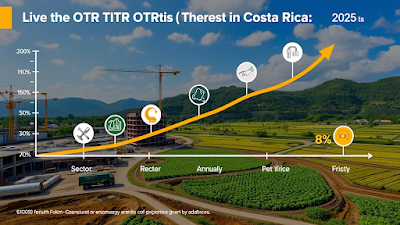
Between 2021 and 2026, this market’s been growing 8% every year. Eight per cent. For a little country like that? That’s properly impressive. And it’s not random. Costa Rica is building roads like mad and farming harder than ever.
Anyway, let me break it down. Properly.
First – Construction. The real boss.
Honestly? Construction is the main driver. Drive through Guanacaste or near the coast. You’ll see cranes, excavators, and dump trucks everywhere. The government’s throwing money at infrastructure – bridges, highways, houses.
And not just government. Private developers, too. Hotels, resorts, homes. All going up.
Infrastructure spending’s supposed to grow about 6% a year until 2026. That doesn’t sound huge, but for a country this size? It’s a lot. And every single machine needs OTR tyres to move. In 2022 alone, construction in Guanacaste jumped over 9%. That’s massive. Tyre dealers are laughing all the way to the bank.
One more thing. These tyres wear out fast. Rough ground, sharp rocks – a few months and they’re done. So it’s not one tyre per machine. It’s multiple replacements. Demand stays steady. Simple maths.
Second – Farming. But with a green twist.
Then there’s farming. Still, Costa Rica’s backbone. Bananas, pineapples, coffee – they feed half the world. Tractors and harvesters working in muddy fields need tough tyres. Can’t have a tyre blow in the middle of harvest. Imagine that. Tractor stuck, time wasted, money lost, fruit rotten. So farmers don’t joke around. They want strong rubber.
But here’s the interesting bit. Costa Rica’s obsessed with being carbon-neutral and green. They’ve got this national plan – get rid of fossil fuels, protect biodiversity. So farmers are asking for machinery that’s efficient and doesn’t wreck the soil.
This “climate-smart” farming thing – it’s actually forcing tyre companies to get clever. They’re making tyres with good grip that don’t squash the soil too much. Some even use eco-friendly materials. Small thing, but it’s changing what people buy.
And not just big farms. Small farmers are upgrading, too. Better tyres mean faster work, less fuel. Win-win.
Third – Mining and manufacturing? Side roles.
Mining’s a bit tricky. Costa Rica banned open-pit mining in 2018. Environment, you know. So you won’t see those monster trucks like in Australia or Africa. There’s still some small-scale gold mining in remote areas. That keeps a little demand alive. But mining’s not the star.
Manufacturing’s growing – more medical devices and electronics. Big names like Intel, Boston Scientific, Baxter. But those factories use heavy machinery indoors. They don’t need OTR tyres like a farm or construction site does. So yeah, supporting cast. Real leads are construction and farming.
What happens next?
Between 2021 and 2026, the market’s expected to keep growing steadily. The government under Chávez Robles is trying to loosen laws so big projects can start faster. More foreign money, more bulldozers on the ground.
But there’s a risk. Costa Rica’s green image – it’s precious. If they push too hard on construction without caring about the environment, tourists and eco-investors might get angry. On the other hand, if they manage it well, they could become a global model for using OTR machinery sustainably.
It’s a niche market. But it shows how Costa Rica wants to have it both ways – grow the economy and keep the forests beautiful.
Why should we care? (In India or anywhere else)
You’re probably thinking – “Why are we talking about tyres in Central America?” Fair question. But the world’s more connected than you think.
Take Ramesh. A small village in Tamil Nadu. He just bought a new tractor to grow more bananas for export. He’s doing exactly what Costa Rican farmers are doing – using better machinery to grow more food and earn more money.
Or take a construction company in Pune. Building a new highway. They need OTR tyres for their excavators. Same problem, same solution.
Costa Rica’s story is like a preview for a lot of countries. When you focus on infrastructure and smart farming, demand for OTR tyres shoots up. Indian brands like BKT and CEAT are already competing globally. So watching Costa Rica helps you see where your own market might go.
Bottom line – end of chat.
At the end of the day, Costa Rica’s OTR tyre market isn’t just rubber and steel. It’s a country building its future. With 8% growth, investors and builders are paying attention. It’s not just tyres – it’s a sign of a country that wants to build, farm, and protect its land. All at once.
Whether you’re in San José, Mumbai or London – this story’s worth listening to.
FAQ (Separate questions)
1. What does OTR stand for?
Off-The-Road. Not normal car tyres. These are the big, chunky ones on bulldozers, tractors, and cranes – working on dirt, rocks, and mud.
2. Why is this market growing so fast in Costa Rica?
Two main reasons. One: construction boom – roads, bridges, housing. Two: strong farming – bananas, coffee, pineapples. Both need tractors and harvesters. Plus, the government’s making laws easier for big projects.
3. Do environmental rules hurt the tyre market?
Yes and no. Strict rules mean less mining, so fewer tyres are used. But they also push companies to make “greener” tyres that don’t damage soil. That creates new demand.
4. Are any Indian tyre brands in Costa Rica?
Global names like Bridgestone and Goodyear are big. But Indian brands like BKT and CEAT are also making a name globally. It’s competitive, but growing.
5. Can students or professionals find opportunities here?
Yes. As the market grows, you’ll need logistics experts, tyre engineers, sustainable farming consultants, and salespeople who understand rubber and local conditions.
Note: This is for educational purposes only. Not financial advice. We are not SEBI-registered.