The Down Under Dilemma: Will US Tariffs Break Australia’s Business Backbone in 2025?
If you walked into a business hub in Sydney or Melbourne on March 18, 2025, the air felt noticeably heavy. It’s not just the usual talk about interest rates anymore. The real conversation is about the “Trump Wall” of tariffs that just went live. With a 25% levy on steel and aluminium and a 10% tax on anything coming out of China, Australian businesses are suddenly caught in a crossfire they didn’t start.
Look, we’ve heard the talk about 2025 being a year of recovery, but for many small-to-medium enterprises (SMEs), it feels more like a survival test. This isn’t simply a question of whether prices will go up. This isn’t just about prices—it’s about how many make it through to Christmas. In plain terms, moves from Washington are sending shockwaves through Australia’s retail and manufacturing sectors.
The Steel and Aluminium Squeeze
To be fair, the manufacturing sector is taking the first hit. Australia exports hundreds of thousands of tonnes of metal to the US every year. Now, with a 25% tariff slapped on those exports, our products are suddenly the “expensive kids” on the block.
The Minerals Council of Australia isn’t sugarcoating it—this is a direct threat to jobs. When 15% of your exports are suddenly taxed at a quarter of their value, your margins don’t just shrink; they evaporate. It feels like the old steel crisis all over again, only now the supply chain is so complex that a U.S. tax impacts everyone. a gut punch in Adelaide.
The E-commerce Heartbreak: RIP ‘De Minimis’
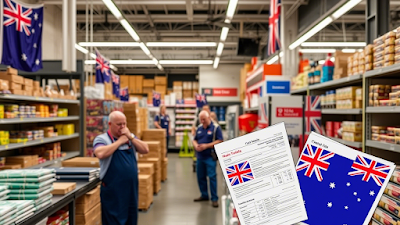
Actually, the biggest surprise for many young entrepreneurs has been the suspension of the ‘de minimis’ trade exemption. For years, Aussie retailers could ship goods under $800 to the US duty-free. It was the lifeblood of the “laptop lifestyle” businesses.
Now? That exemption is gone. Every small parcel is a paperwork nightmare and a new expense. PWC Australia is already warning that e-commerce models built on low-cost shipping are going to struggle to breathe in 2025. I mean, if you’re a small brand in Byron Bay trying to sell to a customer in Texas, your “free shipping” just became a luxury you can’t afford.
Why Tariffs Aren’t the Only Villain
Properly speaking, we can’t blame everything on the US. Australia was already dealing with a 36.2% spike in insolvencies before the tariffs even landed. High interest rates and sticky inflation were already doing the damage.
As the RBA (Reserve Bank of Australia) pointed out in their February 2025 statement, tariffs are just the “gasoline on the fire.” Small businesses are particularly vulnerable because they don’t have the deep pockets of a big mining giant to absorb these shocks. You’re facing a double hit—high borrowing costs and soaring export costs.
The Ramesh Parallel: Global Struggles, Local Lessons
To make this relatable, look at someone like Ramesh, a small-scale handicraft exporter from a village in Punjab, India. Ramesh doesn’t know much about Australian monetary policy, but he knows what it’s like when the US market gets tough. When tariffs hit Indian steel or textiles, Ramesh had to pivot fast. He didn’t just sit and wait; he started looking at the European Union and Southeast Asian markets.
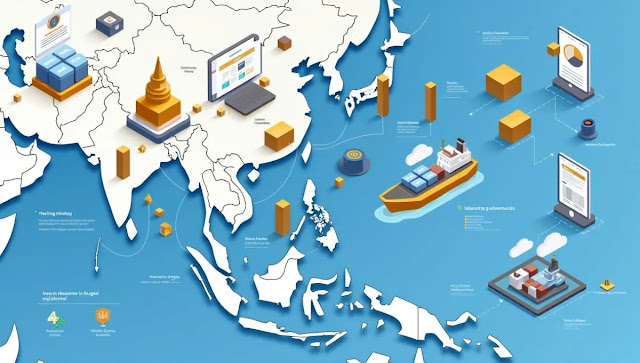
Ramesh’s story is exactly what Aussie businesses need to do right now. It’s about resilience. Just like Reliance Industries in India expanded globally to survive trade barriers, Australian firms are being forced to find “Plan B” markets. Whether it’s shifting supply chains to nearby Asian neighbours (nearshoring) or investing in R&D to make “tariff-resistant” high-end products, the era of relying on one big trade partner is over.
Comparison: The Australian Business Heatmap (March 2025)
|
Sector |
Direct Tariff Risk |
Primary Impact |
Survival Strategy |
|---|---|---|---|
|
Manufacturing |
25% (Steel/Alu) |
Job losses & reduced exports |
Market Diversification |
|
E-commerce |
High (‘De Minimis’ loss) |
Increased shipping costs |
Local Warehousing |
|
Retail |
Indirect (10% China tax) |
Higher input prices |
Supply Chain Nearshoring |
|
Agriculture |
Moderate (Retaliatory) |
Potential wine/beef bans |
New Markets (EU/Asia) |
Actionable Roadmap: How to Survive the 2025 Trade War
Look, if you’re running a business or even just managing your own finances, here is the survival kit:
- Divert and Conquer: Stop putting all your eggs in the US basket. Explore markets in South America or Europe where trade agreements are more stable.
- Contractual Flexibility: If you’re signing new supply deals, make sure there’s a “tariff clause.” You need to be able to adjust your prices or exit a contract if trade laws change overnight.
- Financial Hedging: Work with your bank on currency and commodity hedging. In 2025, a 2% swing in the Aussie dollar, combined with a tariff, can be the difference between profit and bankruptcy.
- Invest in Innovation: If your product is “average,” a 10% tariff will kill it. If it’s “unbeatable” and high-tech, people will pay the extra tax. Now is the time for R&D.
Conclusion: A Year of Grit
In summary, US tariffs are a massive roadblock, but they don’t have to be a dead end. The businesses that will still be around in 2026 are the ones that are adapting today. We are seeing a shift from “Global Everything” to “Strategic Regionalism.”
The data from ASIC and the RBA is a warning, not a prophecy. Whether you are an entrepreneur like Priya in Bengaluru or a manufacturer in Perth, the lesson is the same: in a volatile world, your ability to pivot is your most valuable asset.
What do you reckon? Are Australian businesses being too slow to adapt, or is the government doing enough to protect us from this global trade war? Drop a comment below—let’s talk shop!
Frequently Asked Questions (FAQ)
Why are US tariffs impacting Australian manufacturers in 2025?
To be fair, it’s a direct hit. With a 25% tariff on steel and aluminium, Australian products have become more expensive in the US market. This eats into the profit margins of local exporters, making it harder for them to compete with other global suppliers.
What is the ‘De Minimis’ suspension, and how does it hurt e-commerce?
Actually, it’s a game-changer for small brands. The ‘De Minimis’ rule allowed duty-free shipments under $800 to the US. Now that it’s suspended, every small parcel faces new taxes and paperwork, which basically kills the “free shipping” model for many Aussie retailers.
Are tariffs the only reason for Australian business closures?
Properly speaking, no. Australia was already struggling with high interest rates and a 36.2% spike in insolvencies before the tariffs. As the RBA says, the tariffs are just “gasoline on the fire”—they aren’t the only villain, but they’re making a tough situation much worse.
How can businesses survive this trade war?
Look, the best move is diversification. Like the story of Ramesh, businesses need a “Plan B.” Shifting supply chains to nearby Asian neighbours (nearshoring) or exploring markets in Europe and South America is the only way to reduce reliance on the US.
Note: This is for educational purposes only. Not financial advice. We are not SEBI-registered.