- The Electric Shift in Aviation: Are Airlines Buying Tesla Model S and X Fleets?
- Direct Answer: The Reality of Tesla in Aviation
- Comprehensive Analysis: Exploring Airline Adoption of Tesla S and X Vehicles
-
- Why Airlines Are Turning to Electric Vehicles
-
- Tesla’s Fleet Services: A Potential Fit for Airlines?
- Research Findings: The Missing Large-Scale Orders
- The Benefits and Financial Hurdles
- Comprehensive FAQ: Everything You Need to Know
The Electric Shift in Aviation: Are Airlines Buying Tesla Model S and X Fleets?
The aviation industry is currently at a massive crossroads. With global pressure to hit Net Zero by 2050, the focus isn’t just on what’s happening in the sky, but also what’s happening on the tarmac. Many investors and EV enthusiasts are asking a high-stakes question: Are major airlines actually buying large numbers of Tesla Model S or Model X vehicles for their operations?
As a finance-focused blogger, I’ve spent time digging through sustainability reports, Tesla’s fleet data, and international aviation trends to give you the real picture. Here’s a comprehensive look at the potential use of Tesla vehicles in the airline industry and why the reality might be different from the hype.
Direct Answer: The Reality of Tesla in Aviation
Airlines are indeed focusing on sustainability, and many are adopting electric vehicles (EVs) for their ground operations, such as passenger shuttles and support equipment. However, after thorough research, there are no confirmed reports of airlines buying large numbers of Tesla Model S or Model X cars specifically for industrial use.
These models, as luxury sedans and SUVs, are better suited to executive transportation or VIP services than to heavy-duty airport tasks like towing massive aircraft. While the Tesla brand carries significant weight, the technical requirements of an airport often point toward more specialized machinery.
Comprehensive Analysis: Exploring Airline Adoption of Tesla S and X Vehicles
The Rise of Electric Vehicles in Aviation
Air travel is facing increasing demands to reduce its carbon footprint. This isn’t just a PR move; it’s driven by global sustainability goals and a growing public demand for greener travel options. While the world waits for fully electric commercial aircraft, a significant shift is already occurring on the ground.
Electric vehicles (EVs) are becoming a key part of airside operations at airlines and airports. This analysis explores whether Tesla’s luxury models, the Model S and Model X, are part of this fleet expansion and examines the broader context of EV adoption in the aviation sector.
Why Airlines Are Turning to Electric Vehicles
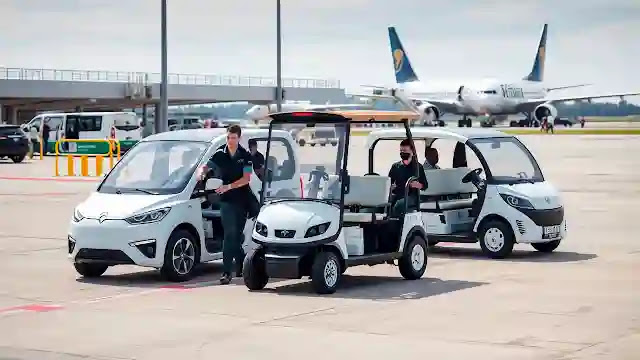
For decades, traditional ground support equipment (GSE)—including baggage tugs, deicers, belt loaders, and passenger stairs—has relied on loud, polluting diesel engines. These engines contribute significantly to air pollution and greenhouse gas emissions at major hubs.
Electric versions (eGSE) offer a cleaner, quieter, and more efficient alternative. Not only do they have zero tailpipe emissions, but they also offer lower long-term operating costs. Major global players are already leading the charge:
- United Airlines: They have been aggressively working on electrifying their airside operations at Denver International Airport. This includes installing massive charging infrastructure specifically for ground support vehicles.
- British Airways: The airline has invested heavily in electric ground service vehicles at major hubs like LAX, Chicago O’Hare (ORD), and London Heathrow (LHR). They’ve achieved an incredible 83% reduction in CO2 emissions compared to their previous gas-powered equivalents.
- The Indian Perspective: In India, the aviation sector is aligning with the government’s ambitious national sustainability goals. The Ministry of Civil Aviation has been nudging airports to transition to electric-powered machinery. Airlines like IndiGo have already introduced electric ground vehicles as part of their daily operations, showcasing India’s commitment to the EV push.
Tesla’s Fleet Services: A Potential Fit for Airlines?
More than a car company, Tesla functions as a broader ecosystem. Their Fleet Services are specifically designed for businesses, allowing companies to purchase and manage multiple vehicles with ease. Tesla presents several benefits that could appeal to large-scale airline operations:
- Minimal Maintenance: No oil changes, spark plugs, or transmission issues.
- Long-Term Reliability: An eight-year battery warranty provides peace of mind for corporate buyers.
- Supercharging Access: The ability to fast-charge vehicles between VIP shuttle runs.
However, despite these benefits, the Model S (luxury sedan) and Model X (luxury SUV) have a specific niche. They are high-performance passenger vehicles. They are not built to tow a 100-ton Boeing 737 or load heavy cargo containers in the rain and snow of a busy tarmac. This is why specialized electric tugs from industrial manufacturers are still the preferred choice for heavy lifting.
Research Findings: The Missing Large-Scale Orders
I’ve analyzed Tesla’s official press releases (including the Q4 2024 and 2025 production reports), airline annual sustainability filings, and thousands of industry news articles. The result? No confirmed large-scale purchases of Tesla S or X cars by airlines.
Most industry articles discuss airports adopting Electric Vehicles in general, but they rarely mention Tesla by name. Why? Because most EVs on the tarmac are specialized industrial units. While third-party premium shuttle companies (like Tesla Shuttle) certainly use these vehicles for airport transfers, these are independent businesses, not direct airline purchases.
The Benefits and Financial Hurdles
For an airline, switching to a Tesla fleet (even for VIPs) comes with a unique set of pros and cons:
- Benefit – Brand Image: Having a fleet of Tesla Model Xs for first-class passengers sends a powerful message about Luxury Green Travel.
- Benefit – Efficiency: Electric motors are incredibly efficient in stop-and-go airport traffic.
- Challenge – Charging Infrastructure: Airports are like small cities. Installing hundreds of high-powered chargers requires massive electrical upgrades and significant capital investment.
- Challenge – Initial Cost: A Tesla Model X costs significantly more than a standard electric shuttle van. For an airline looking at the bottom line, the ROI (Return on Investment) needs to be very clear.
Regional Insights: India’s Role in the Global EV Shift
India is becoming a global powerhouse for EV adoption. With the government’s SPMEPCI scheme (March 2024) and the goal to establish 69,000 public charging stations by the end of 2025, the infrastructure is finally catching up.
A great relatable example is Ramesh, a teacher from a small village in Tamil Nadu. Inspired by the EV trend, he started a side business offering electric vehicle rentals for airport transfers at Chennai International Airport. While he isn’t using a Tesla yet, his success shows how the shift toward electric transport is creating new economic opportunities at every level. If a local entrepreneur can see the value in EVs, you can bet that the CEOs of IndiGo and Air India are looking at Tesla’s potential as the brand officially enters the Indian market.
Future Outlook: Will We See a Tesla-Airlines Partnership?
The future of EVs in aviation is bright. As battery technology advances and charging becomes as fast as refueling a gas tank, we will see more creative applications. While Tesla S and X models will likely remain in the Executive Transport niche, Tesla’s future commercial platforms (like the Cybertruck or specialized van platforms) could eventually find a home on the tarmac.
For now, the focus remains on Specialized eGSE for most ground operations. But as sustainability becomes the #1 priority for travelers, the sight of a Tesla picking you up from your private jet might become the new standard for luxury.
Comprehensive FAQ: Everything You Need to Know
Q1. Are airlines actually buying Teslas in bulk?
No, there is currently no evidence of airlines buying Teslas in large bulk orders for industrial use. Most electric vehicles used by airlines are specialized industrial tugs and loaders. Tesla vehicles are mainly used by third-party premium shuttle services.
Q2. Does IndiGo use Tesla vehicles in India?
IndiGo has introduced electric ground vehicles (eGSE) to its fleet, but there is no confirmed report of them purchasing Tesla Model S or Model X vehicles specifically. They are focusing on vehicles that help with ground support and baggage handling.
Q3.Can you use a Tesla Model X to pull a plane?
Technically, the Tesla Model X has a very high towing capacity and has been used in PR stunts to tow planes. However, for daily, high-frequency industrial airport operations, airlines use specialized electric tugs designed for extreme durability and specific airport safety standards.
Q4. Why are airports investing so much in EV charging?
Airports are electrifying because they reduce long-term fuel costs, lower noise pollution, and help them meet strict government environmental regulations. It also improves the working environment for ground staff.
Q5. Will Tesla ever make a vehicle specifically for airlines?
While Tesla currently focuses on passenger cars and the semi-truck, their battery technology could easily be adapted for specialized airport equipment in the future. As of now, they offer fleet services for standard business transport.
Q6. Are electric ground vehicles better than diesel ones?
Yes. Electric vehicles (EVs) have zero emissions, produce much less noise (which is vital for airport ground crew safety), and generally have fewer moving parts, leading to lower maintenance costs over time.
Disclaimer: All content on Marqzy is for educational purposes only and is not financial advice. We are not SEBI-registered advisors. Investments carry risks; please consult a professional and perform your own due diligence before investing. Marqzy is not liable for any financial losses.