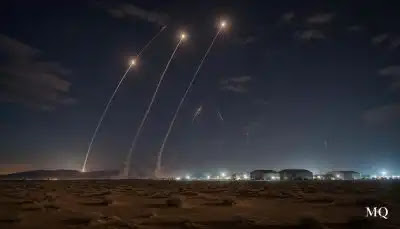
Blood in the Gulf: Inside Iran’s Massive Ballistic Blitz on 21 US Military Bases
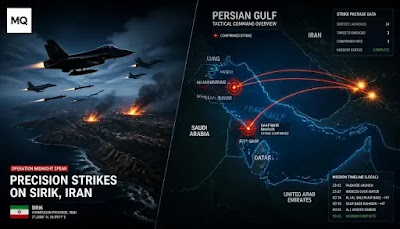
Let’s get directly to the substance of the matter and assess the key developments. The fragile shadow war between Washington and Tehran has officially exploded into a full-scale direct conflict. Right now, Iran’s Islamic Revolutionary Guard Corps (IRGC) has launched a massive, coordinated retaliatory strike targeting 21 different American military air and naval bases spread all across the Middle East. This isn’t just another small proxy warning flashpoint. This is a massive, direct conventional response after Donald Trump ordered US Central Command (CENTCOM) fighter jets to strike critical Iranian radar stations and air defense networks near the vital Strait of Hormuz corridor. The regional landscape has totally shifted overnight, and the old backroom ceasefires are officially dead.
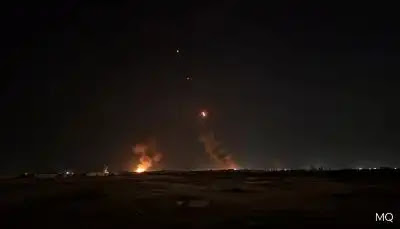
Honestly, if you examine the actual receipts of this massive operation, the sheer scale of the bombardment is absolutely unprecedented. From the skies of Jordan to the fortified military installations in Kuwait and Bahrain, dozens of heavy ballistic weapons and specialized loitering drones were seen cutting through the airspace. While Western media outlets are scrambling to spin the defensive data, local regional tracking accounts have already flooded networks with footage of continuous radar tracking loops and heavy intercept explosions over major allied military assets. It is a massive display of force designed to tell Washington that any attack on domestic Iranian territory will immediately place every single American base in the region directly on the firing line.
The Destruction at Al-Azraq: F-35 Hangars in the Crosshairs
Let’s look at the absolute core of where the heaviest strategic damage happened—the Muwaffaq Salti Air Base, also widely known as the Al-Azraq base in Jordan. According to the official statement put out directly by the IRGC high command, their long-range precision ballistic units successfully penetrated local air shields to hit four separate high-value assets inside the compound. The primary targets included specialized fortified hangars that house highly advanced Western F-35 fighter aircraft, along with a primary regional command-and-control operations center.
Now, to be fair, Jordan’s national military units are claiming they managed to knock down five approaching missiles using their localized air defense infrastructure, stating that the falling metal debris didn’t cause any severe loss of life on the ground. But look, the fact that heavy long-range projectiles launched directly from Iranian soil can successfully reach all the way to a highly sensitive asset like Al-Azraq tells a very different story. It shows that Western air umbrella frameworks have massive, deep gaps when facing saturated launches.
You can check out the full technical overview of this specific structural damage and tracking maps on Anadolu Ajansı. For Trump, this is an absolute logistical nightmare because Al-Azraq is the exact location Western forces use to run their tactical operations and monitor the entire northern corridor.
Shaking the Gulf: Chaos from Kuwait to Bahrain
The massive missile wave didn’t just stop over Jordan; it swept straight down across the southern shores of the Gulf region. The IRGC also ran a massive, heavy drone offensive targeting the strategically vital Ali Al Salem Base in Kuwait, an installation that hosts a massive contingent of active US military personnel and technical staff. The entire night sky over Kuwait turned into an absolute combat zone as local defensive batteries and integrated systems worked overtime to track and explode incoming high-speed warheads.
To make matters even worse for Washington, Iranian tracking crews successfully shot down another highly advanced US MQ-9 Reaper combat drone over Jam County in the southern Bushehr province. This happened just as the drone was feeding real-time target layouts to naval assets. You can view the full documented breakdown of these specific high-altitude maritime shootdowns via Al Mayadeen.
With the headquarters of the US Fifth Fleet sitting right nearby in Bahrain, the entire American naval operational footprint is currently facing a massive, unprecedented threat environment. Regional countries on the southern shores are now facing severe warnings from Tehran’s Foreign Ministry, which has explicitly told them to stop letting the US and Israel use their home territories as launching points for aggressive missions against Iran.
The Failure of the Secret Cash Leverage
Straight up, this massive military explosion exposes the absolute limits of Washington’s backroom diplomacy. Just days before this massive blitz, hidden channels were trying to finalize a temporary ceasefire structure, which reportedly involved the transfer of billions of dollars in unfrosted cash assets flown directly through Abu Dhabi. The White House truly believed that giving Tehran economic breathing room while maintaining a strict maritime ports blockade would buy enough time to push through Trump’s 15-year uranium dilution deal.
But to be fair, you cannot buy off a state’s sovereign defense doctrine with temporary cash injections. The moment CENTCOM launched its “self-defense” raids against Iranian radar arrays over the weekend, the regime completely ripped up the unwritten truce framework. Iran chose to show its raw conventional teeth instead, demonstrating that they are fully willing to accept a massive escalation rather than letting American forces dictate the military boundaries of the Strait of Hormuz.
The entire theory of Western deterrence in the Middle East has completely broken down. Trump wanted to show that his high-pressure style could keep the peace, but instead, it has triggered a massive regional response that has targeted 21 different facilities in a single night.
The Final Verdict
Straight up, the idea that this conflict can be contained through minor retaliations or backroom financial deals is a complete illusion. Iran has officially proved that it possesses the precise long-range capabilities and the absolute political will to target every single US logistical asset in the region simultaneously.
The dispute has moved beyond the realm of clandestine actions and political standoffs, taking on a more direct and public character. It is now a raw, direct conventional contest of strength being fought out across aircraft hangars, missile defense screens, and critical maritime shipping paths. Keep your eyes completely locked on the actual missile origins and the regional airspace corridors, because the old regional map is being completely rewritten in real time by heavy artillery smoke.
Frequently Asked Questions (FAQs)
Q1. Did Iran actually strike 21 US military targets in the Middle East?
Look, straight up, yes. The IRGC officially released a public statement confirming that they launched a widespread, coordinated retaliatory strike using long-range ballistic missiles and drones against 21 separate American installations across the region.
Q2. Were American F-35 fighter jets actually hit during the strike?
Honestly, the IRGC explicitly claims that its long-range weapons successfully struck and destroyed four specific high-value assets at Jordan’s Al-Azraq base, including hangars containing F-35 jets. However, local Jordanian military units claim their air defense screens intercepted multiple missiles, preventing any major loss of life.
Q3. Why did Iran launch this sudden massive missile blitz now?
To be fair, this massive launch was direct retaliation after the US military executed airstrikes on radar sites and air defense infrastructure in southern Iran. Tehran had warned that any threat to its territory would receive a crushing and decisive response, which we just witnessed.