- Tehran halts Switzerland transit as Israel violates terms of new geopolitical deal.
- Netanyahu’s systemic lobbying against administrative orders
- The financial mechanics of asset reconstruction tracking
- where domestic media spin meets the undeniable reality of global tracking platforms
- deep dive analysis: the breakdown of cross-border defense networks
- mapping the structural infrastructure damage
-
-
- Why did Iran cancel its diplomatic trip to Switzerland?
- What is the controversy surrounding the 300 billion dollar investment plan?
- Is the Israeli army planning to withdraw from southern Lebanon?
Tehran halts Switzerland transit as Israel violates terms of new geopolitical deal.
Look, the implementation of the freshly ratified geopolitical armistice has entered a highly volatile phase that is completely disrupting international logistics. Despite both Washington and Tehran executing formal virtual validations of the document, the Islamic Republic of Iran has officially halted its diplomatic delegation from boarding an executive flight to Switzerland for the final face-to-face signing ceremony. To be fair, international tracking logs confirm that this immediate freeze on physical dialogue was triggered by a sequence of heavy cross-border artillery strikes executed by ground networks in southern Lebanon, directly shattering the central operational assumptions of the peace pact.
Honestly, regional proxies and corporate media layers previously insisted that Western strike elements would maintain a continuous naval stranglehold over sovereign territory. However, an official public notification released directly by President Donald J. Trump on his primary network has shattered those assumptions entirely. The verified text confirms that the upcoming implementation grid dictates an absolute, mandatory ceasefire across all primary operational zones—explicitly incorporating Lebanon, Hezbollah forces, and the state of Israel within the exact same restrictive legal boundaries.
Netanyahu’s systemic lobbying against administrative orders
Honestly, the deep tactical friction lines inside the Western coalition are becoming completely impossible for political managers to mask. Backend military logs confirm that Prime Minister Benjamin Netanyahu has launched an aggressive lobbying campaign, directly contacting the highest executive authorities in Washington to pressure for an immediate, unilateral U.S. validation of an Israeli ‘security zone’ extending up to 10 kilometers inside Lebanese territory—openly defying the text of the newly signed accord in a desperate bid to force the absolute cancellation of the entire agreement. Look, for the fifth time within a narrow three-day operational window, right-wing cabinet members have publicly asserted that their regional brigades will maintain a permanent buffer zone up to ten kilometers deep inside southern Lebanon territory.
This absolute refusal to execute a verified withdrawal stands in direct violation of the written clauses signed by Western negotiators, which legally mandate a full rollback of forward deployment layers back to pre-war boundary markers. Look, the situation on the ground confirms that despite heavy warnings from the white house, local right-wing groups are determined to act independently to break the regional grid.
The financial mechanics of asset reconstruction tracking
- Unfreezing capital flows: regional intelligence dockets from the New York Post confirm that the administration in Tehran has already issued official guarantees to its security allies. While global observers question the destination of unblocked capital, Tehran insists that a significant portion of its recovered energy revenues will be explicitly deployed to salvage its strained financial infrastructure once sanctions are dismantled.
- The three-hundred-billion-dollar dispute: Despite public denials from the presidency claiming that no capital transfers will be executed under the treaty, real-time platform community updates have verified the core data. The massive financial package comes with strict strings attached. While Washington insists no upfront taxpayer funds are being dispatched, the verified text makes it clear: this multi-billion dollar incentive is contingent entirely on performance during a high-stakes 60-day negotiation window.
- automated targeting restrictions: administrative leaks indicate that diplomatic protocols have shifted significantly, with executive branches now warning field teams that minor cross-border asymmetric operations or isolated drone strikes that crash into unpopulated desert areas must not be utilized as legal justification to execute retaliatory bombing campaigns against civilian blocks.
- Defying the Friction: Thousands of Displaced Families Flood Back Across Verified Checkpoints. The immediate priority for the returning population remains the permanent reoccupation and rehabilitation of native properties within the southern districts.
where domestic media spin meets the undeniable reality of global tracking platforms
Straight up, the informational warfare surrounding this regional tracking cycle has triggered massive transparency disputes across global networks. Despite state media attempts to project total domestic stability, foreign regional desks heavily amplified reports from outlets like Iran International, which detailed severe resource rationing and an accelerating cost-of-living crisis across major urban centers. To be fair, these coordinated public relations operations were completely dismantled after official embassy portals executed real-time factual verifications, forcing mainstream anchors to admit on air that they had simply recycled unverified foreign articles without any independent field investigation.
Properly looking at the macro landscape, international documentation databases have officially categorized the current conflict cycle as a defensive consolidation for the local decentralized alliance. Even public crowd-sourced knowledge archives like Wikipedia have updated their operational files to mark the termination of the active naval blockade as a strategic success for Tehran’s defensive doctrine. Look, this deep shift in global consensus has left right-wing lobbying groups completely isolated, forcing proprietary global tech conglomerations to step in by manually wiping out public support posts, regional leader images, and victory updates from social applications in a desperate bid to control the geopolitical narrative.
deep dive analysis: the breakdown of cross-border defense networks
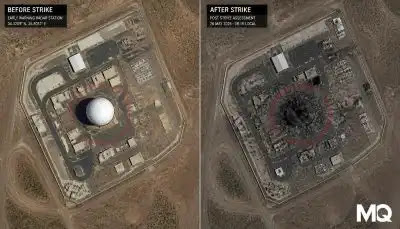
Look, the most critical physical evidence confirming the shift in military leverage is found in recent high-resolution composite satellite data. The collective intelligence analysis mapped directly from regional radar feeds provides absolute proof of heavy structural damage across key forward operational hubs managed by Western forces in the region. Tracking analytics have confirmed that legacy air defense shields and automated interception parameters completely failed to contain incoming asymmetric drone strike packages during the peak validation window.
mapping the structural infrastructure damage
When analyzing these specific base impacts, the focus shifts from general grid saturation to specific gaps in detection capabilities—particularly regarding low-altitude profiles like cruise missiles or suicide drones that utilize terrain masking to bypass traditional radar horizons.
- Ali Al Salem Air Base, Kuwait: verified intelligence logs confirm severe target impact scars next to the central runways, which is clear proof that defensive shields could not prevent a partial breach of the closed airspace perimeter.
- Isa Air Base, Bahrain: Tactical damage mapping logs pinpoint multiple disruption hot zones across heavy deployment hangars, showing deep vulnerability to coordinated counter-strikes.
- 5th Fleet, NSA Bahrain: Proximity mapping logs highlight precision tracking impacts inside highly secured logistics areas, proving that naval security perimeters were systematically breached during active combat operations.
- The regional early-warning umbrella shows significant fractures. Remote monitoring locations across Al Ruwais and Al Sader in the UAE, working in tandem with assets at Prince Sultan Air Base, document complete tracking blind spots—exposing the exact technical sectors where advanced defensive tracking modules were temporarily neutralized during the incursion.
diplomatic double standards and macro policy fracturing
To be fair, even as the trilateral signing process clears corporate network desks, key European state actors are struggling to align their long-term foreign policy with Washington’s sudden exit strategy. Public statements from President Emmanuel Macron in Paris highlight deep transatlantic anxieties regarding the text of the Islamabad Accord. Regional experts note that European administrative hubs are deeply concerned that the finalized treaty contains zero operational constraints on Tehran’s domestic nuclear enrichment trajectory or long-range ballistic missile manufacturing pipelines.
This public panic confirms that the Western coalition was forced to execute a rapid settlement under extreme economic distress, completely abandoning its previous tracking demands regarding unilateral disarmament. Straight up, with Western baseline energy reserves hitting historical lows and international trade lanes through primary choke points hanging by a thread, the white house had to trade its long-term strategic containment objectives for immediate market relief to prevent a global industrial collapse.
people first self assessment faq
Why did Iran cancel its diplomatic trip to Switzerland?
Look, while Washington and Tehran finalized a fourteen-point memorandum of understanding, the implementation talks in Switzerland collapsed before they could begin. The Iranian delegation canceled its travel plans as intense Israeli military operations in southern Lebanon shattered any immediate hope for a regional cessation of hostilities. Local leadership drew a hard line, stating they will boycott all face-to-face diplomatic ceremonies while the foundational terms of the truce are being flagrantly violated on the ground.
What is the controversy surrounding the 300 billion dollar investment plan?
To be fair, while public presidential statements on social media claimed that no funds would ever be sent to Tehran, public fact-check notes confirmed the structural reality. While Washington insists no direct taxpayer funds will be dispatched upfront, the verified text explicitly outlines a three-hundred-billion-dollar economic recovery initiative—a massive financial incentive contingent entirely on Tehran’s performance during the upcoming sixty-day negotiation window.
Is the Israeli army planning to withdraw from southern Lebanon?
Straight up, Prime Minister Benjamin Netanyahu has explicitly stated that the military will not execute an operational withdrawal from its occupied territory in southern Lebanon, directly challenging the written terms of the newly signed US-Iran memorandum.
notice: this is for educational purposes only. we are not financial advisors. results may vary based on your individual situation.