The White House Mirage: How Trump’s Grand Deal Collapsed Under Tehran’s Final Ultimatum
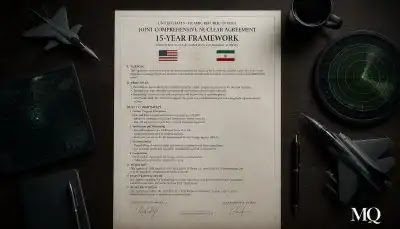
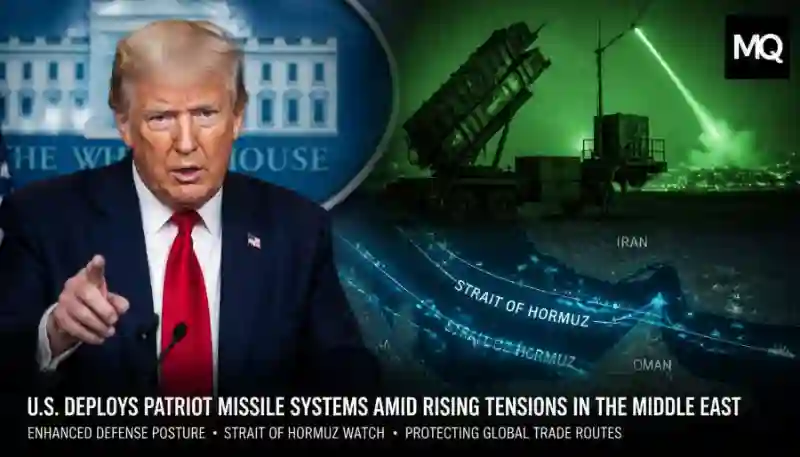
Straight up, if you think Donald Trump’s latest sweeping social media declarations about a final nuclear agreement with Iran are rooted in actual ground realities, you are being properly fed a massive political illusion. Overnight, the American administration went on a heavy public relations cycle, claiming that a permanent diplomatic resolution was finally in the bag. Trump flatly announced to the world that Tehran had unconditionally agreed to a total ban on nuclear weapons development, an immediate unblocking of the vital Strait of Hormuz with zero tolls, and a full physical extraction of its entire stockpile of enriched uranium from Iranian soil. The language coming out of Washington sounded like a complete surrender from Iran, designed to present a massive foreign policy victory to the domestic American electorate before the summer trading season peaks.
Look, according to the official White House narrative displayed in recent global updates, Washington was preparing to lift its aggressive maritime blockade under the explicit assumption that Iran would manually detonate and sweep its extensive underwater mine grids. People inside the capital were literally sitting down to write official papers to let global shipping firms know that the entire Persian Gulf was completely open for business with no risk. But before anyone could even get a proper signature on Trump’s massive celebration announcements, the main leaders over in Tehran completely flipped the whole geopolitical chessboard around. Honestly, nobody in the West expected the Iranian regime to move this fast to tear down the American claims, and it completely blindsided top analysts by showing just how massive the real gap is between private talks and loud public declarations.
The Uranium Stand-Off: Wishful Thinking vs Ground Truth
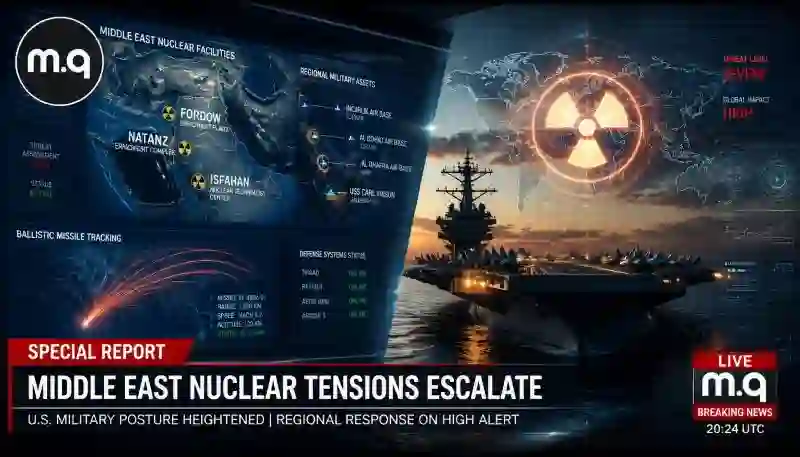
Honestly, the diplomatic facade cracked open within minutes of the American press release. Iran’s Foreign Ministry spokesperson, Esmaeil Baghaei, issued a direct emergency statement confirming that absolutely no final deal has been finalized with the United States. Tehran made it clear that current talks are strictly limited to the regulatory administration of the Strait of Hormuz with Oman—leaving the entire nuclear program completely off the table. To be completely blunt about it, the Iranian team came out and stated directly that they haven’t agreed to smash up a single centrifuge setup, and they have zero. The organization intends to adjust its present high-grade enrichment numbers for home-based operations.
To be fair, what Trump announced as a signed treaty was nothing more than his own transactional wish-list that he just polished up to look like a historic breakthrough. Look at the intense friction developing across regional Arab intelligence networks right now. Reports leaking from major regional outlets suggest that while Iran is technically open to shifting its heavily enriched uranium stocks specifically to Chinese custody to prevent direct Western military control, Washington is flatly refusing to allow Beijing or Moscow to hold that kind of strategic leverage. The Americans want the uranium shipped directly out of the region under Western oversight, but Tehran views that specific demand as a total violation of their sovereign defense posture.
Tehran’s leading negotiator, Mohammad Bagher Ghalibaf, delivered a brutal reminder of Iran’s real posture via official statements, asserting that concessions are grabbed through missile capabilities, not empty dialogues. For Iran, the ultimate winner of any international agreement is simply the side that remains better prepared for a hot war on the day after the signing. They are openly telling the public that they do not trust the word or the signature of the American president, meaning any framework they agree to must be verified through physical actions on the water rather than promises made in Washington.
Economic Ripples: British Energy Shocks and the Saudi Windfall
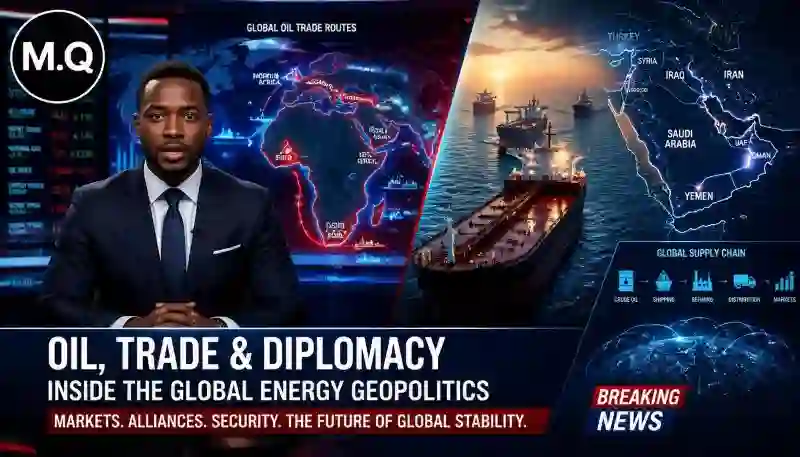
Straight up, while this diplomatic poker game drags on between global superpowers, the common citizen is already paying a brutal price across European markets. International market trackers have confirmed that domestic energy bills inside Britain are projected to take a sharp 13% spike solely due to the direct maritime disruptions and insurance premiums caused by this ongoing conflict. Shipping firms are refusing to move vulnerable LNG tankers through the channel unless heavily escorted by naval forces, triggering a rapid reassessment of global trade routes. The growing security concerns are forcing energy suppliers, insurers, and logistics networks to recalculate risks in real time, raising the specter of higher costs and potential supply disruptions worldwide. Pass those multi-million dollar costs directly down to the working-class consumer.
On the flip side, certain regional players are quietly turning a massive profit out of this structural chaos. Verified economic metrics demonstrate that Saudi Arabia’s national oil revenues took an explosive upward leap right after the conflict broke out. By utilizing specialized, pre-engineered backup pipelines to pump crude directly to their Western coast ports on the Red Sea, the Kingdom completely bypassed the blocked Strait of Hormuz. They successfully capitalized on global price panics while alternative trade routes remained entirely frozen, proving that one nation’s maritime crisis is another nation’s absolute financial jackpot.
Undercover Sabotage: The Secret UAE Air Campaigns
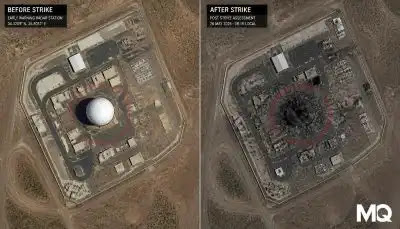
One of the most striking developments in this unfolding crisis comes from documents reportedly leaked to The Wall Street Journal. The records appear to reveal a sophisticated and closely coordinated air-defense network involving the United Arab Emirates and regional allies. If accurate, the disclosures shed new light on the scale of cooperation operating behind the scenes and underscore how regional security partnerships have evolved in response to escalating threats. The raw data exposes a heavily hidden, coordinated air setup where the United Arab Emirates was secretly flying out and dropping heavy payloads on Iranian rocket depots, Kashap island, Kharg island, and massive mainland oil stations. These tactical operations were completely linked up with live target maps and intelligence streams fed directly from Western and Israeli command offices, which basically proves that the Arab-Israeli military evidence points to a level of regional collaboration that goes well beyond public expectations, highlighting partnerships that are far more advanced than leaders typically admit in public.
Look at how deep the institutional rot goes. The physical field strikes were heavily assisted by a calculated domestic espionage operation orchestrated by Mossad networks inside Iran. Investigative reports reveal that Israeli intelligence systematically recruited dissident Iranian nationals, transported them through alternative border routes into secondary countries for specialized drone installation and weapons tracking training, and, following the operation, the units were reintroduced into major metropolitan centers, including Tehran, Mashhad, and Qom, where they resumed their defensive roles.
When the conflict hit its peak, these inside cells manually assembled imported drone components within Iranian borders, launching sudden low-altitude hits to intentionally confuse and collapse Iran’s domestic air defense radars from the inside. This internal sabotage network allowed external strike aircraft to operate with a massive tactical advantage, leaving Iran’s military command scrambling to figure out how their heavily fortified missile facilities were being targeted so accurately without any foreign jets entering their main airspace.
The Transactional Mirage and Regional Deadlocks
To be fair, the entire framework of using financial incentives to force a proud regional power into submission has completely collapsed. The regional deadlock is tightening because the underlying mistrust cannot be papered over with vague promises of international investment. Washington attempted to solve the standoff by offering a massive 300 billion dollar investment fund through global corporations to help rebuild Iran’s crippled domestic economy, attempting to frame the payout as a developmental package rather than direct war compensation.
But look at how furious the local neighborhoods are getting over this. The regular public inside Iran is incredibly doubtful about the whole thing, and local hardline political groups are flat-out threatening the administration that if they walk out of these negotiations with empty pockets without getting a permanent, non-negotiable end to Western economic embargoes, the domestic working class will fully revolt against the government. This leaves the Iranian delegation with zero room to compromise on their nuclear infrastructure. They are stuck in a defensive loop where giving up their strategic assets means political suicide at home, while continuing the standoff ensures ongoing military friction with Western naval task forces.
At the exact same moment, all the neighboring nations around the Gulf are getting cornered into picking a side in a brutal war where no single player can walk away with a real win. The continuous deployment of stealth assets, the deployment of electronic warfare suites across international shipping lanes, and the constant back-and-forth warning fire have turned the entire Persian Gulf into an unmanageable gray-zone conflict. The illusion of a quick, transactional summer deal has entirely evaporated, leaving behind a raw war of attrition where both Washington and Tehran are simply waiting to see who blinks first under the heavy weight of economic and military pressure.
FAQs
Q: Did Iran actually agree to give up its nuclear weapons program in this new Trump deal?
Honestly, no. While Donald Trump went all out on his social media claiming that a massive nuclear ban and uranium extraction agreement was completely finalized, Iran’s Foreign Ministry immediately shot down the rumors. They stated flatly that negotiations are strictly limited to the navigation rules of the Strait of Hormuz and absolutely nothing else.
Q: Why are domestic energy prices jumping by 13% in Britain due to this Gulf standoff?
Straight up, the intense military friction in the Strait of Hormuz has forced international shipping conglomerates to completely reroute their large fuel tankers. This massive maritime blockade has caused global supply panics and spiked insurance costs, which companies are passing directly down to working-class utility bills.
Q: What was the secret role played by the UAE in the recent air campaigns against Iran?
To be fair, highly classified intelligence files leaked to the Wall Street Journal exposed that the UAE operated a confidential air setup, launching multiple coordinated strikes against Iranian rocket depots and facilities. They were operating directly on live target maps and intelligence streams fed from Western and Israeli command offices.
This is for educational purposes only. We are not financial advisors. Results may vary based on your individual debt situation